
Commercial Wine Cellars: Wine As Revenue & Experience
For hotels, restaurants, casinos, and wine bars, the wine program is more than inventory—it's part of your brand, your profitability, and your guest experience. At Cachet Wine Cellars, we've built solutions for MGM Grand, Palazzo, Waldorf Astoria, Caesars, Fairmont, and Ritz-Carlton. We know that commercial wine cellars serve dual purposes: protecting valuable inventory while creating experiences that drive sales and loyalty.
The Business Case: Wine as a Revenue Driver
A well-executed commercial wine program has a direct impact on the bottom line. Wine margins typically run between 40 and 60 percent — higher than most food items — making the collection one of the most profitable assets in any hospitality venue. A restaurant carrying 500 bottles can generate substantial monthly wine revenue depending on pricing and sales mix, while a hotel offering guest wine lockers can build a reliable recurring revenue stream through annual locker fees alone.
The critical variable, however, is visibility. Restaurants with wine walls or display cellars sell significantly more wine than those with hidden storage — guests who can see a premium selection are far more likely to order from it. The same principle applies in hospitality more broadly: hotels with elegant wine programs attract a more discerning clientele and command stronger pricing. Wine lockers, in particular, become a sought-after amenity that deepens guest satisfaction and loyalty.
The cellar itself, then, is not merely storage — it is a revenue-generating asset. It signals a serious commitment to the wine program, enhances the aesthetic of the space, and functions as a marketing tool in its own right. Guests photograph it, share it, and recommend the venue to others. That visibility and credibility translate directly into higher sales volume and greater guest value.
We have designed commercial cellars that recovered their full cost through incremental wine revenue within two to three years. The logic is straightforward: a professionally designed cellar with a visible, well-curated collection consistently drives higher volume and stronger margins than conventional storage. It is precisely why the most respected hospitality venues treat the wine program not as an amenity, but as a core business investment.
Display vs. Storage Strategy
STAGE
01
Most commercial venues require two distinct strategies
Display cellars showcase premium selections and build anticipation among guests, while storage cellars work quietly behind the scenes, maintaining inventory in perfect condition.
STAGE
02
Display Cellars
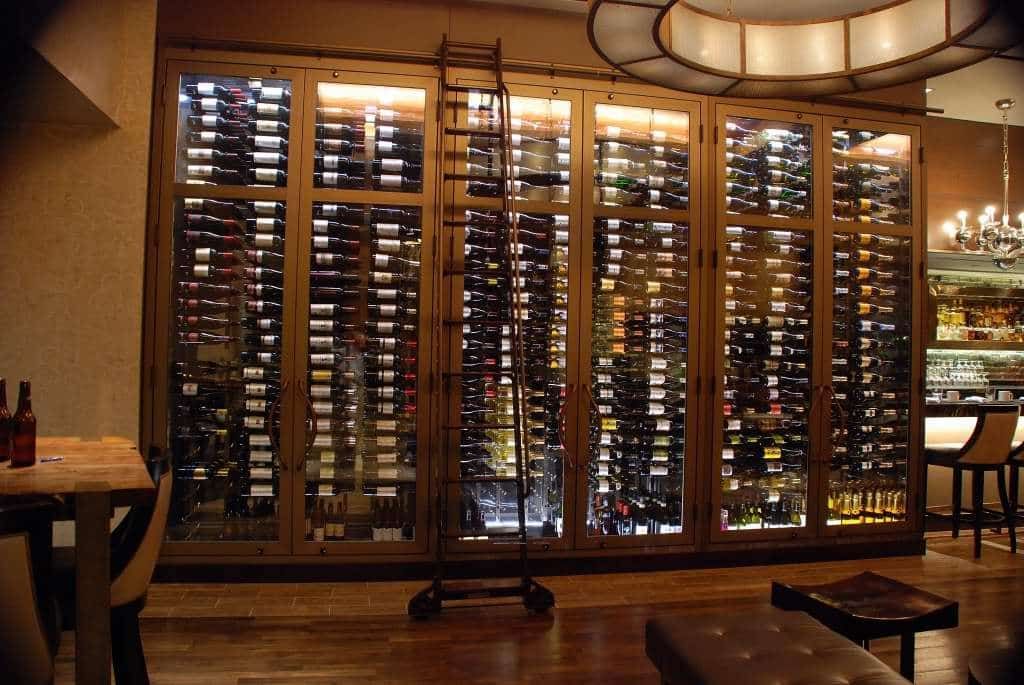
Display cellars are always visible, always beautifully lit, and always stocked with your most prestigious and visually striking bottles. A restaurant display cellar in the dining room might showcase 300 to 500 of your finest selections; a hotel lobby wine wall presenting 1,000 or more bottles becomes the first thing guests encounter on arrival; a casino gaming lounge with RGB lighting turns the collection into a full sensory experience. In each case, the display cellar does something that a wine list alone never can — it makes the collection tangible, immediate, and desirable. Guests see the bottles, and they want to order them.
STAGE
03
Storage Cellars
Storage cellars operate behind the scenes, optimized for climate control and efficient access rather than visual impact. A restaurant might keep 2,000 to 3,000 bottles in a back-of-house cellar maintained at perfect conditions; a hotel may require climate-controlled storage for 5,000 or more bottles of working inventory. The design priority here is preservation and operational efficiency — these spaces are built to perform, not to be seen.
STAGE
04
Optimal Strategy
The most effective commercial wine programs treat display and storage as distinct functions rather than trying to combine them in a single space. When separated, each cellar can be designed purely around its own purpose — the display cellar as visually striking and guest-facing as the brand demands, the storage cellar as utilitarian and operationally efficient as the inventory requires. Neither compromises for the other, and both perform at their best.
Commercial Cellar Types
STAGE 1
Walk-in Cellars
Walk-in cellars are large enough to enter and move through comfortably, making them particularly well-suited to restaurants and hotels managing substantial wine inventories. A 300-square-foot walk-in can hold between 2,000 and 3,000 bottles while still leaving enough room for staff to locate and retrieve bottles with ease. Good lighting and clear organization are what make these spaces genuinely efficient — turning what could be an overwhelming volume of inventory into a professional, navigable system.
STAGE 2
Glass Display Cellars
Front-of-house installations put the collection on full display, turning storage into spectacle. MGM Grand's dramatic glass cellars are visible directly from the gaming floor; the Palazzo showcases its extensive collection in premium, high-traffic locations where it cannot be missed. In both cases, the cellar does double duty — building credibility with guests while actively driving wine sales. When the collection is this visible, it sells itself.
STAGE 3
Wine Walls
Wine walls are permanent installations that display premium selections in the spaces where guests already gather. Restaurants integrate them into dining rooms; hotels position them in lobbies and high-traffic corridors where they become part of the arrival experience. Unlike dedicated cellars, wine walls create visual interest and drive sales without claiming significant floor space — a compelling return on a relatively modest footprint.
STAGE 4
Wine Lockers
Wine locker programs offer individually climate-controlled storage for guest collections, creating a distinctive amenity at country clubs, high-end restaurants, and private clubs alike. At Brae Burn Country Club, for example, guest wine lockers serve a dual purpose — generating a reliable recurring revenue stream while meaningfully enhancing the value of membership. It is the kind of offering that rewards loyalty and gives members a reason to return.
Commercial Cooling System Requirements
Capacity Sizing
Commercial wine spaces present greater climate control challenges than residential installations — larger heat loads, higher foot traffic, and less consistent ambient conditions all factor into the equation. Precise heat load calculation is therefore essential, accounting for occupancy, lighting output, external wall exposure, and daily access patterns rather than relying on rough estimates. This level of precision ensures the cooling system is sized exactly to the cellar's real-world demands — neither underpowered nor wastefully oversized.
Monitoring & Alerts
Commercial wine systems should include remote monitoring with real-time alerts — because in a commercial setting, early warning is everything. A temperature drift, a humidity spike, or an outright system failure all demand immediate attention, and remote monitoring ensures that notification arrives the moment something goes wrong. That response window, however narrow, is often the difference between a minor adjustment and significant inventory loss.
Maintenance Programs
Commercial cellars require regular maintenance—filters changed, seals inspected, performance verified. We offer complete maintenance agreements ensuring your system stays optimal.
Featured Commercial Projects
STAGE
01
Palazzo Gaming Lounge
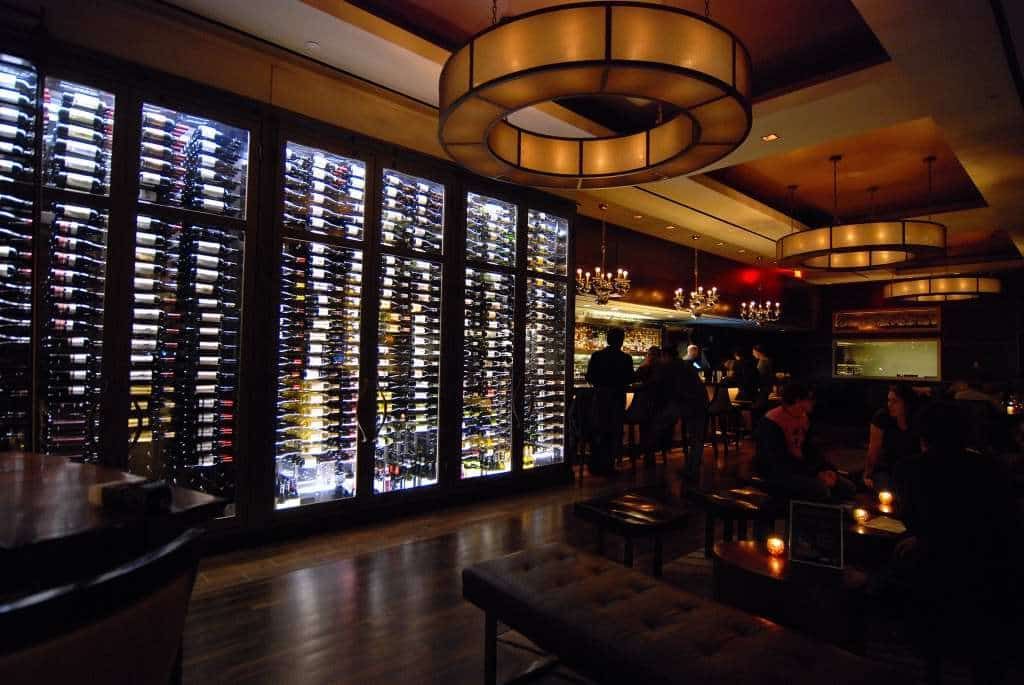
A premium wine display featuring over 1,000 bottles and sophisticated lighting transforms the collection into a visual spectacle — one visible directly from the gaming floor, where it shapes brand perception and drives premium beverage sales from the moment guests arrive. Climate control runs precisely in the background, maintaining perfect conditions throughout. The installation has become a signature feature of the property, the kind of detail guests notice, remember, and associate with the overall quality of the experience.
STAGE
02
Waldorf Astoria
A complete hotel wine program — guest wine storage, a premium restaurant display cellar, and bar service working in concert — becomes a draw in its own right, attracting guests who seek a more refined hospitality experience. Wine lockers elevate the offering further, functioning as a tangible membership benefit that rewards returning guests. The display cellar, meanwhile, becomes a destination for wine enthusiasts, the kind of feature that earns a reputation and gives guests a reason to seek out the property specifically.
STAGE
03
MGM Grand
An extensive wine program serving multiple restaurants, bars, and guest services simultaneously speaks to a different order of ambition — one where wine is not a single amenity but a defining thread running through the entire property experience. At this scale, the sophistication of the program reinforces the brand's positioning as a genuine luxury destination, signaling to guests that every detail has been considered. The returns are both tangible and reputational: substantial revenue on one side, and the kind of positive guest perception that compounds over time on the other.
