
Wine Cellar vs. Wine Fridge: Which Do You Actually Need?
A wine fridge and a wine cellar both store wine, but they're fundamentally different. One is an appliance; the other is a dedicated space. One costs a few thousand dollars; the other costs significantly more. One takes up two square feet; the other might take up 200. Understanding the real differences — not marketing claims, but actual wine preservation science — helps you determine what your collection genuinely needs.
The Core Difference: Active Cooling vs. Dedicated Space
A wine fridge is a self-contained cabinet with internal cooling — an appliance, much like a refrigerator. Plug it in, and it maintains temperature and, to varying degrees, humidity. The cooling system is built in, the space is fixed, and everything is contained within one unit.
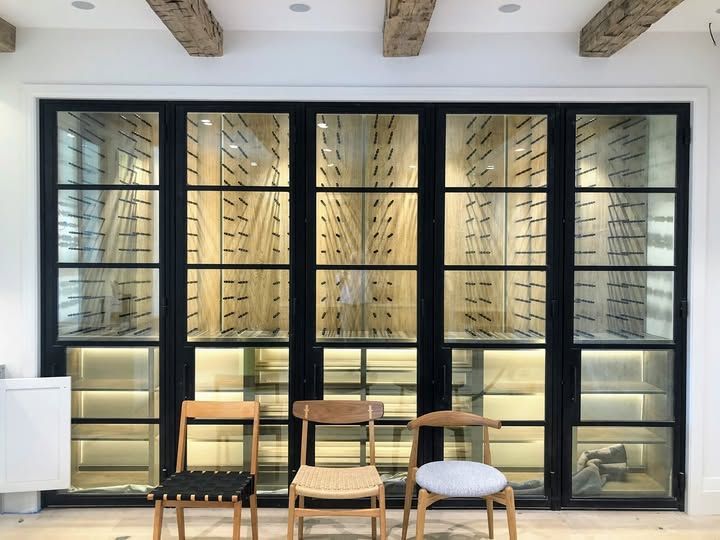
A wine cellar is a dedicated room or closet with walls, insulation, vapor barriers, and a separate climate control system. Cooling equipment is typically located outside the storage area — in an attic, garage, or external wall — and the space is designed specifically for wine storage, integrated directly into your home's architecture.
These aren't just different versions of the same thing. They're fundamentally different approaches to wine storage.
Temperature Stability: The Critical Difference
Here's where the distinction matters most:
01
Wine Fridge Temperature Behavior
Wine fridges maintain temperature through compressor cycling. The compressor runs until the interior reaches the target temperature — say, 55°F — then stops. The interior slowly warms until it drifts to 56–57°F, triggering the compressor again. This on/off cycling causes the internal temperature to oscillate within a roughly 53–57°F range. It's normal refrigeration behavior and adequate for short-term wine storage, but not ideal for long-term aging.
02
Wine Cellar Temperature Behavior
Professional cooling systems — Wine Guardian, CellarPro, WhisperKOOL — maintain temperature through continuous air circulation rather than on/off cycling. The result is a constant 55°F ±1°F, held with precision rather than approximated through repeated correction. That stability is what makes a dedicated cellar better suited for long-term wine aging.
03
Why This Matters
Wine ages through slow chemical reactions, and temperature fluctuations stress the bottle seal, cork, and wine itself. Constant temperature allows those reactions to proceed predictably. Wine stored at a cycling 53–57°F ages differently than wine held at a steady 55°F — and over decades, that variability affects development in ways that matter. For everyday wines consumed within a few years, the difference is minimal. For wines you're aging 10, 20, or 30 years, temperature stability becomes genuinely important.
Humidity Control: Where Wine Fridges Struggle
Wine Fridge Humidity
Humidity performance varies widely across wine fridges. High-end models maintain 50–70% humidity reasonably well, but budget models often deliver only 30–40%. Below 50%, corks begin to dry out, shrink, and allow air infiltration into bottles — and air oxidizes wine. A bottle with a dried cork can become undrinkable within 3–5 years. This is a particularly serious problem in dry climates like Arizona and Nevada, where ambient humidity is already naturally low.
Wine Cellar Humidity
Properly designed wine cellars maintain 60–70% humidity through a combination of space design, cooling system selection, and supplemental humidification where needed. This range keeps corks in ideal condition indefinitely. Humidity above 70% risks mold on labels, while humidity below 50% is corrected through design or supplemental humidification — both scenarios are accounted for in proper cellar engineering.
The Impact
If you're in an arid climate like Phoenix or Las Vegas and relying on a wine fridge with inadequate humidity control, your collection may be aging poorly without you realizing it. A cellar designed specifically for your climate handles humidity correctly from day one.
Vibration & Its Effects on Wine
Wine Fridge Vibration
Wine fridges have compressors running inside or directly attached to the cabinet, producing a hum and vibration that transmits through the shelving and into the bottles. Wine scientists continue to debate the precise impact, but consensus increasingly suggests that constant vibration can affect sediment settling and interfere with aging processes. At a minimum, it isn't ideal.
Wine Cellar Vibration
Professional cooling systems placed remotely — in an attic, garage, or outside wall — transmit minimal vibration into the storage space, keeping the cellar itself essentially vibration-free. For serious collectors aging valuable wine over long periods, this is a meaningful advantage.
Practical Implication
If your wine fridge is adjacent to a bedroom, the vibration and noise will likely be noticeable. In a basement setting, it's less of a concern, but for wines you're aging over many years, vibration-free storage is always the preferable choice.
Collection Size & Capacity Thresholds
01
Wine Fridge Capacity
Standard wine fridges range from 50-bottle compact units to 500-bottle larger models, with 150–300-bottle units being most common. Once your collection outgrows a single fridge, you're either buying multiple units or moving to a cellar. Multiple fridges consume significant space and multiply the vibration and noise problem considerably.
02
Wine Cellar Capacity
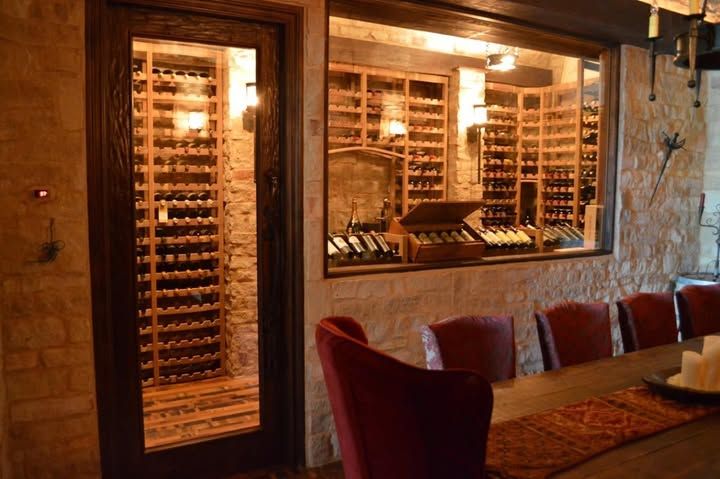
A modest 100 sq ft wine cellar can hold 800–1,200 bottles; a 200 sq ft cellar can hold 1,500–2,500. Racking is designed around your specific collection size, so you're never constrained by manufacturer-set configurations. The relationship between space and capacity is entirely flexible.
03
Capacity Threshold
Once you have — or a project having — more than 500 bottles, a wine cellar becomes more practical than multiple wine fridges. At that point, you're comparing the combined footprint and cost of 2–3 fridges against one well-designed cellar. The cellar almost always wins.
Space Efficiency & Home Integration
Wine Fridge
Takes up 15–30 sq ft of floor space, depending on size, but it remains a freestanding appliance — functional, but not integrated into your home's design. It looks like what it is: a fridge. In a home designed for minimalism or elegance, that utilitarian presence is hard to overlook.
Wine Cellar
A dedicated cellar can be built into unused space — a basement, closet, under-stairs area, or dedicated room — becoming an architectural feature rather than an appliance sitting in your living space. A well-designed cellar feels like a natural part of your home, and that integration changes how you experience your collection every day.
Cost Comparison: Upfront vs. Lifetime
Wine Fridge Initial Cost
Low barrier to entry, ranging from entry-level to premium builds for quality units.
Wine Fridge Lifetime Cost
Wine fridges typically last 8–12 years. Over a 30-year homeownership period, you'll likely replace them 2–3 times — adding up to a mid-range residential investment in refrigeration alone, plus the ongoing floor space devoted to appliances.
Wine Cellar Initial Cost
Higher upfront investment, ranging from targeted residential to premium installations, depending on scope.
Wine Cellar Lifetime Cost
Cooling systems are built for longevity, and racking lasts indefinitely. Annual maintenance — covering the 40-day check, 6-month service, 12-month service, and occasional repairs — runs a modest to mid-range cost depending on service tier. Over 30 years, the initial build plus maintenance will likely cost less than repeatedly replacing wine fridges, and you'll have a space fully integrated into your home rather than a series of appliances.
Long-Term Verdict
A cellar is the better investment if you're staying in your home 10 or more years. A wine fridge makes sense if you're renting, planning to move soon, or want minimal commitment.
When a Wine Fridge is Genuinely Enough
A wine fridge is the right choice if:
- You have fewer than 200 bottles
- You're renting or might move in 2-3 years
- You live in a moderate climate (coastal California, not desert or humid tropics)
- You're aging wines for 5-10 years, not 20+
- You want minimal home renovation/construction commitment
- You value convenience and simplicity over optimal conditions
- You have limited floor space and can't dedicate a cellar
- You want to start collecting without a major upfront project
If most of these apply, a quality 300-bottle wine fridge is practical and solves the problem. Stop overthinking it.
When You Need a Wine Cellar
You need a cellar if:
- You have 300+ bottles or a project to reach that
- You're aging wines 15+ years (Bordeaux, Burgundy, high-end Cabs)
- You're in a hot, dry climate (Phoenix, Las Vegas) where humidity is challenging
- You want constant temperature stability, not cycling refrigeration
- You want your wine storage to be a beautiful, integrated home feature
- You're staying in your home 10+ years
- You're serious about wine collecting and want ideal conditions
- You want vibration-free storage
- You want the flexibility to scale your collection upward
If most of these apply, a cellar is worth the project.
The Honest Middle Ground
Many collectors use both: a wine fridge for everyday wines — current drinking bottles, whites, and light reds meant to be consumed within a few years — and a cellar for collectible wines meant for long-term aging. The fridge handles the working stock while the cellar handles the investment stock. This approach is practical, sensible, and increasingly common among serious collectors.
FAQ: Cellars vs. Fridges
Can I just put a wine fridge in my cellar to make it better?
Technically possible, but unnecessary. If you're building a proper cellar, install a cooling system designed specifically for the space. Placing a wine fridge inside a cellar defeats the purpose — you're paying twice for climate control and getting the benefits of neither.
Will my wine go bad in a wine fridge?
No. Quality wine fridges maintain adequate temperature and humidity for wine storage — your wine won't spoil. It simply ages differently than it would in a stable cellar environment, due to the cycling temperature. For 95% of wines, that's perfectly fine. For collectible wines with a decades-long aging plan, a dedicated cellar is the better choice.
If I move, can I take my wine fridge with me?
Yes. It's an appliance — you can unplug it, move it, and reinstall it wherever you go. A cellar, by contrast, is built into the home and stays with it.
How long can I age wine in a wine fridge?
Technically indefinitely, but the cycling temperature means conditions aren't truly ideal for long-term aging. If you have a 20-year plan for a serious Bordeaux, a dedicated cellar is meaningfully preferable to a fridge.
Isn't a wine fridge just a smaller wine cellar?
No — they're fundamentally different. A wine fridge is a self-contained appliance with built-in cooling. A cellar is an insulated, purpose-built space with a separate climate control system. The distinction matters more than most people realize.
Will a wine cellar make my home harder to sell?
Not if it's well-executed. It may reduce appeal to buyers with no interest in wine, but it strongly attracts the buyer who does. In luxury markets, a quality cellar is a clear positive. In more modest markets, it tends to be neutral to slightly positive — rarely a liability when built properly.
