
Mold Prevention in Wine Cellars
Mold is the most common long-term problem in wine cellars, appearing on labels, corks, racking, and walls. It doesn't destroy wine inside sealed bottles, but it damages labels and — more importantly — signals an underlying humidity problem that needs addressing. This guide explains what causes mold, how to prevent it, and what to do if it appears.
What Causes Mold in Wine Cellars
Mold thrives in three conditions: moisture, darkness, and temperatures between 50–80°F. Wine cellars have all three. Prevention is about eliminating excess moisture and addressing air circulation problems that create stagnant pockets where mold can take hold.

Humidity Above 75%
The primary culprit. Above 75%, mold growth becomes likely. Sustained high humidity over several weeks virtually guarantees it will appear somewhere in the cellar.
Poor Air Circulation
Stagnant air pockets in corners, on shelves blocked from circulation, or in dead zones allow moisture to collect locally. Mold can appear in these spots even when overall cellar humidity is within an acceptable range.
Vapor Barrier Failure
An incorrectly installed or gapped vapor barrier allows moisture to infiltrate from surrounding walls. As moisture accumulates, mold follows.
Basement Humidity
Basements naturally run 60–70% humidity, and those in humid climates like Miami or the Gulf Coast can run 70–80%. Without active dehumidification, humidity levels are consistently too high for a mold-free cellar.
Concrete Wall Moisture
Concrete is porous and transmits moisture from the surrounding soil. Unprotected concrete walls absorb that moisture, which then evaporates into the cellar and raises overall humidity levels.
Prevention Strategy 1: Humidity Control
Target
60–70% humidity. Above 75% is concerning and creates real mold risk. Below 50% is also problematic — causing cork drying — though less likely to produce mold.
Achieving Target
The right cooling system is the foundation. Wine Guardian and CellarPro both offer integrated humidity management capability. In humid climates, supplemental dehumidification — either a standalone unit or one integrated into the cooling system — is often necessary. Regular monitoring verifies that humidity stays within range, and seasonal adjustments account for natural changes in ambient conditions throughout the year.
How Cooling Systems Help
Professional cooling systems remove heat and moisture simultaneously. As air is cooled, condensation occurs, and humidity drops naturally. A properly sized system manages humidity through this process without requiring supplemental equipment in most moderate climates.
Dehumidification
In very humid climates or basement installations, standalone dehumidifiers provide effective supplemental support. They are relatively inexpensive to run and can be operated continuously or seasonally, depending on conditions.
Prevention Strategy 2: Air Circulation
Stagnant air causes mold, whereas proper air circulation prevents it.
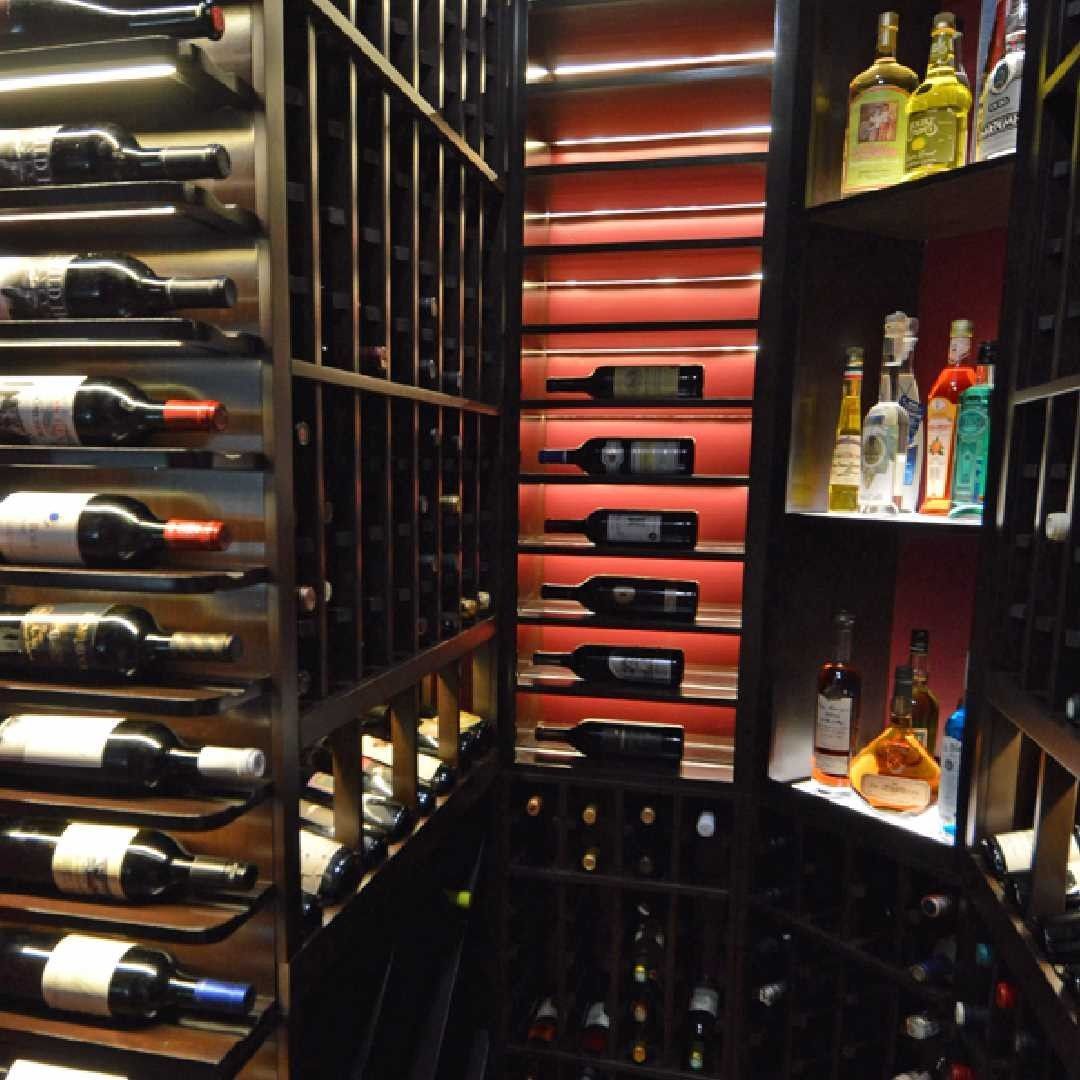
Design Elements
- Cooling system should have return air paths (air circulates in, cooled air comes back out)
- Racking should allow air to flow, not block circulation
- Avoid densely packed storage that traps air
- Avoid densely packed storage that traps air
Practical Approach
If your cellar has obvious dead spots — a corner where air doesn't reach, or a shelf blocked from airflow — a small fan is an easy fix. A simple 4-inch fan costs very little and can improve circulation significantly without any complex installation.
Door Openings
Frequent door openings temporarily disrupt temperature and humidity levels, but this is normal and actually beneficial. Air exchange prevents stagnation and keeps conditions fresh. An occasional door opening is nothing to worry about.
Prevention Strategy 3: Vapor Barrier Installation
This is a critical prevention step.
What It Is
A continuous plastic or foil layer placed on the warm side of insulation that prevents moisture from outdoor air migrating through walls into your cellar.
Correct Installation
The vapor barrier must be placed on the warm side of insulation — inside your home, not outside. It must be completely sealed with no gaps, sealed at all penetrations, including doors, cooling ducts, and electrical, and sealed to both the floor and ceiling.
Common Mistakes
Installing the barrier on the cold side of insulation, leaving gaps in the barrier, or failing to seal penetrations properly. Any of these errors compromises the entire system.
When Vapor Barrier Fails
Moisture infiltrates from outside, accumulates in the cellar, humidity rises, and mold grows. Most cellars with persistent mold problems trace back to a vapor barrier that was installed incorrectly.
Rectifying This
If your cellar has chronically high humidity that won't come down despite active dehumidification, vapor barrier failure is the likely cause. Fixing it requires professional inspection and, in most cases, reconstruction — removing walls to properly reinstall the barrier.
Concrete Wall Consideration
Basement concrete walls are porous and absorb moisture from the surrounding soil, which then evaporates into the cellar and raises humidity levels over time.
Solution
Seal concrete walls with an appropriate sealant — epoxy, polyurethane, or a specialized concrete sealer — to prevent moisture transmission. Combined with a properly installed vapor barrier on the insulation above, this addresses the moisture problem at its source.
Alternatively, building a new wall over the concrete — insulation, vapor barrier, and drywall — creates a fully sealed interior surface. This approach is more thorough but also more involved and expensive.
If Mold Appears: Treatment Approach
With proper maintenance, here's what you can expect:

01
Surface Mold (on Labels, Corks, Racking)
This is cosmetic and indicates a humidity problem, not imminent wine destruction.
02
Treatment
- Reduce humidity immediately (increase dehumidification, check vapor barrier)
- Wipe affected areas with dilute bleach solution (1 part bleach to 10 parts water) or white vinegar
- Dry thoroughly
- Address the underlying humidity problem
03
Mold in Walls or Insulation
This is more serious and indicates a structural moisture problem.
04
Treatment
- Professional assessment (mold inspection/testing)
- Address moisture source (vapor barrier, concrete sealing, dehumidification)
- May require wall removal and reconstruction if mold is extensive
- Professional remediation if mold is widespread
05
When to Call a Professional
- Mold keeps returning despite humidity control efforts
- Mold appears inside walls or insulation
- Visible moisture/condensation you can't control
- Musty smell persists despite humidity reduction
Don't ignore mold. It indicates an underlying problem that requires diagnosis and correction.
FAQ: Mold Prevention
Is mold dangerous to wine?
Mold on labels and corks doesn't penetrate sealed bottles, so the wine inside remains safe. That said, mold damages the bottle's appearance and — more importantly — signals an underlying humidity problem that needs to be identified and corrected.
Can I prevent mold completely?
In very humid climates, ongoing dehumidification is necessary, and mold prevention requires active management. That said, mold shouldn't be a recurring issue. Appearing once after a humidity spike, then not returning after correction, is normal. If it keeps coming back, your humidity control needs adjustment.
My basement always has high humidity. Can I cellar wine down there?
Yes, but active dehumidification is essential. Expect to run a dehumidifier seasonally or continuously, depending on your climate, and budget for it as part of your cellar design. Many basements successfully store wine long-term with proper dehumidification in place.
Should I use a dehumidifier continuously or seasonally?
It depends on your climate and baseline basement humidity. Dry climates may not need it at all. Humid climates typically do. Run it seasonally if humidity is a seasonal issue, and continuously if high humidity is persistent year-round.
Is mold remediation expensive?
Surface mold is inexpensive to address — cleaning with bleach or vinegar handles most cases. Structural mold requiring wall removal is a different matter entirely, potentially running into significant remediation costs. This is exactly why prevention and early detection are so important.
