
Wine Cellar Style Guide
Your wine cellar should reflect your home's aesthetic and your personal taste. We work with four primary style categories—Contemporary, Traditional, Transitional, and Rustic—and guide clients toward the right fit for their space.
Contemporary Wine Cellars
Contemporary design emphasizes clean lines, minimalism, and modern materials. Color palettes are typically neutral — whites, grays, and blacks — with occasional bold accents. Glass features prominently, and metal accents like brushed steel, chrome, and black chrome are common throughout. Storage is hidden or streamlined, with no decorative ornamentation — just functional beauty. The result is a cellar that feels sleek and uncluttered.
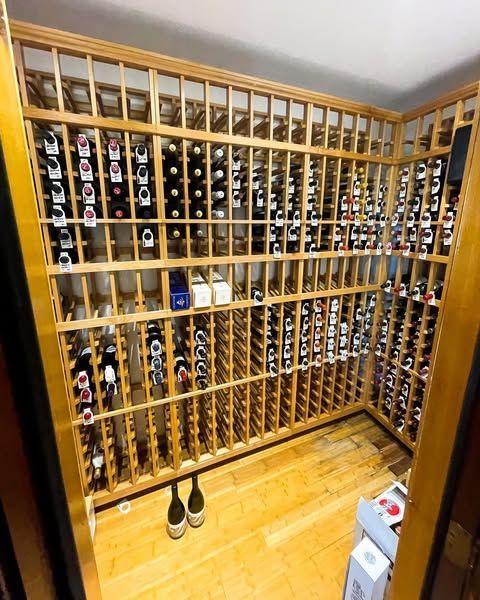
01
Materials for Contemporary
Metal racking systems — stainless steel, VintageView cable, ultra-peg — pair naturally with glass walls, polished concrete or tile flooring, and light-toned wood like Alder with a minimal stain. Frameless glass doors, recessed LED lighting, and RGB accent lighting complete the look.
02
When Contemporary Works
Modern homes, minimalist aesthetics, and collectors who want their cellar to feel tech-forward and clean. Our Hell's Kitchen installation at Harrah's is a strong example — acrylic racking, brushed steel ladder, and a design that is contemporary, functional, and visually striking.
03
Budget Consideration
Contemporary can be cost-effective since metal racking is often simpler than custom wood, but glass walls and smart lighting add meaningful expense. Premium contemporary builds incorporate high-end glass, sophisticated lighting systems, and precision engineering throughout.
Traditional Wine Cellars
Traditional design celebrates craftsmanship, classic proportions, and rich materials. Wood is the primary material, and decorative elements — arches, crown molding, detailed racking configurations — are valued rather than minimized. Color palettes are warm, running through mahogany, cherry, walnut, and knotty Alder in rich stains. Storage is displayed as craft, with beautiful racking serving as an aesthetic element in its own right. The result is a cellar that feels timeless and deeply sophisticated.
Materials for Traditional
Mahogany racking, Spanish cedar accents, glass-insert Barolo doors, stone or tile flooring, and decorative architectural elements like arches and display shelves, all lit with warm LED lighting. Our Mission Viejo project exemplifies this approach — knotty Alder racking with lacquer finish, an arched display area, Barolo door, and diamond bins that add visual interest throughout.
When Traditional Works
Classic homes, collectors who appreciate fine craftsmanship, and homeowners in established neighborhoods with traditional architecture. Traditional cellars often become gathering spaces rather than pure storage — destinations within the home that invite people to linger.
Budget Consideration
Traditional design typically requires quality wood materials and more complex racking configurations, placing it in the mid-to-premium budget range. The investment pays dividends in longevity — traditional design never goes out of style.
Transitional Wine Cellars
Transitional design blends contemporary and traditional elements — taking the simplicity of modern design and adding the warmth and character of traditional materials. Wood racking pairs naturally with glass walls and metal accents. Color palettes are neutral but warm. Proportions are clean but never stark. The result feels balanced: modern without being cold, classical without being ornate.
Materials for Transitional
Mixed wood — Redwood or Mahogany racking — combined with glass walls, metal-and-wood door designs, neutral tile or polished concrete flooring, and warm LED lighting with minimal decoration. Simple archways or clean structural elements add character without ornamentation.
When Transitional Works
Contemporary homes that want added warmth, collectors who value both form and function, and homeowners who want a cellar that complements multiple design styles. Transitional is increasingly popular precisely because it's versatile and ages well across changing design trends.
Budget Consideration
Transitional typically falls in the mid-range — delivering design sophistication and material quality without the premium costs of pure traditional woodwork or glass-heavy contemporary builds.
Rustic Wine Cellars
Rustic design emphasizes natural materials in their most honest form. Wood is often reclaimed or hand-finished, stone is rough or varied, and metal is rough-hewn or antique in character. Color palettes are earthy — warm browns, grays, and blacks. The aesthetic celebrates weathering and age rather than concealing them, creating a cellar that feels like a European wine cave: timeless and rooted in winemaking tradition.
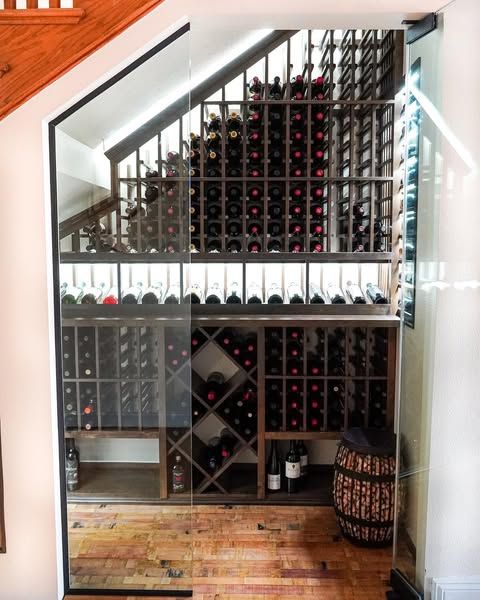
01
Materials for Rustic
Reclaimed wood racking, exposed or faux-stone walls, hand-forged metal details, rough tile or stone flooring, wrought iron doors, and warm amber or candlelight-style lighting. Barrel heads as architectural accents and naturally finished wood — rather than lacquered — complete the look.
02
When Rustic Works
Mountain or countryside homes, collectors inspired by European wine regions, and homeowners in adobe or stone construction who want the cellar to feel continuous with the home's existing aesthetic. Rustic cellars appeal to those who want a space that feels authentic and deeply historical.
03
Budget Consideration
Rustic can be surprisingly cost-effective — reclaimed materials are often less expensive than new premium wood, or genuinely premium when authentic reclaimed oak or heart pine is specified. The key is that materials feel honest, not artificially aged.
Choosing your cellar's style
A wine fridge is the right choice if:
- Look at your home's existing design. Does your home skew contemporary, traditional, transitional, or rustic? Your cellar should feel like it belongs to the same home.
- Consider the room where your cellar will live. A basement cellar might feel more rustic naturally. An upper-floor dedicated space might lean contemporary or transitional.
- Think about your personal collecting style. Do you see your cellar as project/collection storage (might suit contemporary), or as a gathering space/destination (might suit traditional)?
- Collect reference images. Save 10-15 cellar images you love, then notice what style they share. You'll probably gravitate toward one primary style.
- Discuss with your designer. Bring your reference images and home photos. A good designer will help you identify your style and execute it well.
If most of these apply, a quality 300-bottle wine fridge is practical and solves the problem. Stop overthinking it.
