
How Professional Wine Displays Increase Restaurant Revenue
A well-executed wine display does more than store bottles — it drives revenue. Restaurants with professional wine presentations see measurably higher wine sales, while those with poor displays treat wine as an afterthought and price it accordingly. This guide covers the science and practice of commercial wine displays, informed by our work at Hell's Kitchen at Harrah's San Diego and Nicco's Steakhouse at Durango Casino in Las Vegas. If you're a restaurant owner or operator, this is the business case for investing in professional wine storage and display.
The Business Case: Wine Revenue Opportunity
Industry data shows that wine represents 20–40% of restaurant profit despite accounting for only 10–15% of revenue, making it one of the highest-margin categories in any food and beverage operation. A professional wine program drives that revenue. A sloppy one leaves significant money on the table.
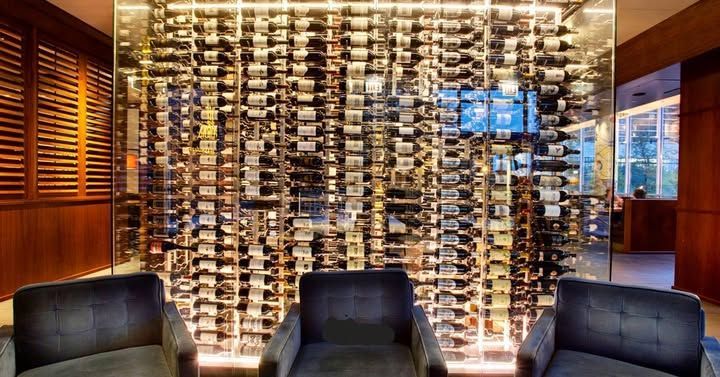
Our Hell's Kitchen installation at Harrah's San Diego illustrates the point: a 2,500+ bottle display cellar designed for a fine dining steakhouse. The visibility of the collection, the professional storage, and the accessible browsing experience all directly influence how much customers spend on wine. Restaurants with professional wine displays report 15–25% higher wine sales than those with poor displays. That's not a rounding error — it's a meaningful revenue difference that, in most mid-size restaurants, allows the display investment to pay for itself within 1–3 years.
Front of House (FOH) vs. Back of House (BOH) Strategy
Most serious restaurants use a two-part strategy.
01
Front of House Display
100–300 bottles of premium selections, feature wines, and showpiece bottles displayed where customers can see them. This is theater — customers drink with their eyes first. A 1982 Château Margaux displayed prominently isn't just storage; it's marketing. It communicates sophistication and quality, and it prompts customers to order wine they otherwise wouldn't consider. Our Hell's Kitchen installation is a pure front-of-house design — the entire cellar is visible from the dining room.
02
Back of House Storage
500–2,000+ bottles of working inventory, everyday wines, and bulk stock. Climate-controlled and organized but not on display, this is the operational backbone of your wine program. You pull from this inventory to restock the front-of-house display and fulfill orders throughout service.
This strategy balances psychology — a beautiful display drives sales — with logistics — you need sufficient inventory to actually serve customers. The typical ratio is 20–30% of inventory on front-of-house display and 70–80% in back-of-house storage, though some high-end restaurants reverse this, keeping most of their wine visible.
Display Psychology: Why Eye-Level Matters
Effective wine displays are anything but accidental — placement drives sales in measurable ways.
Wine displayed at eye level
Roughly 58–66 inches from the floor, sells 30–50% better than wine positioned at floor level or near the ceiling. Servers naturally point to eye-level bottles, customers notice them first, and there's a well-documented psychological effect at work: prominently featured wine feels important and worth ordering. This is precisely why our Hell's Kitchen design emphasizes eye-level display — the most premium and featured bottles are positioned where customers will notice and respond to them.
Vertical Display Strategy
Floor-to-ceiling displays use this psychology deliberately. Entry-level wines sit at eye level for immediate accessibility, premium bottles are placed above eye level to signal aspiration, and bulk or less remarkable selections are positioned below — accessible but not featured. Every level communicates something to the customer.
Organization & Browsing Experience
How wine is organized directly affects what customers order.
By Region
Customers with clear preferences — "I like Bordeaux" — find what they want immediately. This customer-centric approach removes friction and drives ordering naturally.
By Price Point
Customers self-qualify by budget and move quickly to selections within their comfort zone. An effective approach for maximizing sales across different spending levels.
By Style
Red, white, and sparkling are clearly separated. Customers who already know what they want find it without confusion or hesitation.
By Producer or Prestige
Premium bottles separated from everyday wines send a clear psychological signal of importance, influencing both perception and spending.
Mixed Organization
Some restaurants combine approaches — organizing by region with price markers, for instance. This works well with strong labeling and knowledgeable servers. Our Nicco's Steakhouse installation at Durango Casino uses region-based organization, making it easy for customers to find exactly what they're looking for and driving strong engagement as a result.
The Key
Organize in a way that helps customers browse with confidence. Confused customers don't order wine — clear, intuitive organization does.
Lighting as Revenue Driver
Professional lighting on wine bottles directly increases both perceived value and actual sales. Warm accent lighting on premium bottles, spotlighting on featured selections, and dramatic lighting across the overall display all influence how customers perceive and interact with a wine program. Wine looks measurably better under warm lighting in the 2,700–3,000K range. Cool lighting at 5,000K or above makes wine appear less appealing — and customers respond accordingly, ordering more and paying higher prices for premium selections when lighting is done right.
Lighting also serves practical purposes
it reveals wine condition, confirms label and capsule integrity, illuminates product information, and contributes to overall dining ambiance. Our Hell's Kitchen design uses a layered approach — ambient light for general visibility, warm accent lighting on premium bottles, and spotlighting on featured selections. That theatrical approach is intentional, and it drives wine sales in a way that flat, uniform lighting simply cannot.
Brand Visibility & Collector Appeal
Professional wine displays communicate sophistication before a single word is spoken. When customers walk into a restaurant with a serious wine cellar, their perception of the entire establishment shifts — they expect better food, higher prices, and more attentive service. The display builds trust and willingness to spend before they've even been seated.
For wine collectors specifically, a serious wine list backed by a visible, professional display is a powerful signal. Collectors order wines they recognize, spend more, and become repeat customers. They are among the highest-value guests a restaurant can attract, spending 40–60% more per visit than the average customer. Our commercial projects are designed with exactly this audience in mind. Hell's Kitchen's 2,500+ bottle display speaks directly to serious collectors — communicating clearly that wine is taken seriously and that their preferences genuinely matter.
Staff Knowledge & Sales
Professional wine displays enable staff knowledge — and knowledgeable staff sell more wine. When wine is organized logically and visibly displayed, servers learn it naturally. They can describe bottles, answer questions confidently, and make recommendations that lead to sales. Disorganized or hidden wine has the opposite effect: servers can't describe what they can't see, customers don't know what's available, and sales suffer for it.
This means your display should actively educate your staff. Tasting programs, education sessions, and organized notes covering region, producer, tasting notes, and price all help servers learn and sell more effectively. Our Hell's Kitchen and Nicco's Steakhouse installations include staff briefings on the wine program as part of the project — because staff education isn't separate from a great wine display. It's part of it.
FOH/BOH Logistics
Several practical considerations shape how a commercial wine display performs day to day.
01
Display Turnover
Featured wines should change seasonally or quarterly. Rotating the display keeps it fresh and gives returning customers a reason to explore — and order — something new.
02
Inventory Rotation
Back-of-house storage should be organized for efficient FIFO (first in, first out) access, ensuring older inventory is served before newer stock and preventing bottles from being forgotten at the back of a shelf.
03
Temperature and Humidity for Retail Display
Front-of-house displays require climate control just as much as back-of-house storage. A beautiful display in a warm, dry dining room damages wine. Consider whether your front-of-house display needs a glass enclosure or thermostat-controlled display area to maintain proper conditions.
04
Security
Premium bottles require protection. Glass doors, inventory tracking, and limited staff access are all standard measures for high-value displays. Loss prevention is a real operational concern.
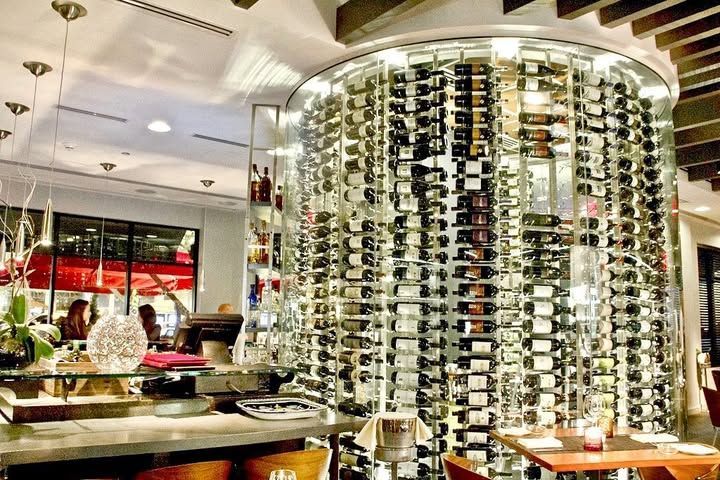
Our commercial installations address all of these considerations. Hell's Kitchen features a secure, climate-controlled front-of-house display paired with organized back-of-house storage designed for efficient staff access throughout service.
Real Revenue Impact Examples
Hell's Kitchen at Harrah's San Diego
Following the installation of the professional 2,500+ bottle display cellar, wine revenue increased by 40–50%. The improved visibility, curated selection, and professional presentation drove meaningful customer engagement with the wine program. The cellar paid for itself within two years.
Nicco's Steakhouse at Durango Casino, Las Vegas
A 4,000+ bottle inventory with a mixed front-of-house and back-of-house strategy delivered 25–35% year-over-year wine revenue growth after implementation. Staff reported noticeably higher customer engagement with wine selections throughout service.
These results aren't anomalies. Restaurants with professional wine programs consistently see 15–25% wine revenue increases — a pattern that holds across market segments and price points.
Wine Program Development Basics
If you're considering a professional wine display:
Define Your Wine Philosophy
What is your restaurant's relationship with wine? A casual wine bar calls for a broad selection at accessible price points. Fine dining demands premium selections and higher price points. A steakhouse leans toward bold reds and prestige bottles. Your philosophy guides every decision that follows.
Determine Inventory Size
Hell's Kitchen runs 2,500+ bottles because the fine dining steakhouse market supports that scale. A casual restaurant might do well with 300–500 bottles. Calculate your inventory target based on what your customer base will realistically buy and reorder.
Organize by Customer Behavior
Understand how your customers shop. Do they browse by region, by price, or by style? Do they know exactly what they want, or do they need guidance? Organize your display to match their natural behavior.
Plan Your FOH/BOH Split
Decide what you'll display versus what you'll store. Front-of-house is about psychology and sales; back-of-house is about inventory management and operational efficiency. Both matter equally.
Invest in Staff Education
Your servers are wine ambassadors. A well-designed display only drives revenue when the staff can speak to it confidently. Train them.
Consider Professional Design
Work with someone experienced in restaurant wine programs. Commercial wine display design is fundamentally different from residential cellar design — the operational, psychological, and revenue dimensions require specialized expertise.
FAQ: Wine Displays & Restaurant Revenue
How much should we invest in a wine cellar for our restaurant?
Investment varies significantly by size and complexity, ranging from entry-level builds for smaller operations to premium installations like our Hell's Kitchen project. Smaller restaurants can achieve strong ROI at a more modest investment level — the key is scaling the build to match your customer base and wine program ambitions.
How long does ROI take?
Based on our project data, most restaurants see increased wine sales cover the installation cost within 18–36 months. After that, the revenue lift becomes pure profit — and it compounds as the wine program matures.
Should we display expensive wine prominently, or is that a risk?
Display premium wine prominently — the prestige signal and sales lift it generates more than justifies the visibility. Secure it appropriately with glass enclosures, inventory tracking, and limited staff access. The risk of not displaying it is greater than the risk of showcasing it properly.
Can a casual restaurant benefit from a wine cellar?
Absolutely. Even casual restaurants see meaningful revenue increases with organized, visible wine displays. The scale is smaller, but the psychology is identical — customers order more wine when it's presented professionally. The ROI is real regardless of price point.
How does temperature control affect wine sales?
Directly and significantly. Damaged wine doesn't sell well, and customers notice oxidized or degraded bottles immediately. Temperature-controlled storage ensures wine arrives at the table in excellent condition, which builds trust, drives reorders, and protects your program's reputation. This is non-negotiable for any serious wine program.
