
Wine Cellar Materials & Finishes: A Complete Guide
Your wine cellar's materials shape both its aesthetics and its longevity. Wood, glass, metal, and stone each bring distinct properties and maintenance demands, and the finishes you choose — stain, lacquer, paint, or natural — directly affect both appearance and durability over time. This guide covers what works, why, and how to maintain each material across decades of use.
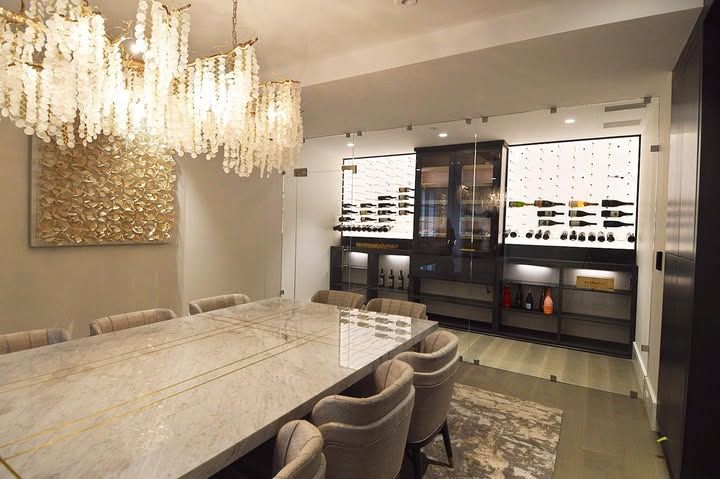
Wood Materials & Species
Spanish Cedar
The premium choice for wine cellar racking. Naturally rot-resistant, aromatic, and aging beautifully over time, developing a warm golden-brown patina that deepens with the years. Extremely durable at 30+ years with minimal maintenance required — occasional dusting and polishing is all it needs. A traditional choice for wine cellars and cigar storage worldwide.
Mahogany (Genuine)
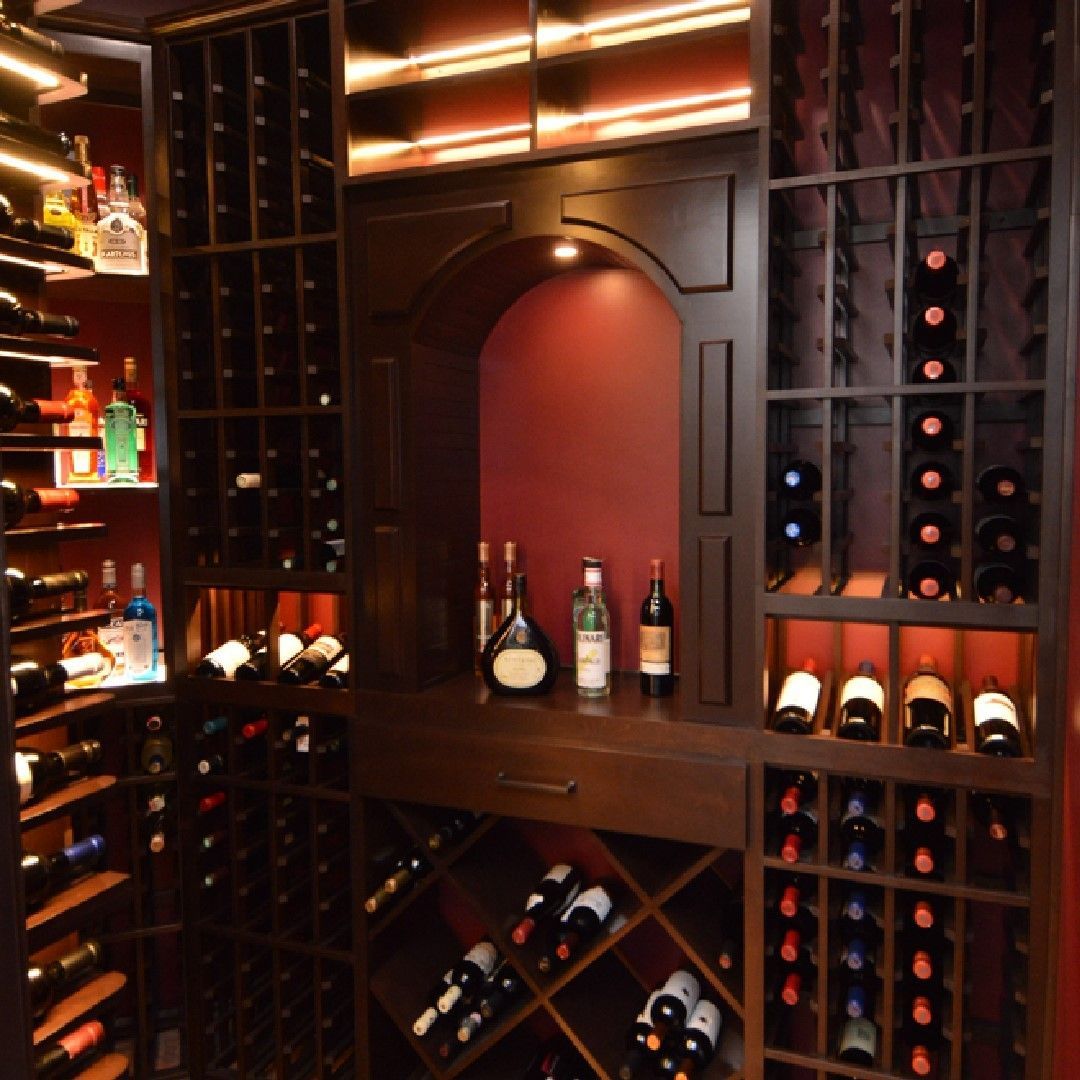
Deep brown-red in color and very durable at 25–30 years. Naturally resists rot and insects and ages beautifully with time. Slightly less expensive than Spanish cedar but comparable in quality and longevity. Our Mission Viejo cellar features mahogany racking that continues to perform beautifully.
Redwood (Premium/All-Heart)
Warm tan-brown with natural rot resistance and lighter weight than mahogany. Good durability at 20–25 years, particularly well-suited to dry climates. A step down in price from mahogany without a significant sacrifice in quality.
Alder
A light wood with prominent grain that offers decent durability of 15–20 years with proper finishing and sealing. More economical than premium hardwoods. Our Mission Viejo project uses knotty Alder to great effect as an alternative to higher-cost species.
Pine
Soft, affordable, and requiring heavy sealing to perform adequately. Lifespan of 10–15 years. Not recommended for cellars housing valuable collections, as wood degradation poses a real risk over time.
Reclaimed and Antique Wood
Salvaged barn wood and old-growth redwood offer sustainability and natural beauty with variable durability depending on the source. Premium pricing reflects the material's character and growing popularity among collectors who prioritize environmental considerations.
Glass for Wine Cellars
Why Glass
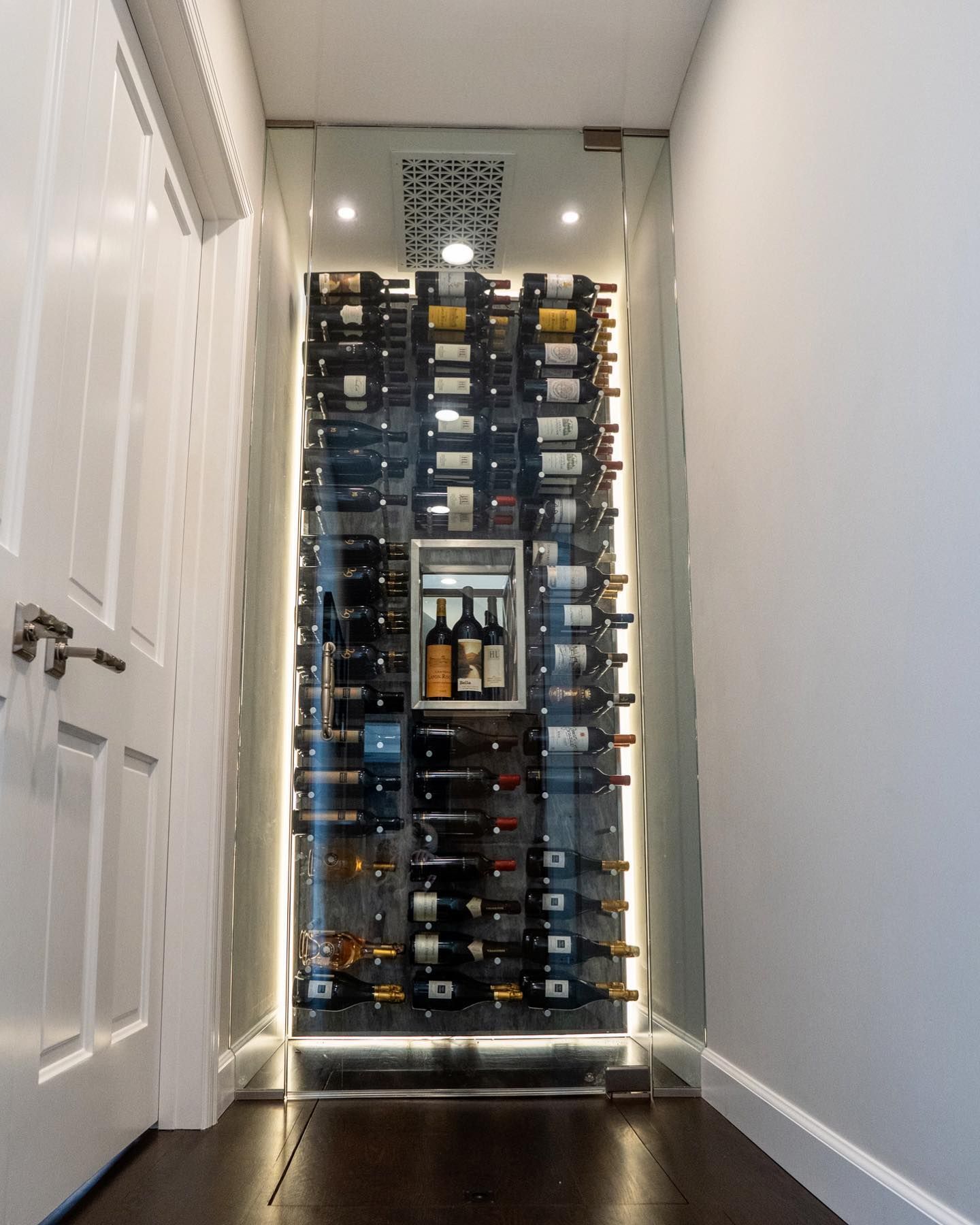
Glass walls offer visibility of the collection, allow temperature and humidity monitoring from outside the cellar, create visual drama, and showcase racking and bottles as an architectural feature.
Glass Types
Tempered glass provides safety by eliminating sharp splinters if broken. Dual-pane glass adds meaningful insulation. UV-blocking glass protects wine from light damage and is the preferred choice for any serious installation.
Considerations
Glass walls require precise climate control — condensation on interior glass is a direct signal of humidity issues. Frameless enclosures deliver a contemporary look; framed glass reads as more traditional. Both work beautifully when paired with the right interior design.
Maintenance
Clean glass regularly, as wine residue, dust, and fingerprints are highly visible. Use an appropriate non-abrasive glass cleaner to keep the display looking pristine.
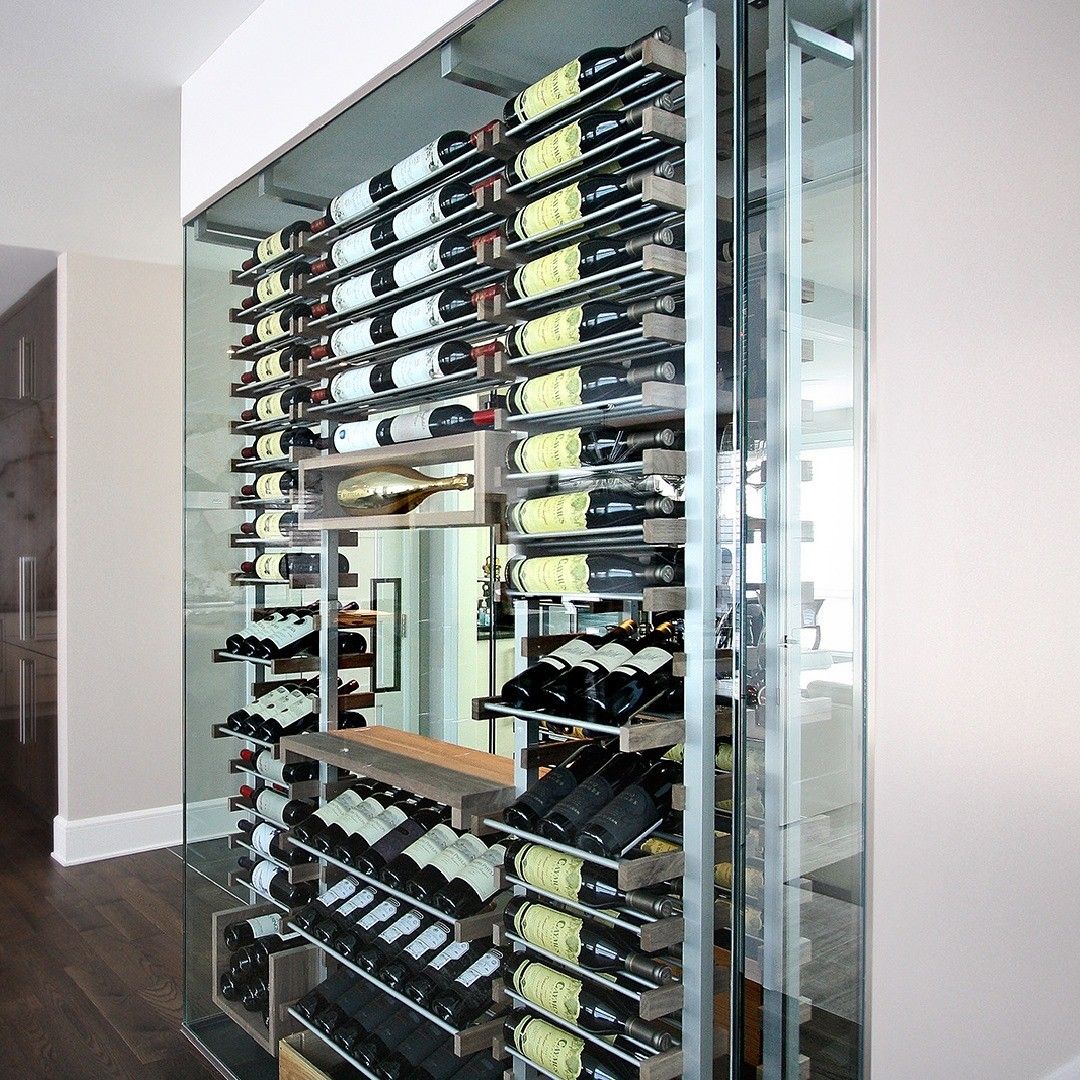
Our Manhattan Beach glass wall project demonstrates the full impact of a glass enclosure — warm wood racking visible through a clean, frameless surround. The contrast between the contemporary glass and the natural wood interior is striking.
Metal Materials
Stainless Steel
Bright, modern, and corrosion-resistant indefinitely. A premium material that pairs naturally with glass walls and contemporary design. Fingerprints are visible and require regular cleaning, but the overall maintenance commitment is minimal.
Chrome
Reflective and elegant with a lifespan of 15–25 years before eventual tarnishing. Can be refinished when needed. A classic contemporary choice that balances sophistication with accessibility.
Black Chrome
Dark and sophisticated, with a lifespan of 10–20 years before showing wear or darkening. Requires occasional polishing to maintain its appearance. A strong choice for contemporary luxury installations.
Powder-Coated Steel and Iron
Available in custom colors with a durable finish lasting 10–15 years. Coating can chip over time, exposing rust risk and requiring touch-up maintenance. A budget-conscious option that performs well when properly maintained.
Maintenance
Stainless steel needs only occasional cleaning. Chrome benefits from periodic polishing. Powder-coat finishes should be inspected regularly for chipping and touched up promptly to prevent rust.
Stone & Flooring
Stone Options
Granite is very durable and timeless. Marble is elegant but softer than granite and requires more care. Slate offers a rustic, durable character. Limestone is classic but softer and more susceptible to staining.
Tile
Porcelain or ceramic tile is practical, easy to clean, highly durable, and budget-friendly — one of the most common flooring choices in wine cellars for good reason.
Concrete
Polished or sealed concrete delivers a contemporary, industrial aesthetic with excellent durability and minimal maintenance requirements.
Wood Flooring
Cooperage and barrel-head wood, reclaimed wood, and standard hardwood all bring warmth and a traditional character to a cellar. All require thorough sealing and ongoing protection from moisture.
Flooring Considerations
Every flooring material in a wine cellar must be sealed against moisture — concrete, stone, and wood alike. Avoid porous materials that absorb condensation. Polished concrete and tile are the most practical choices, while wood works well with proper sealing and ongoing maintenance.
Finish Options
Lacquer (High-Gloss)
A shiny, protective finish with excellent durability that delivers a classic, traditional look. Shows dust and fingerprints but cleans easily. Our Mission Viejo Alder racking uses lacquer to create a warm, glossy effect. Maintenance: occasional dusting and polishing every 5–10 years.
Stain (Matte/Satin)
Enhances the natural wood color while emphasizing grain with a less reflective finish than lacquer. Durability depends on the sealer applied underneath. Maintenance: protect from spills and re-stain every 5–10 years if needed.
Paint (Custom Colors)
Allows any color and creates a contemporary aesthetic by intentionally concealing wood grain. Lasts 10–15 years before touch-ups are needed. Maintenance: monitor for chipping and touch up as required.
Natural (Unfinished)
Raw wood color with a rustic aesthetic and minimal built-in protection. Requires regular oiling or waxing to maintain its integrity and has a shorter lifespan without consistent care. High-maintenance but beautiful — works particularly well for reclaimed wood cellars.
Oil or Wax Finishes
Deliver a natural appearance with a tactile warmth that other finishes can't replicate. Require regular re-application annually or more frequently. Beautiful and increasingly popular for sustainable cellar builds, but among the more maintenance-intensive finish options.
FAQ: Wine Displays & Restaurant Revenue
How much should we invest in a wine cellar for our restaurant?
Investment varies significantly by size and complexity, ranging from entry-level builds for smaller operations to premium installations like our Hell's Kitchen project. Smaller restaurants can achieve strong ROI at a more modest investment level — the key is scaling the build to match your customer base and wine program ambitions.
How long does ROI take?
Based on our project data, most restaurants see increased wine sales cover the installation cost within 18–36 months. After that, the revenue lift becomes pure profit — and it compounds as the wine program matures.
Should we display expensive wine prominently, or is that a risk?
Display premium wine prominently — the prestige signal and sales lift it generates more than justifies the visibility. Secure it appropriately with glass enclosures, inventory tracking, and limited staff access. The risk of not displaying it is greater than the risk of showcasing it properly.
Can a casual restaurant benefit from a wine cellar?
Absolutely. Even casual restaurants see meaningful revenue increases with organized, visible wine displays. The scale is smaller, but the psychology is identical — customers order more wine when it's presented professionally. The ROI is real regardless of price point.
How does temperature control affect wine sales?
Directly and significantly. Damaged wine doesn't sell well, and customers notice oxidized or degraded bottles immediately. Temperature-controlled storage ensures wine arrives at the table in excellent condition, which builds trust, drives reorders, and protects your program's reputation. This is non-negotiable for any serious wine program.
Concrete Wall Consideration
Basement concrete walls are porous and absorb moisture from the surrounding soil, which then evaporates into the cellar and raises humidity levels over time.
Solution
Seal concrete walls with an appropriate sealant — epoxy, polyurethane, or a specialized concrete sealer — to prevent moisture transmission. Combined with a properly installed vapor barrier on the insulation above, this addresses the moisture problem at its source.
Alternatively, building a new wall over the concrete — insulation, vapor barrier, and drywall — creates a fully sealed interior surface. This approach is more thorough but also more involved and expensive.
If Mold Appears: Treatment Approach
With proper maintenance, here's what you can expect:
01
Surface Mold (on Labels, Corks, Racking)
This is cosmetic and indicates a humidity problem, not imminent wine destruction.
02
Treatment
- Reduce humidity immediately (increase dehumidification, check vapor barrier)
- Wipe affected areas with dilute bleach solution (1 part bleach to 10 parts water) or white vinegar
- Dry thoroughly
- Address the underlying humidity problem
03
Mold in Walls or Insulation
This is more serious and indicates a structural moisture problem.
04
Treatment
- Professional assessment (mold inspection/testing)
- Address moisture source (vapor barrier, concrete sealing, dehumidification)
- May require wall removal and reconstruction if mold is extensive
- Professional remediation if mold is widespread
05
When to Call a Professional
- Mold keeps returning despite humidity control efforts
- Mold appears inside walls or insulation
- Visible moisture/condensation you can't control
- Musty smell persists despite humidity reduction
Don't ignore mold. It indicates an underlying problem that requires diagnosis and correction.
FAQ: Mold Prevention
Is mold dangerous to wine?
Mold on labels and corks doesn't penetrate sealed bottles, so the wine inside remains safe. That said, mold damages the bottle's appearance and — more importantly — signals an underlying humidity problem that needs to be identified and corrected.
Can I prevent mold completely?
In very humid climates, ongoing dehumidification is necessary, and mold prevention requires active management. That said, mold shouldn't be a recurring issue. Appearing once after a humidity spike, then not returning after correction, is normal. If it keeps coming back, your humidity control needs adjustment.
My basement always has high humidity. Can I cellar wine down there?
Yes, but active dehumidification is essential. Expect to run a dehumidifier seasonally or continuously, depending on your climate, and budget for it as part of your cellar design. Many basements successfully store wine long-term with proper dehumidification in place.
Should I use a dehumidifier continuously or seasonally?
It depends on your climate and baseline basement humidity. Dry climates may not need it at all. Humid climates typically do. Run it seasonally if humidity is a seasonal issue, and continuously if high humidity is persistent year-round.
Is mold remediation expensive?
Surface mold is inexpensive to address — cleaning with bleach or vinegar handles most cases. Structural mold requiring wall removal is a different matter entirely, potentially running into significant remediation costs. This is exactly why prevention and early detection are so important.
