
Modern Wine Cellar Design Ideas & Current Trends
Wine cellar design has evolved far beyond simple racks in a basement corner. Today's cellars are showpieces — spaces that marry wine preservation engineering with thoughtful aesthetic design. This guide covers the trends reshaping residential and commercial wine cellars, from full-wall glass enclosures and smart home integration to materials that balance function with beauty.
Glass Walls & Transparency
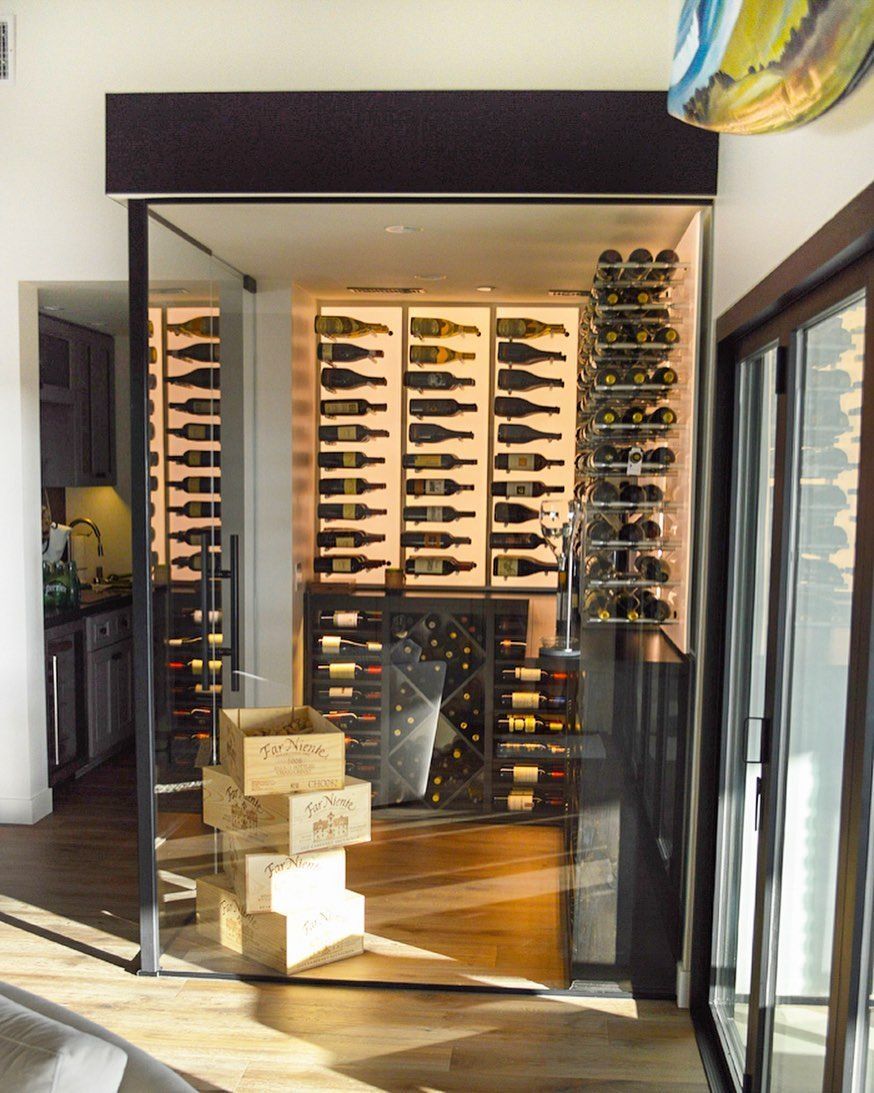
One of the strongest current trends is making wine cellars visible architectural features rather than hidden utilities. Glass walls allow your collection to function as an interior design element — transforming a cellar from a storage closet into a showpiece. We've built glass wall cellars in Manhattan Beach and other coastal homes where the cellar becomes the focal point of an entire room. Beyond aesthetics, glass serves a practical purpose: it allows temperature and humidity monitoring from outside the cellar and creates genuine visual drama. Modern frameless designs keep the look clean and contemporary. The trade-off is that glass requires precision in condensation management and careful installation — but when done right, the result is stunning. For serious collectors who want their collection on display, the premium cost is well worth it.
Smart Home Integration
Smart home integration has shifted from a luxury add-on to a baseline expectation in high-end wine cellars. Wine Guardian Pro Series cooling with Crestron, Nest, and Honeywell compatibility allows collectors to monitor temperature and humidity remotely, adjust controls from their phones, and integrate cellar climate management seamlessly into their home's smart ecosystem. RGB lighting with remote control is another growing feature — allowing you to adjust ambiance, set colors for entertaining, and create the right mood at the touch of a button. For collectors who want their cellar to feel as modern and connected as the rest of their home, these integrations are increasingly non-negotiable.
Mixed Materials & Architectural Complexity
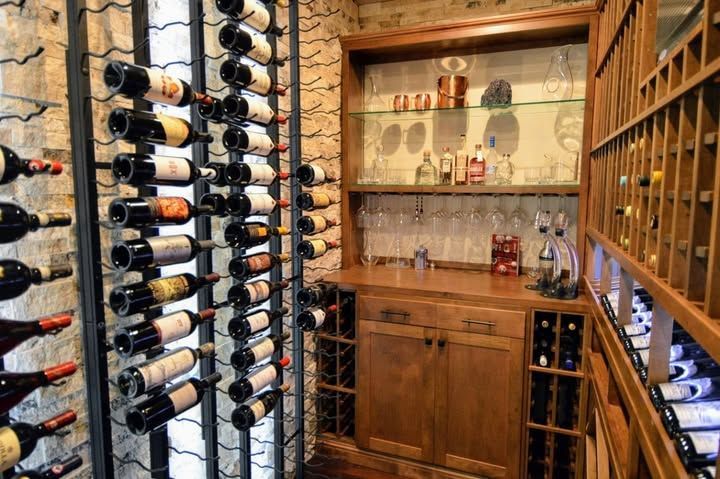
The trend away from all-wood cellars toward mixed materials is increasingly noticeable. Combining Spanish cedar or mahogany racking with glass walls, metal accents, and stone flooring creates visual depth and sophistication that a single material simply can't achieve. Our Mission Viejo project's knotty Alder arch with diamond bins demonstrates how functional elements can also serve as architectural statements. Contemporary designs mix wood, metal — stainless steel, black chrome — glass, and stone in ways that feel intentional rather than eclectic. Executed thoughtfully, this material blending is what separates exceptional cellars from merely adequate ones.
Functional Display Spaces
Today's cellars are moving beyond pure racking toward dedicated display shelves for featured bottles, tasting tables, decanting stations, and accent lighting on showcase selections. Our Hell's Kitchen installation at Harrah's San Diego demonstrates how thoughtful lighting and organization create genuine drama in a commercial setting. In residential cellars, the same principle applies — homeowners increasingly want a featured display area of 10–20 bottles with accent lighting, with the remaining collection organized in racking behind. This approach creates visual hierarchy and gives you a dedicated space to showcase the wines you're most proud of.
Lighting as Design Element
Professional lighting design is increasingly central to wine cellar aesthetics. Basic recessed lights are no longer enough. Current trends include LED accent lights highlighting racking and architectural features, programmable RGB lighting that adjusts color for different occasions, and dimmable systems that shift ambiance based on mood and time of day. The challenge is balancing adequate illumination for functionality with protection from excessive light, which can affect wine over very long aging periods. Quality cellars address this through layered lighting — ambient recessed lighting for general visibility, accent lights for focal points, and specialty lighting for display areas. Done well, it's an investment that transforms the entire experience of the space.
Temperature-Optimized Room Design
As climate control technology advances, cellar design is increasingly optimized around thermal efficiency. This means better insulation strategies — R-19+ ceilings, R-11+ walls — precise vapor barrier placement that prevents condensation, air circulation design that eliminates hot spots, and cooling system placement that maximizes operational efficiency. The result is a system that runs less frequently, costs less to operate, and lasts longer. It's a design trend you won't see visually, but it's fundamentally reshaping how professional cellars are built.
Cigar Humidor Integration
Integrating a climate-controlled cigar humidor space within a wine cellar is increasingly popular among collectors who appreciate both. Cigar storage requires slightly different humidity — 68–72% — compared to wine's ideal 60–70%, so careful planning is essential. This means either designing separate climate zones or finding an overlapping humidity range that works for both. When executed well, the combination creates a complete collector's sanctuary within a single thoughtfully designed space.
Sustainability & Natural Materials
There is growing interest in sustainably sourced materials and natural finishes among serious collectors. Reclaimed wood racking, sustainably harvested Spanish cedar, and water-based stains in place of polyurethane are increasingly common requests — choices that align with environmental values without compromising performance. These materials perform as well as their conventional counterparts while reflecting a broader movement toward sustainable luxury that is reshaping high-end home design.
