
Custom vs. Prefab Wine Cellars: Making the Right Choice
One of the first decisions you'll face is whether to build a custom wine cellar designed specifically for your space or invest in a prefabricated unit. Both have real advantages, and neither is inherently better — they're simply different solutions for different situations. This guide walks through the honest trade-offs so you can decide what makes sense for your space and goals.
What We Mean by Each Option
Custom Wine Cellar: A purpose-built wine storage space designed and constructed specifically for your home — whether a dedicated room, basement conversion, under-stairs installation, or closet transformation. You work with a designer to plan the space, select materials, configure racking, and install professional climate control. Timeline: 2–6 months, or longer for complex projects. Examples include our Mission Viejo knotty Alder cellar, Manhattan Beach glass wall installation, and Hell's Kitchen commercial cellar.
Prefabricated Wine Cellar (Wine Fridge): A self-contained cabinet unit designed to hold wine at the proper temperature and humidity. Sizes range from compact 50-bottle units to larger 500-bottle cabinets, delivered fully or semi-assembled and plugged into a standard electrical outlet. Timeline: delivered and installed within weeks. Typically available through appliance retailers.
Semi-Custom Kit Racks: The middle-ground option. Factory-made racking systems — not complete cellars — assembled or installed in an existing or newly constructed space. They offer meaningful customization in wood species, stain colors, and configurations without requiring full custom design. Timeline: 2–8 weeks, depending on installation complexity.
Detailed Comparison: 8 Key Criteria
Let's compare these options across what actually matters:
01
Custom Cellars
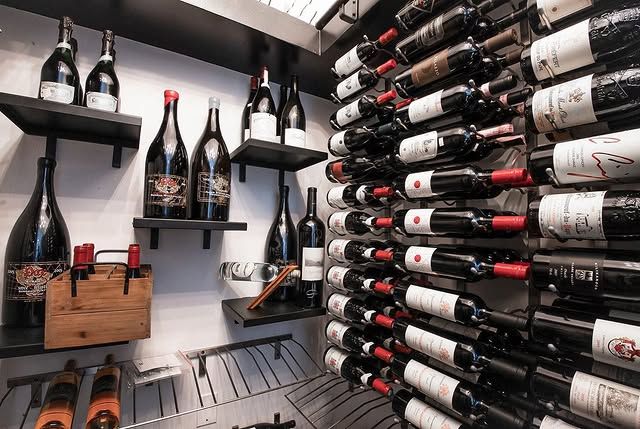
Custom builds maximize every square foot of available space. A 200 sq ft room can hold 1,500–2,500 bottles depending on configuration, with double and triple-deep racking dramatically increasing capacity. Because you're designing for your specific footprint, nothing is wasted.
02
Prefab Units
Compact but fixed. A 50-bottle wine fridge occupies roughly 2 sq ft of floor space; a 300-bottle cabinet takes 15–20 sq ft. You're limited to the dimensions and configurations the manufacturer offers, with no ability to expand into your surrounding space.
03
Semi-Custom Kits
The most modular option. Racking configurations can be tailored to your specific footprint — narrow walls, under-stairs spaces, or closet conversions — and capacity scales naturally with the space you have available.
04
Winner for Space Efficiency
Custom cellars (unlimited optimization) > Semi-custom kits (modular flexibility) > Prefab units (fixed size).
Climate Control Precision
Custom Cellars
You select a professional cooling system engineered specifically for your cellar's volume. Wine Guardian Pro Series ducted systems maintain 55°F ±1°F and 60–70% humidity with precision, and self-contained through-wall units are equally effective when properly sized. The system is designed around your space, not a standard template.
Prefab Units
Cooling is factory-designed and fixed. Many wine fridges maintain temperature within ±2–3°F, which is adequate for most purposes, though humidity control varies significantly between units — some handle it well, others fall short. The system cannot be upgraded or customized, though larger units generally perform better due to greater thermal mass and a more stable internal environment.
Semi-Custom Kits
Since you add your own cooling system — much like a custom cellar — climate precision is comparable, and you retain the ability to size and specify the system for your space.
Winner for Climate Precision
Custom cellars (purpose-designed cooling) ≈ Semi-custom kits (custom cooling) > Prefab units (factory-designed, variable quality).
Vibration & Noise Considerations
Custom Cellars
Professional cooling systems can be placed remotely — in an attic, garage, or basement — minimizing vibration and noise within the storage area. Ducted Wine Guardian and CellarPro units locate compressors outside the cellar entirely. Through-wall units like WhisperKOOL are in-space but designed for quiet operation. Overall, vibration is minimal.
Prefab Units
Self-contained units house compressors inside the cabinet, producing noticeable vibration and noise — anywhere from a quiet hum to an audible fan. Larger units tend to be quieter, but vibration transmission to shelving can still affect wine over time. If the unit is adjacent to a bedroom or quiet living area, you'll notice it running.
Semi-Custom Kits
Since these use the same professional cooling systems as custom cellars, vibration and noise characteristics are essentially the same.
Winner for Quiet Operation
Custom cellars (remote cooling) ≈ Semi-custom kits > Prefab units (vibration and noise are a consideration).
Flexibility & Expandability
01
Custom Cellars
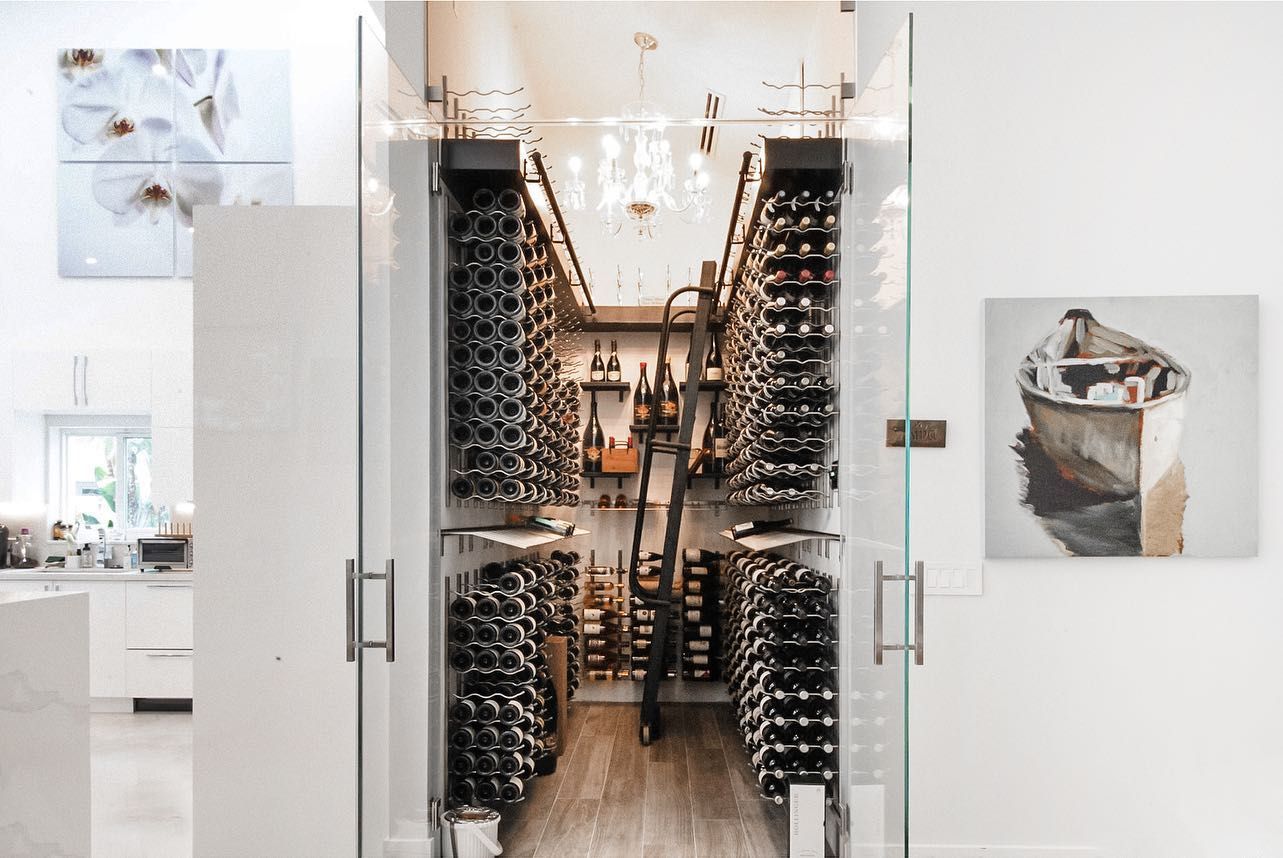
You can design with future expansion in mind from the start. Adding racking to new walls, running additional cooling capacity, or converting adjacent space are all possible — though they require reconstruction. Once built, you're somewhat committed to the configuration, but meaningful modifications remain an option.
02
Prefab Units
Zero flexibility. The cabinet is what it is. More bottles mean buying another cabinet. Better cooling means replacing the unit entirely. Lighting options are limited. You're accepting the design as delivered, with little room to evolve.
03
Semi-Custom Kits
Modular systems offer some expansion potential — adding racking to new walls, for instance — though flexibility depends entirely on the specific kit design and how the initial installation was planned.
04
Winner for Future Flexibility
Custom cellars (can be designed with expansion in mind) > Semi-custom kits (some modularity) > Prefab units (zero flexibility).
Material & Design Quality
Custom Cellars
Every material is your choice — Spanish cedar racking, mahogany cabinetry, glass enclosures, custom doors like the glass-insert Barolo door in our Mission Viejo project, professional lighting, and architectural detailing throughout. The result feels fully integrated into your home and reflects the luxury finishes surrounding it.
Prefab Units
Materials are factory-standard — you get what the manufacturer designed. Many are perfectly functional, but none feel custom or integrated into a home's architecture. They look like what they are: appliances. You're paying for convenience, not aesthetics.
Semi-Custom Kits
Material choices vary by kit and typically include wood species, stain colors, and finish options. More flexibility than prefab, but less than full custom design.
Winner for Design & Materials
Custom cellars (unlimited material choices) > Semi-custom kits (material options within kit system) > Prefab units (factory-standard only).
Timeline & Installation
Custom Cellars
The longest timeline of the three options — typically 2–6 months for design and construction, sometimes longer for complex builds. Coordination between designers, builders, electricians, and HVAC contractors is required, and your home will experience some construction disruption. From decision to opening day, expect to wait.
Prefab Units
The fastest option by far. Order online or from a retailer, receive delivery in 2–4 weeks, plug it in, and you're done. For someone who needs storage quickly or is planning a move, this speed is genuinely attractive.
Semi-Custom Kits
A middle-ground timeline of 4–12 weeks, depending on whether you're having the system professionally installed or assembling it yourself.
Winner for Speed
Prefab units (weeks) > Semi-custom kits (1-3 months) > Custom cellars (3-6+ months).
Installation Expertise Required
01
Custom Cellars
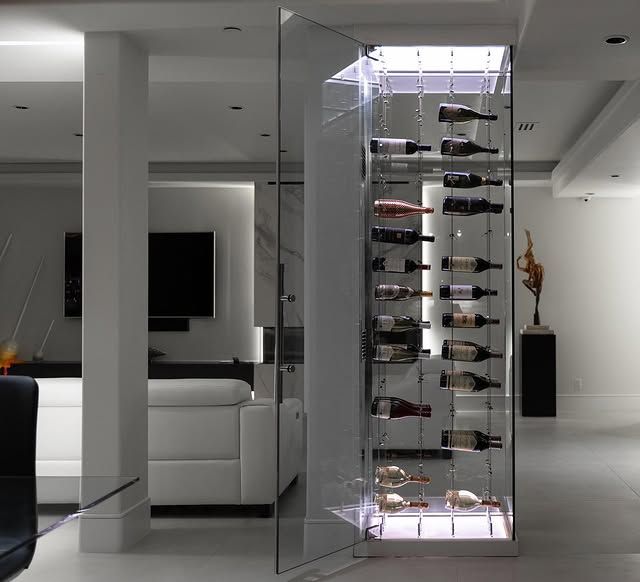
Requires coordination across multiple trades — designers, builders, electricians, and HVAC contractors who all understand wine cellar specifics: insulation, vapor barriers, cooling integration, and humidity management. This is not DIY-friendly territory, and hiring the wrong contractors is where costly mistakes happen.
02
Prefab Units
Plug and play. No expertise required. Unbox, position, plug in, done. Your electrician only needs to provide standard 110V service — no specialized knowledge necessary.
03
Semi-Custom Kits
Modular systems offer some expansion potential — adding racking to new walls, for instance — though flexibility depends entirely on the specific kit design and how the initial installation was planned.
04
Winner for Future Flexibility
Custom cellars (can be designed with expansion in mind) > Semi-custom kits (some modularity) > Prefab units (zero flexibility).
Long-term Cost & Maintenance
Custom Cellars
Higher upfront investment, ranging from targeted residential to full-scale luxury, depending on scope. Maintenance includes cooling system servicing, filter cleaning, and Cachet's three service tiers — the 40-day check, 6-month interim service, and 12-month full service. Cooling systems last 15–20 years when properly maintained, and racking lasts indefinitely. The total cost of ownership is substantial but spread across many years.
Prefab Units
Lower upfront cost for quality units, with minimal ongoing maintenance — mostly keeping vents clear. However, wine fridge compressors eventually fail, with an average lifespan of 8–12 years. Repairs are often expensive, and replacement becomes inevitable. Over 30 years, you may purchase 2–3 units. A custom cellar, by contrast, is maintained once over that same period and outlasts all of them.
Semi-Custom Kits
Medium upfront investment at the residential level. Maintenance mirrors that of custom cellars since professional cooling systems are used, and longevity is similarly high.
Winner for Design & Materials
Custom cellars (highest upfront, lowest 30-year cost) > Semi-custom kits > Prefab units (lower upfront, higher 30-year cost due to replacement cycles).
Real Estate Agent Perspective
Prefab units are genuinely the right choice in several situations:
- You have 50–150 bottles and limited space — small collection, apartment living, or no room for a dedicated cellar
- You're renting and can't make permanent improvements to the space
- You're planning to move within 2–3 years and don't want to invest in a permanent installation
- You want wine storage without coordinating a months-long construction project
- Your needs are simple — proper temperature storage with no design aspirations
- You want to explore wine collecting before making a major financial commitment
- You have a guest house or office that could use wine storage, but doesn't justify a full cellar
In these situations, a quality wine fridge from a reputable manufacturer is practical, solves the problem, and is perfectly appropriate. Don't apologize for the choice — it's the right answer for your situation.
When Custom Cellars Make Sense
Custom wine cellars are the right choice when:
- You have 300+ bottles and plan to grow your collection
- You're staying in your home long-term (5+ years minimum)
- Your collection is valuable enough that precise climate control matters
- You want the cellar to feel like a designed space, not an appliance
- You have the space to dedicate to a proper installation
- You want professional climate control with smart home integration
- You care about the experience of opening a beautiful wine room, not just storing bottles
- You want a space that's integrated into your home's architecture and design
- You're willing to invest upfront for a system that lasts 30+ years.
If most of these resonate with you, a custom cellar is worth the project and timeline.
When Semi-Custom Kits Make SenseDecision Framework
Semi-custom kits fill the middle ground:
- You have 200-500 bottles
- You want more design flexibility than a prefab unit but less complexity than full custom
- You have a specific space (closet, under stairs, basement wall) that calls for custom racking
- You want material choices (wood species, finishes) without full architectural design
- You're willing to invest in a substantial project, high-end residential, in wine storage
- Timeline: 4-12 weeks is acceptable
Semi-custom kits are increasingly popular because they hit a practical middle ground: more personal than prefab, faster and less expensive than full custom.
Decision Framework
This is paragraph text. Click it or hit the Manage Text button to change the font, color, size, format, and more. To set up site-wide paragraph and title styles, go to Site Theme.
How many bottles are you storing or planning to store?
- Fewer than 100: Prefab is likely sufficient
- 100–300: Consider a semi-custom kit or small custom cellar
- 300+: A custom cellar or high-capacity semi-custom kit is fully justified
Prefab Units
- 0–2 years: Prefab — it's portable and practical
- 2–5 years: Semi-custom kit
- 5+ years: Custom cellar — the long-term commitment makes the investment worthwhile
How important is aesthetic and design integration?
- Not a priority: Prefab
- Somewhat important: Semi-custom kit
- Very important: Custom cellar
How important is aesthetic and design integration?
- Not a priority: Prefab
- Somewhat important: Semi-custom kit
- Very important: Custom cellar
How important is climate control precision?
- Adequate is fine: Prefab, especially larger units
- Precision is critical: Custom cellar with professional cooling
What is your budget tolerance?
- Modest budget: Prefab or small semi-custom kit
- Mid-range budget: Semi-custom kit or small custom cellar
- Higher budget: Custom cellar
If your answers lean toward more bottles, a longer stay, design that matters, precision cooling, and a higher budget, custom is your answer. If they lean toward fewer bottles, a shorter timeline, simpler design needs, and a tighter budget, prefab or semi-custom makes more sense.
A Note on Cachet's Approach
We specialize in custom and semi-custom wine cellars — not prefab units. We focus here because we believe in purpose-built solutions that integrate wine storage seamlessly into your home and lifestyle. That said, we'll be honest: not every situation calls for a custom build. If a wine fridge genuinely meets your needs, buy a good one. What we can promise is that when you're ready to build a proper cellar, we'll design something that works beautifully in your space, uses materials you love, and keeps your wine in perfect condition for decades.
