
Framed Glass Doors: Design Flexibility Meets Functionality
Framed glass doors sit between frameless minimalism and solid traditional doors. A decorative frame (wood, iron, or steel) surrounds glass panels, creating visual interest, design flexibility, and the ability to customize architectural details. The Mission Viejo Barolo door we reference throughout is a framed glass design: an arched wooden frame with beveled glass panels creating a sophisticated, traditional aesthetic. Framed glass doors allow endless customization: panel configurations (single large pane, beveled four-panes, geometric patterns), frame materials and finishes, hardware details (handles, hinges, decorative elements), and architectural details (arches, moldings, custom shapes). If you want both visibility and design expression—if you want your door to be a feature, not just an entrance—framed glass is the answer.
Framed Glass: Design Expression Within Function
Framed glass doors are the designer's choice because the frame itself becomes the design element while the glass provides functional visibility. A simple wood frame creates traditional elegance; wrought iron delivers dramatic artistic impact; steel reads as contemporary strength; beveled glass adds formal sophistication; clear glass with geometric muntins introduces architectural interest. The possibilities extend well beyond a standard rectangle — arches, circles, half-moons, and custom shapes are all achievable. Wood species, finishes, and decorative hardware all offer further opportunities for personalization. A framed glass door is a bespoke design element, which is precisely why many collectors prefer it: the door reflects their aesthetic vision rather than a standard product.
Frame Materials: Wood, Iron, and Steel
01
Wood Frames
Mahogany, alder, oak, or walnut — warm, traditional, and classic. The frame can be stained to match cellar racking or painted for contrast. Wood requires periodic seal maintenance in humid cellars to prevent water absorption. Recommended for traditional and transitional aesthetics.
02
Wrought Iron Frames
Artistic, dramatic, and substantial. Hand-forged iron creates a sculptural presence suited to Mediterranean, Spanish, or eclectic cellars. Durable and low-maintenance, it develops a natural patina over time. The hand-forging process makes these among the more premium framed options.
03
Steel Frames
Contemporary, minimal, and structurally strong. Steel is lighter than iron, cleaner architecturally, and works beautifully in modern cellars. Powder-coated finishes in black, bronze, or metallic tones are durable and low-maintenance, with costs varying by complexity.
Glass Panel Configurations and Style
Single Large Pane
One piece of clear glass in the frame — maximum visibility, clean aesthetic, and elegant simplicity in its most straightforward form.
Beveled Glass
Angled edges that refract light into subtle rainbows, adding formal sophistication and optical interest. A classic choice for traditional cellars. The bevels create slight light distortion, reducing clarity somewhat, but the elegance is undeniable.
Geometric Muntins
Wrought iron with scrollwork, ornamental hinges, and decorative hardware. A vintage aesthetic that complements period homes and formal traditional cellars.
Industrial-Artistic
The traditional window-pane effect, with glass divided into smaller panes by a grid of muntins. Four, six, or nine-pane patterns are common, with custom configurations available. Adds architectural interest and the impression of traditional craftsmanship.
Frosted or Textured Glass
Opaque panels that maintain the design expression of a framed door while providing privacy. Often paired with clear sections for selective visibility.
Mixed Materials
Doors combining glass with wood or iron panels — upper glass for display, lower solid panels for privacy — offer a practical balance of openness and enclosure.
The Mission Viejo Barolo Door: Framed Glass Excellence
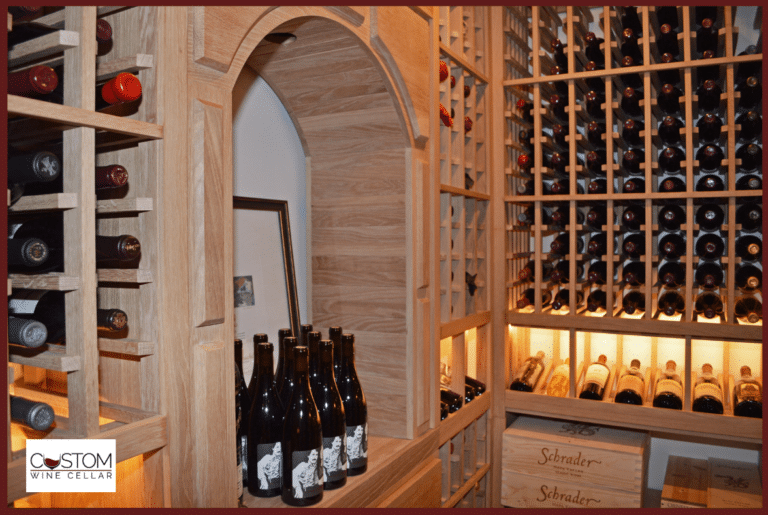
The Mission Viejo cellar features a bespoke Barolo-style framed glass door: an arched wooden frame in natural wood with a clear coat finish, fitted with beveled glass panels. The arch transforms what would otherwise be a rectangular opening into an architectural focal point. The natural wood frame matches the cellar's alder racking, creating visual cohesion throughout. Beveled glass panels refract light softly — formal, subtle, and impressive. The door makes a clear statement before a single bottle comes into view.
The engineering is equally considered: the wood frame is sealed for the cellar environment, the beveled glass is tempered for durability, the threshold is designed for a perfect seal, and the hardware complements the arch and finish. The door is the focal point of the entire cellar — and at its price point, it earns that role. That is framed glass at its best.
Insulation and Sealing: Framed Doors' Tradeoff
Framed glass doors with traditional frames offer lower insulation than thick metal doors — typically R-4 to R-6 versus R-8 to R-10. When properly sealed, however, they perform acceptably. A half-inch wooden frame around glass provides approximately R-4, which requires R-19 wall insulation to compensate, a correctly sized cooling system, and perfect threshold sealing. When all three are optimized, framed glass works beautifully. If any one of them is compromised, problems follow. This is why framed glass doors require careful integrated design — they cannot be specified independently of the walls and cooling system around them.
When Framed Glass Is the Right Choice
Framed glass is the right choice if you want the visibility of glass combined with the design expression of a custom frame — and if you want the door itself to function as an architectural feature rather than simply an entrance. It suits traditional, transitional, and eclectic cellars where craftsmanship and custom details matter. Go in prepared to integrate door selection with cooling system sizing and wall insulation, and to commit to periodic frame maintenance. For collectors who want a door that makes a statement and reflects a distinct aesthetic vision, framed glass delivers.
FAQ: Framed Glass Door
How long do custom framed glass doors take to fabricate?
8-16 weeks, depending on frame complexity. Standard designs (4-pane beveled in wood frame): 8 weeks. Arched doors, hand-forged iron, or specialty glass: 12-16 weeks. Plan accordingly in your project timeline.
Can I replace the glass in a framed door later if it breaks?
Yes — replacing glass is simpler than replacing the entire door. Professional glaziers can remove and reinstall glass while preserving the frame intact. The cost varies by glass type, but repair is almost always worth it over full door replacement.
Do wood-framed doors warp in humid cellars?
Quality wood frames with properly sealed finishes resist warping well. Softwoods like pine are more susceptible; hardwoods such as mahogany, oak, and alder perform considerably better. Proper sealing is essential, and we specify frames engineered specifically for humid cellar environments.
What's the difference between beveled and clear glass?
Beveled glass has angled edges that refract light, creating subtle rainbows and a more formal appearance. Clear glass is optically transparent and reads as more modern. Both are equally durable when tempered — the choice is purely aesthetic.
Can I have a framed glass door with an arched or curved top?
Yes — arched doors are beautiful and fully achievable through custom fabrication. They carry a price premium and longer lead times of 12 to 16 weeks. The Mission Viejo project is a good example of what's possible.
