
Wine Lockers: Individual Climate-Controlled Storage
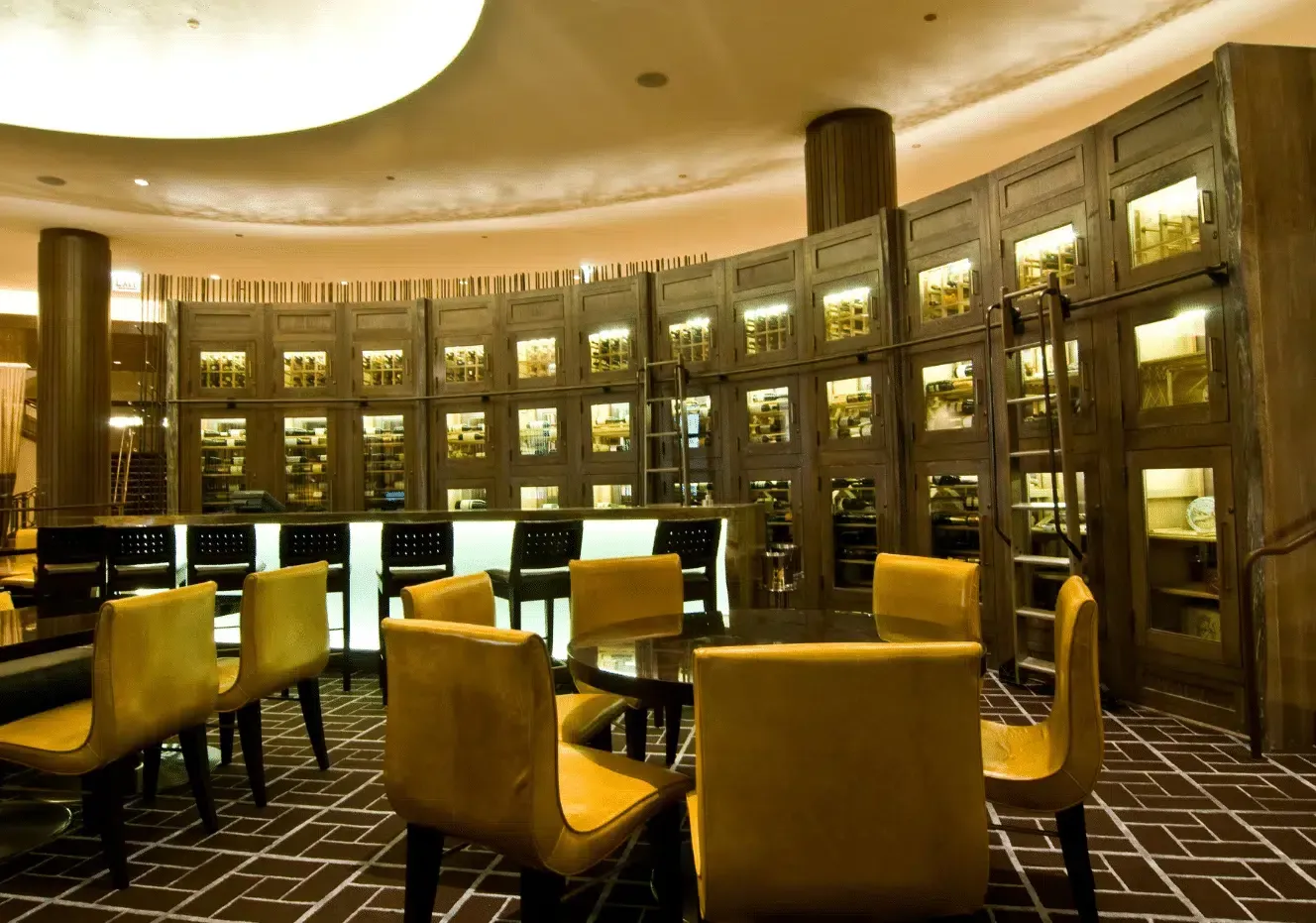
Wine lockers provide individual climate-controlled storage for guests and members. At Cachet Wine Cellars, we've designed locker programs for country clubs, high-end restaurants, private clubs, and hospitality venues. Brae Burn Country Club offers wine lockers to members—a service that creates loyalty and recurring revenue.
Why Wine Lockers Create Value
STAGE
01
Individual Wine Collectors
Serious collectors face a fundamental home storage challenge: seasonal temperature swings damage wine. Summer heat expands wine and raises cork pressure; winter cold contracts it and can break cork seals entirely. Consistent 55°F year-round is what wine requires, and most homes simply cannot deliver it. Professional wine locker storage does.
STAGE
02
Country Club Integration
Country clubs attract serious wine enthusiasts by offering premium locker programs that go beyond simple storage. Brae Burn Country Club in Cleveland pioneered this model, attracting collector members willing to pay a meaningful annual fee for dedicated climate-controlled storage alongside access to the clubhouse wine program, member events, and sommelier guidance. The wine locker membership becomes a premium tier in its own right — drawing high-net-worth members and generating annual locker revenue that returns the installation investment within twelve months.
STAGE
03
Why Collectors Choose Wine Lockers
Professional wine locker storage addresses the vulnerabilities that home storage cannot. Seasonal temperature swings damage wine irreversibly; professional climate control — maintained at proper temperature and 65 percent humidity — eliminates that risk entirely. Expensive bottles warrant security that most homes can't provide, and segregation from household activity means children, pets, renovations, and moves never threaten the collection. Inventory management systems help collectors track holdings and plan acquisitions, while organized access means any specific bottle can be located immediately, without searching through disorganized storage.
STAGE
04
Restaurant Integration
Premium restaurants attract serious diners by offering wine locker memberships that turn the restaurant into a personal extension of the cellar. Members maintain their own collections on-site, bringing favorite bottles to dinner and having them served by the sommelier — a level of personalization that creates a genuine connection between guest and venue. Members visit more frequently to enjoy their collections, and that loyalty translates directly into revenue that justifies the installation cost many times over.
STAGE
05
Resort & Hotel Applications
International travelers and vacation home owners benefit from wine locker services that eliminate the hassle of transporting bottles between visits. Wines are stored in perfect conditions between stays, ready for service the moment the guest arrives. For luxury resorts, this is precisely the kind of effortless, personalized detail that justifies premium positioning and keeps members coming back.
STAGE
06
Revenue Model Economics
Wine locker programs generate recurring revenue that justifies the installation investment. Country clubs charge annual membership fees per locker; restaurants charge monthly; resorts fold locker access into elite loyalty tiers. Across 30 to 50 lockers, the per-unit fees accumulate into a sustainable revenue stream, with installation costs typically recovered within the first year or two. Additional revenue from tastings, events, and sommelier consultations extends total returns well beyond the locker fees themselves.
Locker Design & Specifications
STAGE 1
Locker Size Standards
Standard lockers measure 24"W x 36"H x 24"D and accommodate around 60 bottles; premium lockers at 48"W x 36"H x 24"D hold 100 or more; and extra-large units at 48"W x 60"H x 30"D serve serious collectors with 200-plus bottle collections. Installation design balances space availability, member demand, and revenue targets — compact spaces suit wall-mounted vertical units, while larger footprints can accommodate island arrangements that create a more intimate lounge aesthetic.
STAGE 2
Lock Types & Security
Individual locker security ranges from traditional steel padlocks to electronic keypad locks with audit trails to biometric systems using fingerprint or RFID technology. Cost increases accordingly across the three tiers, and member expectations should drive the selection — premium clubs can justify biometric systems, while a casual restaurant setting is well served by traditional locks.
STAGE 3
Interior Design Materials
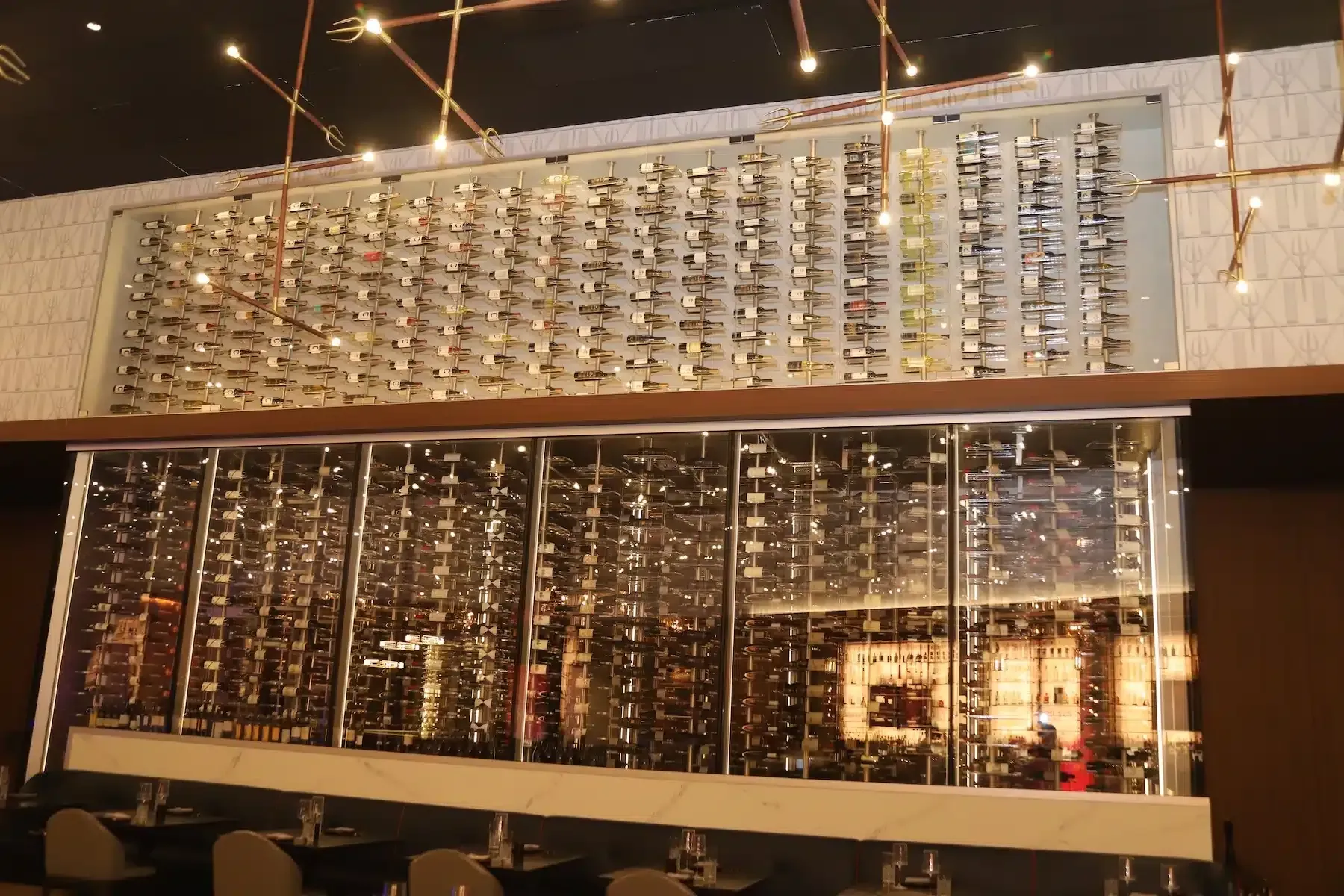
Locker doors range from solid wood — walnut, oak, or mahogany selected for grain and finish — to glass-front panels that showcase the collection while maintaining security, to wire mesh that balances visibility with ventilation. Mixed designs combining solid lower panels with glass uppers offer both security and visual interest. Shelving follows a similar logic: horizontal storage maintains optimal cork contact, angled racks add visual appeal, and adjustable shelving accommodates varied bottle sizes. Each choice shapes both the aesthetic and the functionality of the installation.
STAGE 4
Climate Control Architecture
Climate control options range from a central system serving the entire locker bank — the most cost-effective approach — to individual thermostats per locker offering maximum member control, to zoned systems maintaining separate temperatures for reds, whites, and Champagne. Individual climate control commands a premium but justifies higher pricing, particularly for members managing mixed collections who value granular control. Humidity is equally critical: a target of 65 percent prevents cork drying, and monitoring systems alert property management the moment conditions drift outside the acceptable range.
STAGE 5
Configuration & Layout
Wall-mounted units maximize space efficiency in compact locations; floor-mounted lockers create more impressive visual displays suited to prominent areas. Bank arrangements — four to six units wide, three to four tall — project a professional, organized appearance. Circular arrangements create a more intimate club atmosphere. Some installations feature transparent display lockers at entrance level, with member lockers above, giving visitors an immediate sense of the program's scope before they even approach their own unit.
STAGE 6
Capacity Planning
Installation capacity should be calibrated to space availability, member demand, and revenue targets. Small installations of around 10 lockers generate a modest recurring stream; medium installations of 20 to 30 lockers produce sustainable revenue; larger programs of 50 or more lockers generate significant returns. Overdesigning wastes space; underdesigning leaves revenue unclaimed. Phased installations offer the most flexible path forward, allowing capacity to expand as member demand grows.
Installation & Operations
STAGE
01
Brae Burn Country Club
A wine locker program creates loyalty through genuine member value — collections stored safely, service that competitors can't match, and a membership benefit worth renewing. Annual fees generate reliable revenue, and continued expansion is the clearest sign the program is working.
STAGE
02
Fine Dining Restaurants
High-end establishments offering wine lockers to preferred customers create a loyalty loop that benefits both sides. Members feel valued and return more frequently to enjoy their collections; the property gains reliable storage revenue and the deeper guest relationships that come with it.
STAGE
03
Hotels
Guest wine lockers attract travelers with serious collections and give them a compelling reason to return — their collection is waiting. The service commands premium pricing and adds meaningfully to hotel profitability.
A professional locker program should extend beyond storage into a genuine member experience. A lounge area adjacent to the lockers encourages members to linger, socialize, and engage with their collections. Comfortable seating, ambient lighting, proper temperature control, and wine accessories — glasses, decanters, bottle openers — set the tone. Premium installations add a tasting bar where members can sample before taking bottles home. The lounge investment pays off through member satisfaction, longer visits, and additional food and beverage sales generated by guests who might otherwise have come and gone.
STAGE
04
Security & Access Control
Wine locker programs require serious security infrastructure. Surveillance cameras monitor common areas; electronic locks, keypads, or biometric systems control individual locker access; and audit trails log every entry. Staff presence during business hours adds another layer, while extended key card access accommodates serious collectors who need to reach their collections after hours. Together, these measures give members genuine confidence that their collections are protected from theft, damage, and environmental risk.
STAGE
05
Maintenance & Monitoring
Successful programs are built on consistent maintenance. Monthly inspections verify cooling performance, humidity levels, and security systems. Staff are trained in climate control troubleshooting, and redundant cooling and backup power eliminate single points of failure. Monitoring systems alert staff immediately when conditions drift, and proactive communication with members about system status builds the confidence that keeps them renewing. The annual maintenance budget is modest relative to the collection values it protects.
Revenue & Business Model
Pricing
Annual fees vary by locker size, location, and market positioning. Hospitality venues typically command higher rates than clubs, and premium markets support premium pricing across the board.
Scalability
A 100-locker program generates meaningful annual revenue; a 200-locker program generates substantially more. Most programs recover installation costs within two to three years, after which ongoing operational costs — cooling system maintenance and access management — are minimal, making the recurring revenue highly profitable.
Member/Guest Benefits
Wine lockers create membership value that extends well beyond storage. The convenience and security they offer differentiates the venue from competitors — and that differentiation supports premium pricing while attracting exactly the clientele worth having.
