
Small Wine Cellars: Luxury in Limited Space
Not every wine collector has a basement or a dedicated room to build a dream cellar. Many passionate collectors work with modest square footage and big ambitions. Small wine cellars prove luxury and craftsmanship don't require sprawling footage—they require intelligent design and premium execution. A 300-bottle wine closet can feel as refined as a 2,000-bottle basement when designed properly.
Redefining Luxury in Compact Spaces
Small wine cellars aren't compromises; they're opportunities to showcase design excellence in confined spaces. We've completed projects in Anaheim Hills, Newport Beach, and Orange County homes where 100-200 square feet became stunning wine storage solutions that guests discover with delight. A 350-bottle closet conversion becomes the focal point. A 450-bottle wall installation anchors the design. The constraint of limited space forces elegance.
When you walk into a well-designed small wine cellar, the first impression isn't 'this is cramped.' Impression is 'this is thoughtfully designed,' as every square inch serves a purpose, and every design choice is intentional. Materials premium. Temperature and humidity are perfectly controlled. Lighting makes you want to spend time there despite its compact dimensions.
Small cellars work beautifully for collectors with 300-600 bottles wanting premium installation and climate control. Work for homes where basements aren't available, or space is premium. Work for sophisticated urban homes where square footage costs a premium, and you can't waste sprawling wine storage. Work for clients preferring intimate wine spaces over grand installations.
Maximizing Capacity in Limited Space
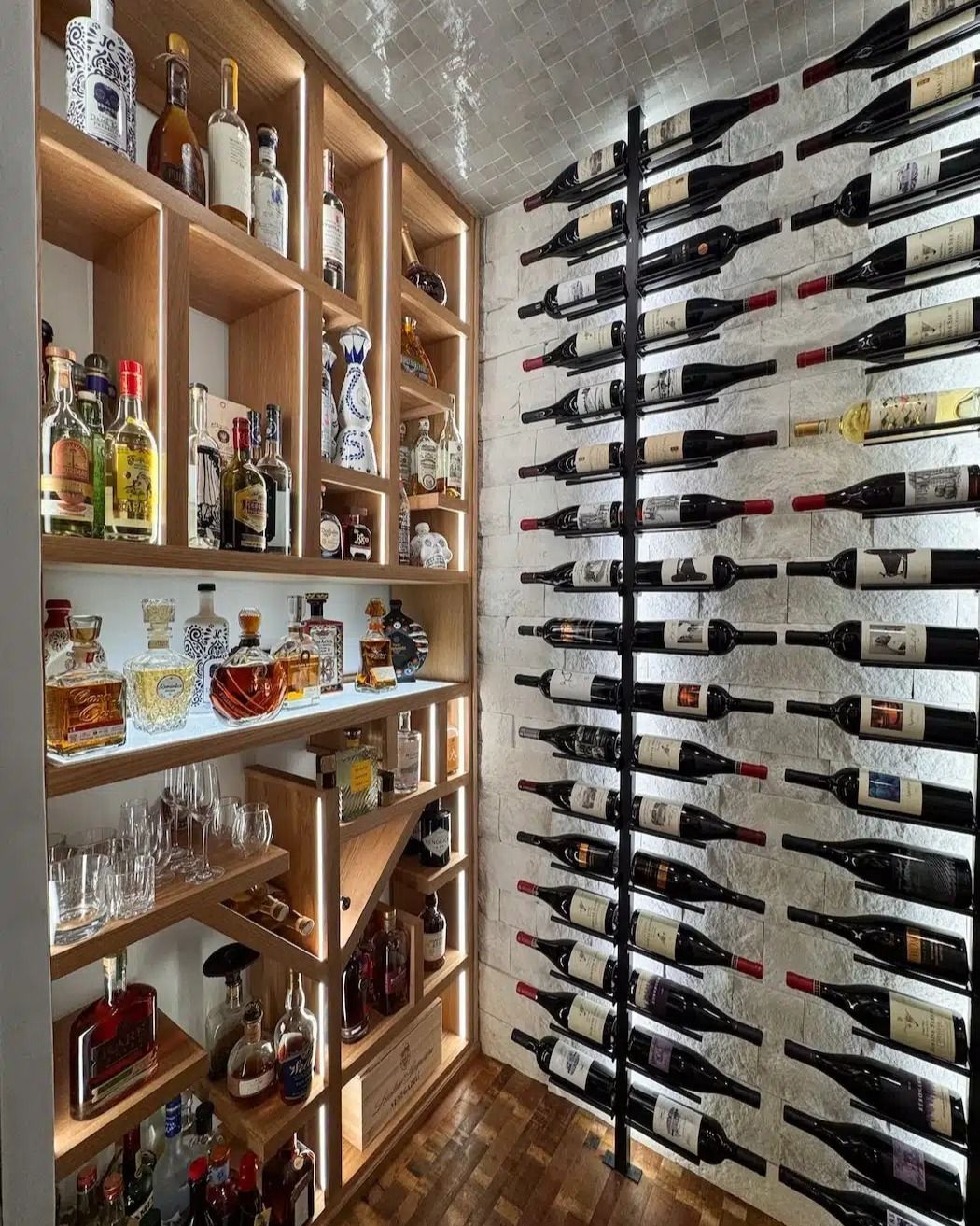
Cable racking systems maximize storage in minimal space because they require almost no depth. Bottles remain horizontal—cork contact maintained, air circulation perfect—in configurations that squeeze maximum bottles into available space. Triple-deep storage in some sections can give you 600+ bottle capacity in just 120 square feet. Cables create minimal visual weight, making space feel larger.
Glass doors or partial glass front allow seeing the collection from adjacent rooms, making the cellar feel integrated with the home rather than hidden away. Glass creates visual interest and allows the collection to become part of the home's design narrative. Frameless glass creates contemporary minimalism, whereas framed glass adds architectural detail.
Vertical space becomes your primary storage dimension. Using floor-to-ceiling height—even with sloped ceilings, partial walls, and architectural irregularities—transforms limited floor space into substantial capacity. A 200-square-foot space with 8-foot ceilings can hold 500+ bottles if using vertical space intelligently.
Material choices matter more in small spaces. Premium finishes create visual richness, compensating for limited square footage. Walnut lacquer racking glows with warmth, acrylic racks create gallery-like clarity, and Brushed steel hardware signals precision and quality. Every visible material should feel substantial and intentional.
Climate Control in Tight Spaces
Small wine cellars present unique cooling challenges because every cubic foot matters, and you can't waste space on mechanical systems. We use WhisperKOOL units frequently for small projects—these self-contained systems sit compactly and operate quietly even when in the main room. Alternative self-contained options like CellarPro also work beautifully in space-constrained situations.
Insulation becomes even more critical in small cellars because the surface area-to-volume ratio works against you. Small spaces lose or gain temperature faster than large spaces. Premium insulation—spray foam, rigid insulation, vapor barriers—minimizes the cooling system's workload. Better insulation means a smaller, quieter cooling system.
Precision sealing matters in tight spaces. Every gap, penetration, and potential air leak gets sealed because small leaks have a disproportionate impact. Result: incredibly stable temperature and humidity using modest cooling equipment operating almost silently.
Making Small Spaces Feel Larger
Glass expands perceived space dramatically. A small cellar with a glass front or a full glass door seems significantly larger than it actually is. Light flows through glass from adjacent rooms. The collection, being visible through the glass, becomes part of the home's visual narrative.
Lighting design in small spaces makes a difference between claustrophobic and elegant. Recessed ceiling lights prevent shadows. LED strips along racks create visual interest and make bottles readable. Soft, warm lighting invites you into space. Harsh overhead lighting makes small spaces feel cramped and utilitarian.
Minimal visual clutter amplifies the sense of space. Cable racking instead of solid wooden racks. Frameless glass instead of heavy frames. Clean lines instead of ornamental details. This is where contemporary design truly shines—clean, minimal aesthetics make small spaces feel intentional and spacious.
Access becomes important in small spaces. You need to reach bottles without awkward bending or stretching. Thoughtful rack height ensures most frequently accessed bottles sit at eye level. Less-accessed bottles go higher. Expensive bottles go to the display sections. Organization creates logical flow and comfort in confined spaces.
Real Small-Space Projects
01
Anaheim Hills 350-Bottle Closet
Guest bedroom closet converted to a wine cellar in 100 square feet of awkwardly shaped space. Cable racking adapted to irregular geometry. Glass door created visual interest from the guest bedroom. LED lighting inside made the collection glow softly. Guests immediately recognize something special—not a storage closet, but a curated wine room. The space became home's most memorable feature.
02
Newport Beach Dining Room Entrance
Wine closet created in transitional space most homes ignore. 450 bottles fit into 150 square feet using vertical cable racking and strategic shelving. Glass door frames showcase the collection beautifully. Walking from the living room to the dining room, you pass through a visual experience—your wine collection on display. That transition space became an architectural highlight.
03
Orange County Wine Wall
120-square-foot closet converted to a wine wall using cable racking and glass display. Contemporary materials, soft lighting, and efficient design created premium wine storage in space previously serving no purpose. Proved small wine cellars aren't lesser versions of large installations—they're distinct solutions for distinct needs. Clients with 400-600 bottle collections in space-constrained homes get premium climate control, beautiful design, and perfect wine preservation.
