
Frameless Glass Doors: Transparent Elegance
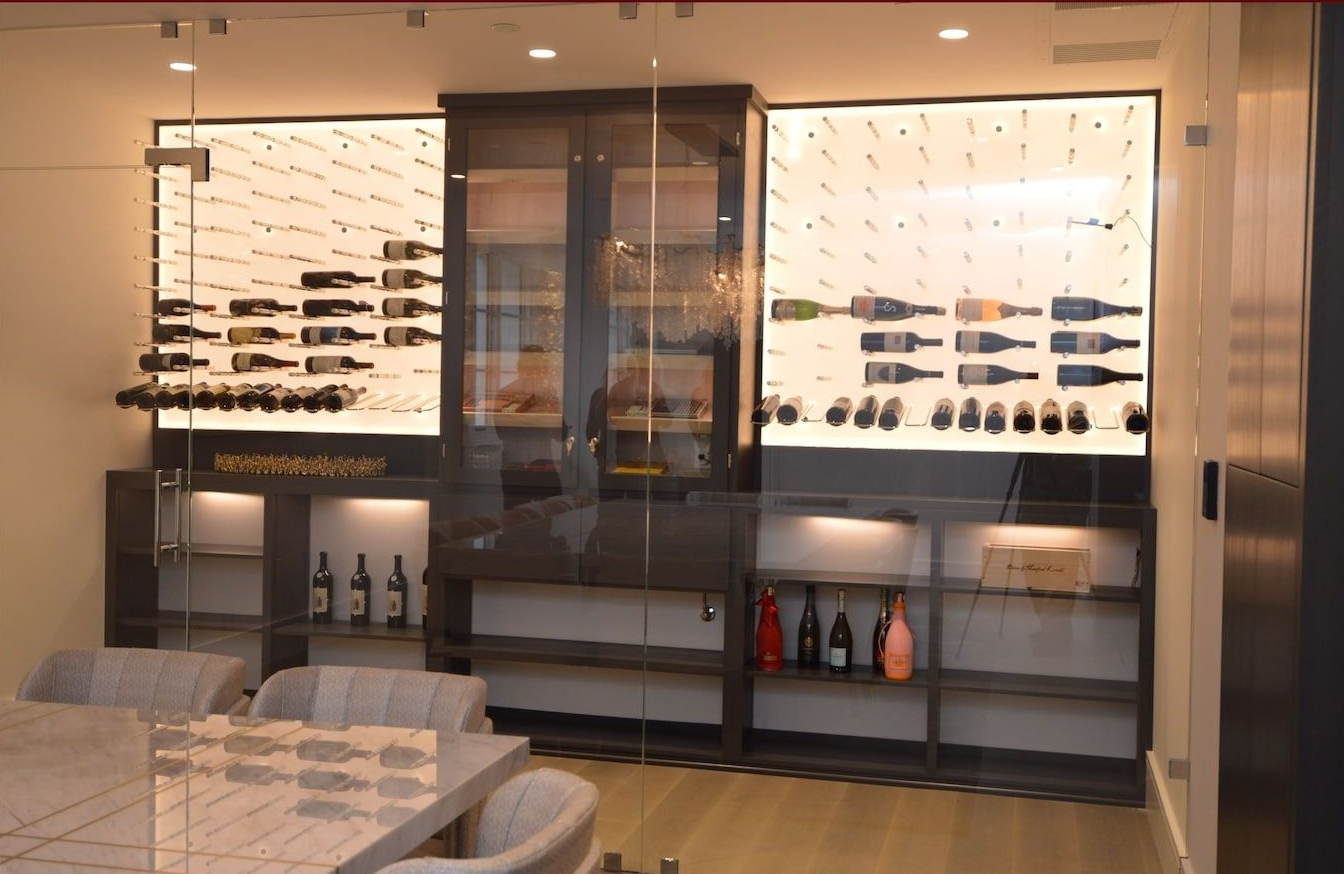
A frameless glass door is pure architectural minimalism — no visible frame, no mullions, no decorative elements. Just transparent tempered glass held by pivot hinges and sealed magnetically. The effect is striking: the cellar becomes a completely visible focal point, bottles and racking on full display, the space feeling more like a gallery than a utility room.
Frameless doors demand meticulous engineering. Glass must be precisely measured and tempered, hardware must carry the full weight without visible support, gaskets must seal invisibly, and the threshold must be perfectly smooth. At Cachet, we source frameless doors engineered specifically for wine cellars — not adapted from commercial storefronts. The result is a door that is beautiful, functional, and built to last.
Frameless Glass: Minimalism as Luxury
Frameless glass represents a design philosophy: remove everything except necessity. No frame means nothing competes with the bottles inside — the racking, lighting, and collection become the visual statement, and the door is simply the threshold. That clarity appeals to contemporary homeowners and serious collectors who want the wine to be the room's centerpiece.
Practically Speaking: frameless doors are architecturally clean, purposeful, and unambiguously high-end. They work beautifully in modern cellars, contemporary homes, and minimalist interiors. They also demand discipline — mediocre racking or poor lighting is fully exposed behind frameless glass. This is precisely why we pair them with equally sophisticated racking and lighting design. The door sets a standard that everything behind it must meet.
Technical Specifications: Glass, Hardware, Seal
01
Glass Specifications
Wine cellar frameless doors typically use 13.5mm tempered glass — thick enough for structural strength without excessive weight. A full 10-foot door may weigh 150 to 200 pounds. Tempered glass is heat-treated to shatter into small beads rather than sharp shards, a critical safety consideration.
02
Double-Pane Options
Single-pane 13.5mm glass provides an R-value of approximately 3. Double-pane glass — two 6.8mm panes with an air gap — reaches R-6, comparable to high-performance windows. Double-pane is recommended for climates with significant temperature swings or where the cooling system is conservatively sized. The trade-offs: slightly greater weight, potentially requiring additional hardware, and a cost premium of 30 to 40 percent.
03
Pivot Hinges
Professional-grade pivot hinges support the door's full weight from the top and bottom of the frame, allowing it to swing silently and close smoothly. The hinge mechanism is recessed into the door frame and floor threshold — completely invisible in use — and rated for thousands of open-close cycles.
04
Magnetic Seals
The door closes with a soft click against magnetic gaskets rather than mechanical latches. The seal is strong enough to hold against pressure differentials as cooler cellar air tries to escape, yet gentle enough to open with ease. It's more elegant than visible hardware and creates the impression of a seamless, effortless closure.
Design Variations: Clear, Tinted, and Specialty Option
Clear Glass
Completely transparent, offering maximum visibility into the cellar and full exposure of the collection. Best suited to cellars with excellent racking and lighting. The drawback: fingerprints and condensation are highly visible.
Tinted Glass
A subtle smoke or bronze tint reduces glare and internal reflections while maintaining clear visibility. Fingerprints and condensation are less apparent. Most contemporary cellars use tinted glass for this reason.
Low-Iron Glass
Optically superior to standard tempered glass, with crystal clarity that standard clear glass can't match. Costs 15 to 20 percent more, but the visual difference is noticeable — recommended for showpiece cellars and commercial installations where appearance is paramount.
Frosted or Satin-Finish Sections
Custom designs combining frosted sections for privacy with clear sections for display. Less common, but striking when executed well. Requires custom fabrication.
Threshold and Seal Design: Where Frameless Gets Technical
The threshold (where door meets floor) is the critical detail. A frameless door with a poorly designed threshold fails to seal and looks amateurish. Professional installation includes:
Recessed Threshold
The floor is slightly recessed (1-2 inches), creating a step into the cellar. The door sits in the recess, creating a natural seal point. The recessed design is invisible when the cellar is viewed from outside, but provides superior sealing.
Magnetic Gasket Compression
As the door closes against magnetic seals, the gaskets compress evenly, creating an airtight seal around the entire perimeter. This is invisible but essential.
Automatic Door Bottom
An optional rubber gasket mounted on the door's bottom edge that compresses against the threshold as the door closes. Creates a secondary seal. Invisible when the door is open.
Drain Routing
Any condensation or cleaning water that touches the threshold should drain properly. We specify drainage paths during installation. Frameless doors are heavy-use thresholds; poor drainage causes water staining and eventual seal degradation.
These details are why frameless doors are architect-grade, not DIY projects. Professional installation ensures every seal point is engineered correctly.
Frameless Glass in Contemporary vs. Transitional Cellar
Contemporary Pairing
Frameless glass works beautifully alongside minimalist metal racking, LED linear accent lighting, polished concrete or slate flooring, and a sleek cellar island. Every element must be executed at high quality — this pairing is stunning when it comes together and disappointing when any detail falls short.
Transitional Pairing
Frameless glass paired with warm wood racking in natural alder or mahogany, layered LED lighting, a wine-tasting island, and traditional finishes. The glass provides the modern edge; everything else is classic. This hybrid approach is more forgiving and remains one of the most popular choices in high-end residential cellars.
What Not to Pair with Frameless Glass
Ornate racking, decorative finishes, excessive signage, or cluttered displays. Frameless glass demands cleanliness and intentionality throughout — anything that competes with that simplicity undermines the entire effect.
Maintenance: Keeping Glass Clean
Glass shows fingerprints, dust, and condensation — that's the trade-off for transparency. Weekly or bi-weekly cleaning with a microfiber cloth and vinegar solution keeps the door looking pristine; avoid abrasive cleaners that can scratch tempered glass. Condensation appears occasionally on cool mornings when the cellar is humid, but it's temporary and harmless, clearing within an hour as temperatures equalize. It's physics, not a design flaw. If it bothers you aesthetically, tinted or frosted glass makes it considerably less visible.
When Frameless Glass is the Right Choice
Frameless glass is the right choice if you want your collection to be the visual centerpiece — and if the racking and lighting behind it are sophisticated enough to deserve that exposure. It suits contemporary and high-end residential cellars where the goal is a space that feels open, integrated, and impressive. Go in with clear expectations: glass requires periodic cleaning, fingerprints are visible, and the design demands discipline throughout. If visual impact is the priority and privacy or low maintenance are not, frameless glass delivers.
Frameless Glass Door
How much do frameless glass doors cost?
Frameless glass doors range from modest to mid-range pricing depending on size, glass thickness, and hardware quality. Double-pane options and custom sizes or specialty glass add to that cost accordingly.
Can frameless glass be tempered for safety?
Yes, all wine cellar frameless doors are tempered (safety standard). Tempered glass can still break if struck hard, but it shatters safely into small beads.
What if my cellar space is oddly shaped?
Frameless doors can be custom-fabricated for irregular openings, sloped ceilings, or curved walls — though this requires custom engineering and carries a higher price. Your design consultant can walk through the options for your specific situation.
Do frameless doors insulate well?
Single-pane: R-3 (below ideal). Double-pane: R-6 (acceptable). For optimal insulation, pair with R-19 wall insulation. If the cooling system is sized correctly, single-pane frameless glass works fine in most climates.
How durable are pivot hinges?
Professional-grade pivots are rated for 500,000+ open/close cycles (roughly 50+ years of normal use). They're more durable than residential door hinges.
Can I add UV protection to frameless glass?
UV-blocking film or coatings are available, reducing UV transmission by 95 percent or more. The treatment is invisible and adds a modest cost — recommended for any cellar that receives direct sunlight.
