
Residential Wine Cellars: Where Luxury Meets Functionality
Your wine collection tells a story—of travels, discoveries, tastings, and refined taste. At Cachet Wine Cellars, we create residential spaces worthy of that story. From intimate 350-bottle closet conversions to sprawling 2,000+ bottle basement installations, we design and build wine cellars that enhance your home's value while protecting your collection in ways that make you actually want to visit the cellar every day.
The Problem: Proper Wine Storage Is Rare
Most serious wine collectors face a difficult reality: they've invested thousands or hundreds of thousands in building their collection, yet they're storing it in conditions that damage it gradually. Wine sitting in a kitchen closet experiences temperature swings of 10-15 degrees between seasons. Bottles in a garage face humidity variation that dries out corks and damages labels. Even wine refrigerators max out at 200-300 bottles and create the constant dilemma of what stays and what goes elsewhere.
The consequences are concrete. Wines that should age gracefully for decades are pushed through their drinking window in years. You can't properly entertain because you don't want to show guests improperly stored bottles. Your home lacks that defining design element that speaks to your taste. You hesitate to acquire wines because you lack proper storage. That valuable collection—a source of pleasure—becomes a source of anxiety.
A properly designed residential wine cellar solves this completely. Your entire collection—300, 500, 1,000, 2,000 bottles—sits in perfect conditions: 45-65°F (ideally), humidity, darkness, and stillness. Your wines age exactly as their makers intended. You can entertain with confidence, knowing your bottles are impeccably stored. Your cellar becomes a design statement in your home, a sanctuary you visit regularly.
What Most Homeowners Don't Know About Wine Cellar Construction
STAGE 1
Proper Insulation Matters More Than You Think
Many contractors treat insulation as an afterthought. That's a mistake. Your cellar needs R-19 minimum insulation in walls, R-30+ in ceilings to maintain stable temperature efficiently. We use spray foam or rigid insulation to eliminate gaps and thermal bridging. Poor insulation means your cooling system works constantly, never achieving that set-it-and-forget-it reliability you want. It means higher energy costs and shorter system lifespan.
STAGE 2
Vapor Barriers Prevent Slow Disasters
Concrete floors and basement walls allow ground moisture to rise and destabilize your cellar's humidity. We install vapor barriers on floors before finishing. We create vapor barriers on exterior walls using spray foam and proper sealing. These invisible barriers prevent the slow moisture accumulation that destroys wood racking and causes mold. This is unsexy infrastructure that makes the difference between a functioning cellar and a disaster zone.
STAGE 3
Humidity Control Is More Complex Than Temperature
You can't just run a cooling unit and expect humidity to stay at 60-70%. Your cellar needs proper sealing to prevent humidity loss through cracks and gaps. Some cellars need humidifiers; others need dehumidifiers depending on your location and seasons. Southern California cellars in coastal areas face different humidity challenges than inland cellars or cellars in Nevada's dry climate. We engineer solutions specific to your location.
STAGE 4
Cooling System Sizing Requires Real Heat Load Calculation
Random installers guess at cooling system size. That's how you end up with an oversized system that cycles too frequently (creating humidity problems) or undersized system that can't maintain temperature in summer heat. We calculate the actual heat load—insulation R-values, location, sun exposure, lighting load—and specify the right system size for your space.
Design Approaches for Different Spaces
Glass Wine Cellars transform rooms visually. A Manhattan Beach project created a dining room centerpiece holding 2,000+ bottles where light plays continuously across the collection. Frameless glass creates smooth transparency, and framed options add architectural detail. Cable racking systems showcase bottles like art pieces, whereas LED lighting casts a warm glow that makes guests linger. These cellars work in living rooms, dining rooms, and dedicated wine closets where visibility and design impact matter.
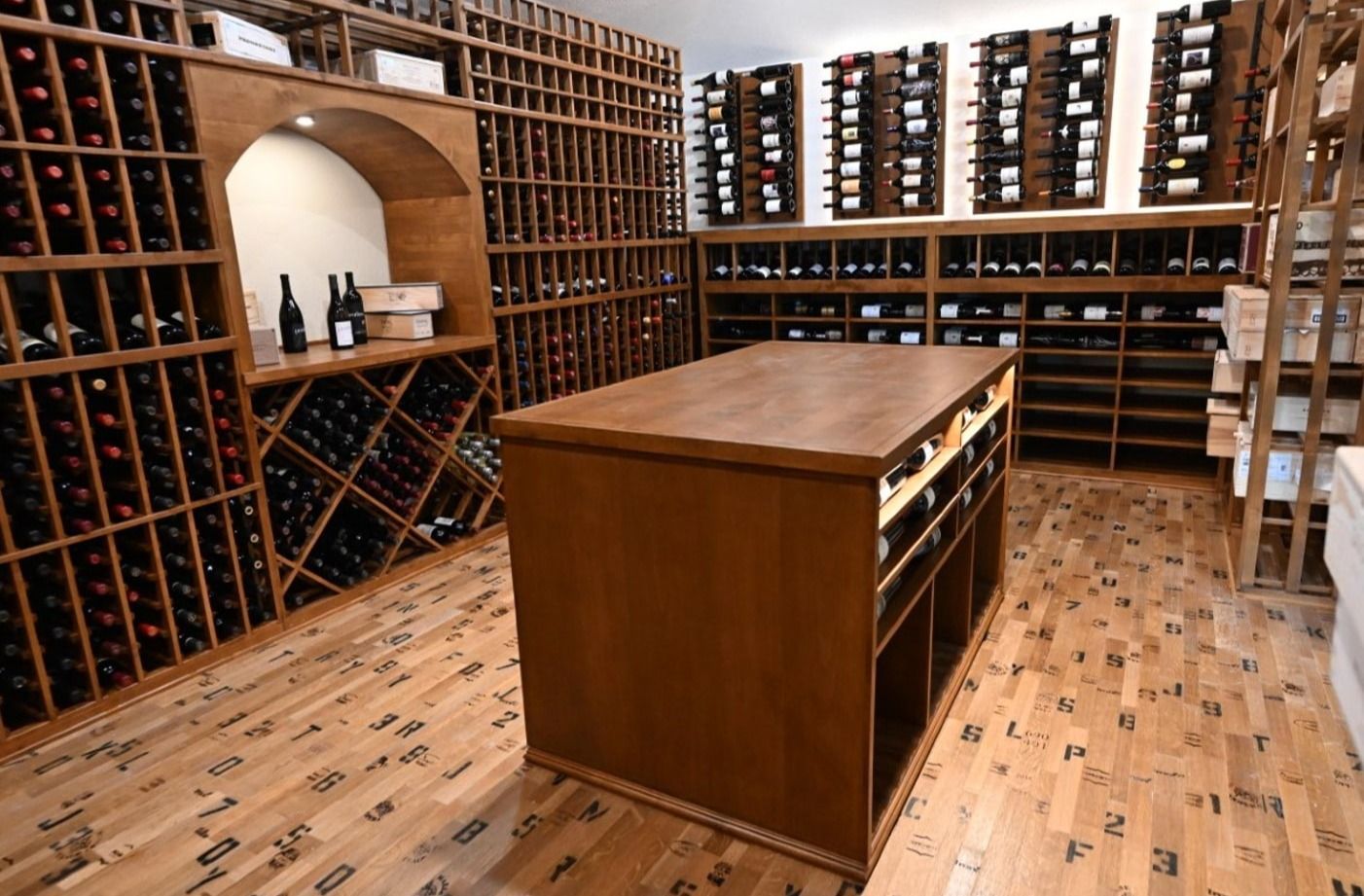
Traditional Wood Cellars create warmth and timeless elegance. Rich alder wood, walnut finishes with deep grain character, classic racking systems evoke European wine country. A Mission Viejo project with knotty Alder wood and lacquer finish holds 600+ bottles and feels like a retreat the moment you enter. These designs excel in basements, cellars, or dedicated rooms where you want an escape that honors winemaking tradition.
Small-Space & Closet Conversions prove that limited square footage doesn't mean limited impact. A 350-bottle Anaheim Hills closet conversion used creative racking and efficient cooling to achieve genuine luxury in a compact space. A Newport Beach project created a wine closet in the dining room entrance—that transitional space most homes ignore—holding 450 bottles where they become a focal point.
Basement Installations provide ultimate capacity and thermal advantage. Basements offer dedicated square footage and natural insulation from the earth surrounding the walls. A Manhattan Beach basement became home to 2,000+ bottles using custom wooden racking, proper insulation, and climate-controlled perfection. A Pleasanton project transformed 600 square feet into a 1,500-bottle wine room with a separate tasting area and display section.
Temperature Control That Works Behind the Scenes
Wine preservation depends on consistent temperature and humidity. Your cellar needs to maintain 45-65°F (ideally) and humidity—the exact conditions your wines need to age gracefully. Our residential installations use split-system or self-contained cooling units sized precisely for your space.
We specify cooling systems from leading manufacturers, matched to your space's exact requirements. Self-contained units work well near living areas. Ducted systems handle larger spaces and challenging climates. Smart-enabled systems connect to your home automation. We calculate your actual cooling load and recommend the right equipment — not the most expensive, not the cheapest, but the one that fits.
US Cellar Systems RMD series units offer California-engineered reliability with proper heat load calculation and ducting into attics or exterior. These systems maintain perfect conditions silently, working in the background without ever requiring attention.
We handle the technical details many contractors overlook: proper insulation to prevent conditioned air loss, vapor barriers to prevent moisture problems, duct configurations to prevent uneven cooling, and backup systems to protect your collection. The result is a cellar where mechanical systems disappear—you just enjoy perfect conditions for your collection.
The Residential Installation Process
STAGE
01
Consultation
We visit your home, understand your vision, collection size, and space. We discuss materials, design preferences, and budget framework.
STAGE
02
Site Assessment
We evaluate insulation requirements, cooling needs, electrical infrastructure, and structural considerations specific to your space.
STAGE
03
Material Selection
We discuss and decide wood species, glass options, racking systems, cooling units, and all visible finishes.
STAGE
04
Construction
We build the structural elements, install insulation, create vapor barriers, frame walls if needed, and finish surfaces.
STAGE
05
Cooling System Installation
We install the cooling unit, run ducting if needed, verify performance, and set temperature controls.
STAGE
06
Racking Installation
We install your chosen racking system—wood, cable, acrylic, or hybrid combinations.
STAGE
07
Electrical & Lighting
We install recessed lighting, LED strips, wall sconces, and electrical infrastructure.
STAGE
08
Final Commissioning
We verify temperature stability, humidity regulation, lighting function, and cooling performance over 2-3 days.
STAGE
09
Walkthrough & Photography
We do a final walkthrough with you, answer questions, then send professional photographers to document your cellar beautifully.
Real Residential Projects That Reflect Our Approach
STAGE 1
Mission Viejo
A homeowner with 600 bottles needed a traditional cellar matching the home's architectural character. We designed knotty Alder wood racking with lacquer finish and added a Barolo door with arched top and beveled glass. The space holds bottles at perfect cork-forward angle, includes diamond bins for special bottles, and features LED lighting that makes labels readable and wood grain visible. US Cellar Systems cooling keeps temperature and humidity stable silently. What was an empty room became the home's most-visited retreat.
STAGE 2
Manhattan Beach
A serious collector needed to store 2,000+ bottles while creating a visual centerpiece for entertaining. We designed a glass-fronted wine room using cable racking and sophisticated LED lighting. The installation is visible from kitchen, dining room, and living room—a design anchor that transforms how guests experience the home. The cooling system maintains perfect conditions while remaining completely hidden.
STAGE 3
Newport Beach
Dual glass cellars under curved stairs and in a living room corner. The irregular stair geometry forced creative design that became beautiful. Cable racking adapted to slopes. Lighting created intentional ambiance despite spatial challenges. The result: 1,650 bottles in spaces most would consider unusable.
STAGE 4
Anaheim Hills
A 350-bottle closet conversion that transformed a guest bedroom closet into a wine room guests discover with delight. Cable racking, glass door, LED lighting, self-contained cooling—all in 100 square feet. Every bottle sits at perfect angle and temperature. The space proves you don't need a mansion to have a proper wine cellar.
