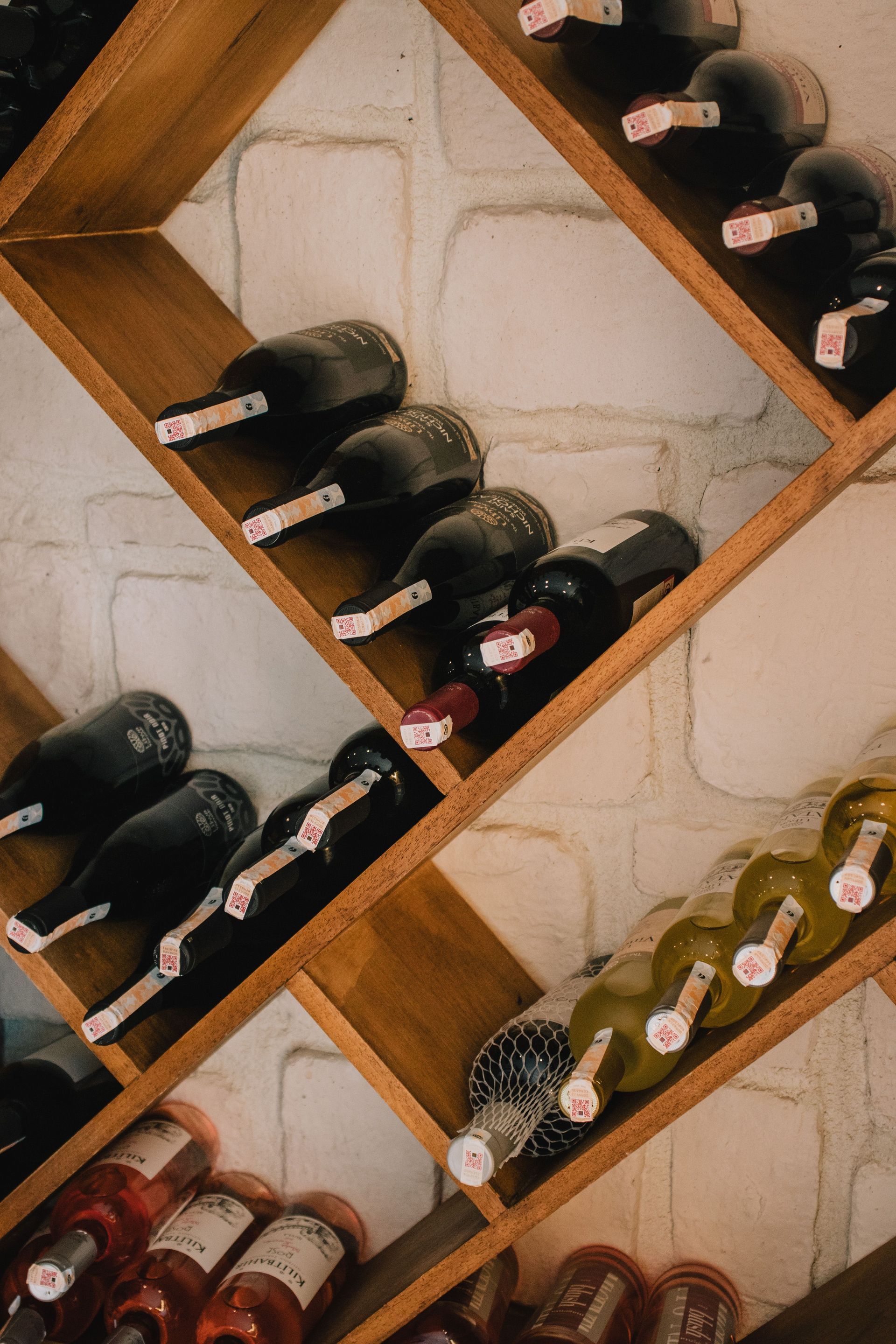
One barrel gives you three different faces of oak, and choosing between them decides where the eye lands in your room. The ends of the barrel carry winery stamps. The outside carries the marks left by the metal hoops. The inside carries the tint of whatever wine sat against it for years. Each surface is sold as its own finish of reclaimed barrel wood, each reads differently on a floor than on a tabletop or a wall, and each asks something different of the room around it. A good decision starts with the surface you are covering, then the amount of visual activity that surface can take.
Start With the Surface You Are Covering
Four surfaces come up when homeowners plan with reclaimed barrel wood: a floor, a tabletop or countertop, a wall panel, and the face of a rack. They differ in how far away the eye sits and how long it rests there.
A floor is seen from standing height across the whole room, so any pattern repeats board after board and sets the mood for everything above it. A tabletop is seen from a few inches away, handled, and lit from overhead, so a stamp or a hoop scar becomes the point of the piece. A wall panel sits at eye level and frames bottles, art and lighting. A rack face is a narrow band that has to stay clear of the labels it holds.
That sorting matters because the three finishes differ in how much they say. One speaks in words and logos, one in texture, and one in color. A large surface that is always in view carries a quiet finish comfortably and can feel crowded with a loud one, while a small, close surface can carry a busy finish and reward the attention.
How One Barrel Becomes Three Finishes
A barrel has long curved boards called staves set edge to edge to form the sides, a round head at the top and another at the bottom, and metal hoops that bind the staves together. The three finishes come from that construction, because the winery, the hoops and the wine each leave a mark on a different part.
Cooperage:
the head boards, the top and bottom of the barrel, where vineyards and wineries stamped their names. The stamps run through the wood in random positions.
Stave:
the outer face of the side boards. The hoops pressed against that face, and the marks in the wood show where the metal sat.
Wine Infusion (wine-infused):
the inner face, which spent years in contact with wine. The wood carries a tint from the wine in each barrel, giving a spread of shades from board to board.
The barrels are reclaimed after years of service, and the wood has gone through repeated swelling and drying in use. That history is part of why barrel wood suits the damp, cool air of a cellar, though the surface still needs sound moisture control under and around it, like any cellar surface.
Cooperage: When Winery Stamps Earn a Place
Cooperage is the finish that tells its story in letters. Stamps, brand marks and logos from the original wineries appear across the boards, so no two floors of cooperage carry the same words in the same order.
That makes it a strong match for a surface people look at closely. On a tabletop or bar top, a stamp sits within reach of the hand, and a guest can trace it with a finger and ask where the barrel came from. In a tasting nook, that conversation is part of what the surface is for.
On a large floor, cooperage asks for judgment. Stamps scattered at random can read as playful in a casual tasting room and as busy in a cellar where the rack labels should lead. The stamps also compete with label-forward racking, since both put lettering in front of the viewer. If your cellar is built around a wall of displayed labels, consider whether the floor should add more text.
Cooperage suits a smaller floor, a tasting area set apart from the racking, a tabletop, a bar front, or a feature panel where the stamps are a deliberate focal point.
Stave: Hoop Marks and a Calmer Surface
Stave is the finish of texture. Its character comes from the grooves and shadows left where the hoops sat, and from the grain of the side boards. There are no logos to read, so the eye finds pattern in place of words.
That calm is why stave fits large areas. A stave floor gives a room warmth and a worn, crafted look without pulling attention from the racking. It sits easily beside wood racks of another species, because the surface reads as oak first.
On a tabletop, stave works in a room that already has strong lettering or color, such as a bar with a printed mural behind it. The hoop marks give the top character without adding anything more to read.
On a wall panel, stave gives a band of texture at eye level. The marks run along the length of each board, so the direction you hang the boards sets whether the wall reads as horizontal or vertical, a choice worth making together with the lighting.
Stave suits large floors, rack faces and trim, tabletops in busy rooms, and any surface where bottles and labels should lead.
Wine-Infused: Color From the Inside
Wine-infused is the finish of color. The inner face took on the tint of the wine that aged in each barrel, so boards carry reds, plums and deeper tones, and each board holds a slightly different shade. That variation breaks a large surface into soft patches of color.
Color is a strong force in a room, and this finish brings plenty of it. On a floor, wine-infused can feel rich and enveloping, which suits a dark, intimate cellar with warm lighting. In a bright room with white walls and cool light, the same floor can become the dominant element. Pair it with racking in a lighter wood, or with metal racking, and the tint reads as a deliberate accent.
On a tabletop, wine-infused turns the top into a conversation piece for its color alone. On a wall, it gives a cellar a backdrop, though a full wall of strong tint can overpower art and lighting, while a narrow accent band is easier to live with.
Wine-infused suits floors in dark, warm cellars, tabletops and bar tops, accent panels, and rooms where one strong color is wanted.
Matching Finish to Flooring, Tabletops, Wall Panels and Racks
The table below sorts the four surfaces against the three finishes by how much visual activity each can carry.
| Surface |
Cooperage (stamps) |
Stave (hoop marks) |
Wine-infused (tint) |
| Large floor |
Busy; best in a tasting area |
Calm; sits well beside racking |
Strong; best in a dark, warm room |
| Tabletop or bar top |
Focal point; strong choice |
Quiet; suits a busy room |
Focal point; color leads |
| Wall panel |
Feature panel |
Textured band |
Accent band |
| Rack face or trim |
Competes with labels |
Stays out of the way |
Works on a narrow band |
Two patterns come out of that comparison. Surfaces seen from far away and for a long time, such as floors, call for the quietest finish, while surfaces seen up close, such as tables, can take the most expressive one. And in a cellar where the racking is the star, the finish nearest the bottles should be the calmest.
A Floor That Leads or a Floor That Supports
Some owners want the floor to be the first thing a guest notices, with the racking in a supporting part. That points toward wine-infused or cooperage underfoot, with plainer racking in metal or simple wood. Others want the bottles to lead, which points toward stave underfoot and a rack style that carries the display.
Where Lighting Changes the Answer
Directional light rakes across the surface and makes hoop marks and stamps cast small shadows, which brings out stave and cooperage. Soft, even light flattens texture and lets color carry, which favors wine-infused. Judge the choice at the hours the room will be used.
Mixing Finishes and Judging Samples
Finishes do not have to be used alone. A cellar might have stave on the main floor, a cooperage tabletop in the tasting area, and a wine-infused accent panel behind a display shelf. The result reads as one family because the oak stays constant while each surface gets the finish that suits its job. Where all three finishes share one view, the eye has stamps, texture and tint to read at once, and a sightline that holds only two of them reads calmer.
Samples settle what pictures cannot. Every barrel differs, so a photograph shows one arrangement of boards out of many.
TIP
Set sample boards on the actual floor or against the rack wood, then look at them in morning and evening light. Finishes that look alike under a showroom lamp can drift apart under daylight and cellar lighting.
A reclaimed surface rewards one decision made with the whole room in view. Give the loudest finish to the smallest, closest surface, the quietest to the largest, and let the bottles keep the starring role.
Frequently Asked Questions
Can all three finishes go in the same room?
Yes. The flooring is engineered and finished on the face before it ships, so boards of different finishes arrive ready to lay side by side without sanding or staining on site. Where the room meets another floor material, plan the meeting point on the drawing.
What does a barrel wood tabletop look like when it arrives?
Each top is made to order, finished on the face and edge-banded so no raw end grain shows, and cut to the base it sits on. Give the designer the base's outside dimensions early, because the top is cut to them before it ships.
Does the age of the barrel change the look?
It can. The barrels are 6 to 50 years old when they are reclaimed, so two lots of the same finish may differ in depth of tone and wear. For a room that needs one consistent look, ask that the boards come from a single lot.
Can I choose a red-only or a pale tint in the wine-infused finish?
The wine that aged in each barrel sets the tint, and the range runs from reds to whites, so a barrel that held white wine gives lighter boards. Tint can be steered by sample review, but it cannot be set board by board.
Is barrel wood only used flat?
No. Reclaimed barrel wood is also used on ceilings, wall paneling and curved racks. Curved racks are worth raising early, because the sweep of the curve is drawn on the design before any boards are cut.
Can I pick where a winery stamp lands?
Not precisely. The boards are cut from barrel heads in mixed lengths, and the stamps fall wherever the winery put them on the barrel, so the position of any single stamp is chance. What you can judge is the overall spread, which several boards laid together show better than one plank.
Hold sample boards of each finish against your floor, tabletop and wall plans with a designer â a drawing with all three surfaces in view shows which finish should lead, which should stay quiet and where stamps, hoop marks or tint belong. Cachet Wine Cellars serves Orange County and Southern California. Call (949) 569-7857.
Call (949) 569-7857