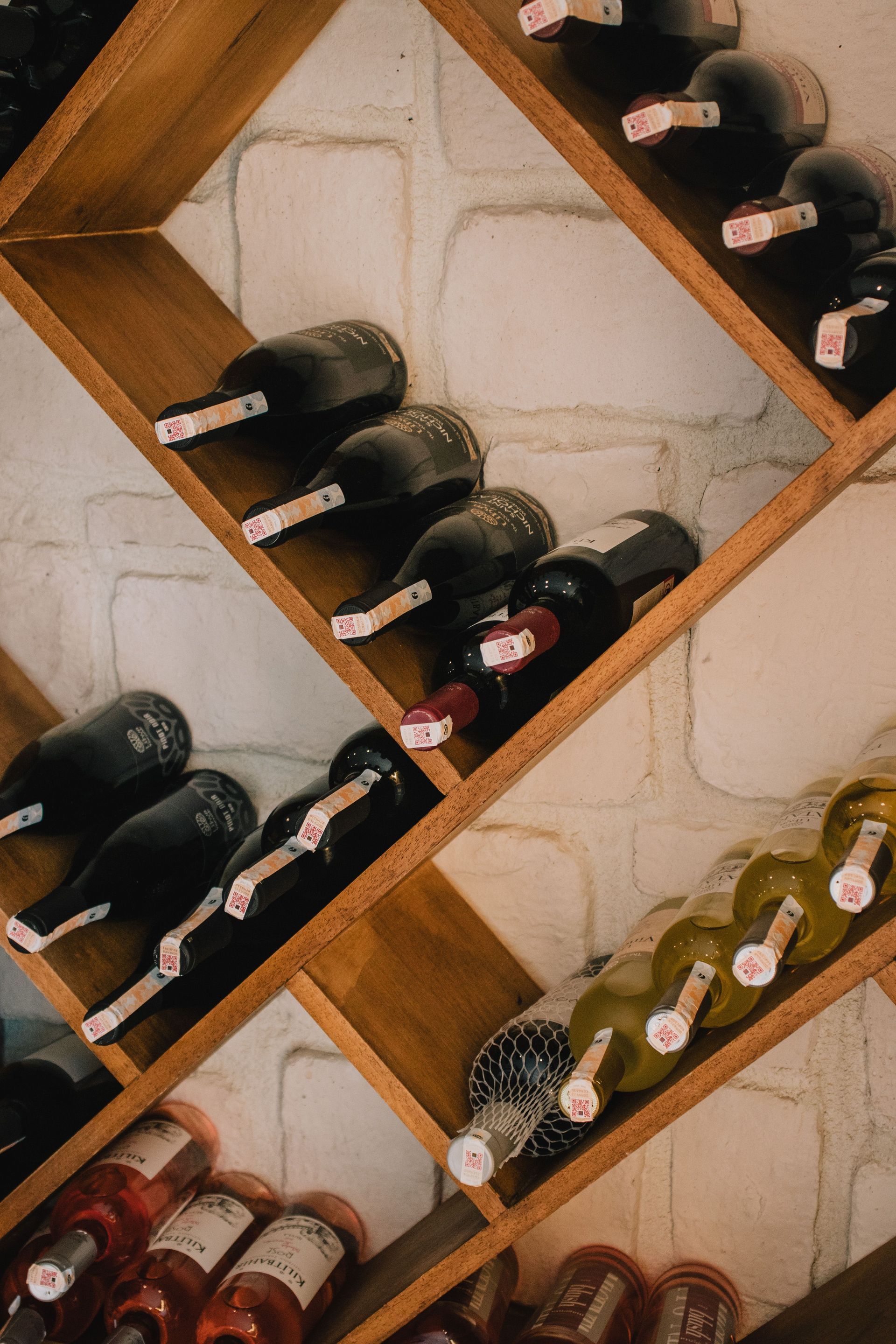
A metal peg that droops at the neck, a bottle that rocks when you lift its neighbor, or a hairline crack spreading from the base of a pin all start with the same question: what is holding this peg to the wall? Some peg lines are built to screw into a backer board or panel, while one line of aluminum pins is made to go straight into drywall, masonry or wood. Each symptom in the table below can be traced to the surface behind the peg and the hardware that joins the two.
| What you see |
What can cause it |
Who sorts it out |
| Pin droops or tilts at the neck |
Toggle wings not seated flat behind the board, or a hole drilled wider than the anchor |
Installer |
| Pin turns when a bottle is lifted out |
Collar left off a drywall install, or a fastener that never caught a stud or opened behind the board |
Installer |
| Cracks or crumbling around the base |
Drywall thinner than half an inch, or weight pulling through soft gypsum |
Installer and designer |
| Pin will not sit flush |
A wall that is not flat, or a layer behind the board that blocks the anchor |
Installer |
| A row sags after bottles are added |
A deeper stack than the hardware was sized for |
Designer |
Which Surfaces Take a Metal Peg Directly
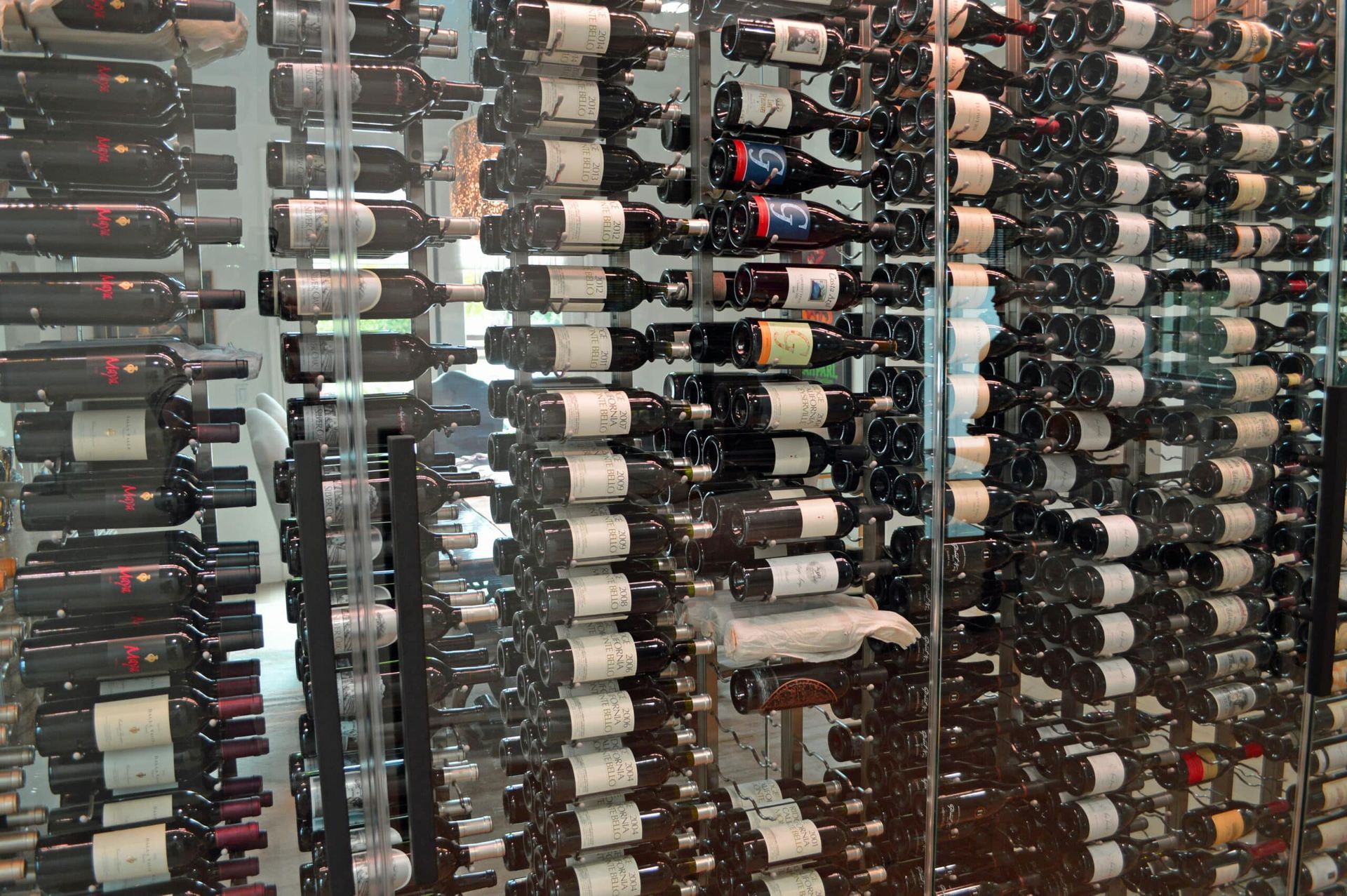
Peg and rod systems split into two camps. Some, such as the Ultra Peg series, are screwed onto a backer board, a pre-made panel or a solid surface the installer prepares, which carries the load and gives the bottles a finished face. Vino Pins are aluminum pins made to mount straight onto drywall, masonry or wood, with a hardware kit matched to each of the three surfaces.
On drywall, the board must be at least half an inch thick. On wood, the surface must also be half an inch or thicker. The pins hold bottles label forward, so the labels face the room, and they can be placed wherever there is a bottle's width of open wall, since no rail or bracket sets the spacing.
What a Full Bottle Asks of the Wall
A full 750 ml bottle weighs roughly 2.5 to 3.5 pounds: the wine is about 1.65 pounds of that, and the glass makes up the rest, so heavy-glass bottles sit at the top of the range. That figure is small, but a pin does not carry it straight down into the wall. Each bottle rests on a pair of pins, one under the base and one under the neck, and the weight acts at the pin's tip, a few inches out from the wall. The farther the tip sits from the surface, the more the bottle tries to pry the anchor out of the wall, in place of pressing it in.
Stack bottles behind one another with pin extensions and the lever gets longer and the load heavier at the same time. A row of ten pairs in single depth and a row of ten pairs in a deeper stack ask different things of the same wall. Weight also builds across a wall in a way a single bottle does not suggest: forty bottles across a display add up to roughly 100 to 140 pounds that the surface and its anchors must carry together.
TIP
Decide the full bottle count and depth for each peg row before any wall is marked. Pin positions, spacing and anchor type all follow from that count, and adding bottles later changes what the wall carries.
Why Anchor Choice Matters in a Hollow Wall
Drywall is a gypsum core between paper faces, and a plain screw driven into it grips very little. A hollow wall holds a load by spreading it, and that is the job of the drywall kit. On a stretch of wall with nothing solid behind it, the anchor passes through the board and opens against its back face, so the load spreads across the board instead of resting on the hole's edge. A collar sits against the front face and supports the pin where it meets the surface; collars come in the drywall kit and go on every drywall mount.
Where a pin position lands on a wood stud, the fastener is different, because solid framing can take a threaded bolt directly. One wall can mix both methods within a single display, and an installer drills a small test hole at each mark to learn which one applies there. That pilot is only 5/32 inch across. Where it finds no wood, the hole is opened up to 5/8 inch for the toggle, and a hole bored wider than that can leave the wings less board to press against. Each pin pair also has a fixed order: the base pin, the one with the longer curve, takes the lower hole and the neck pin the higher.
A loose anchor from a hardware aisle is no substitute for the kit. Hardware sized for the pin and for the surface carries the load the pin was built around, and a substitute that spreads the load differently can let a pin work loose.
CAUTION
Drilling into a wall can reach wiring or plumbing inside it, and a stud finder does not rule either out. A qualified installer checks the wall before drilling, and an electrician handles any wiring found behind a mark.
Thickness and What Sits Behind the Board
The half-inch minimum is firm. Board thinner than that can let go under a loaded pin and drop the bottles, so a thinner wall needs hardware chosen for it, or a backer that meets the minimum. Wall thickness is not something you can read from the front, so a designer or installer confirms it before the pin layout is drawn.
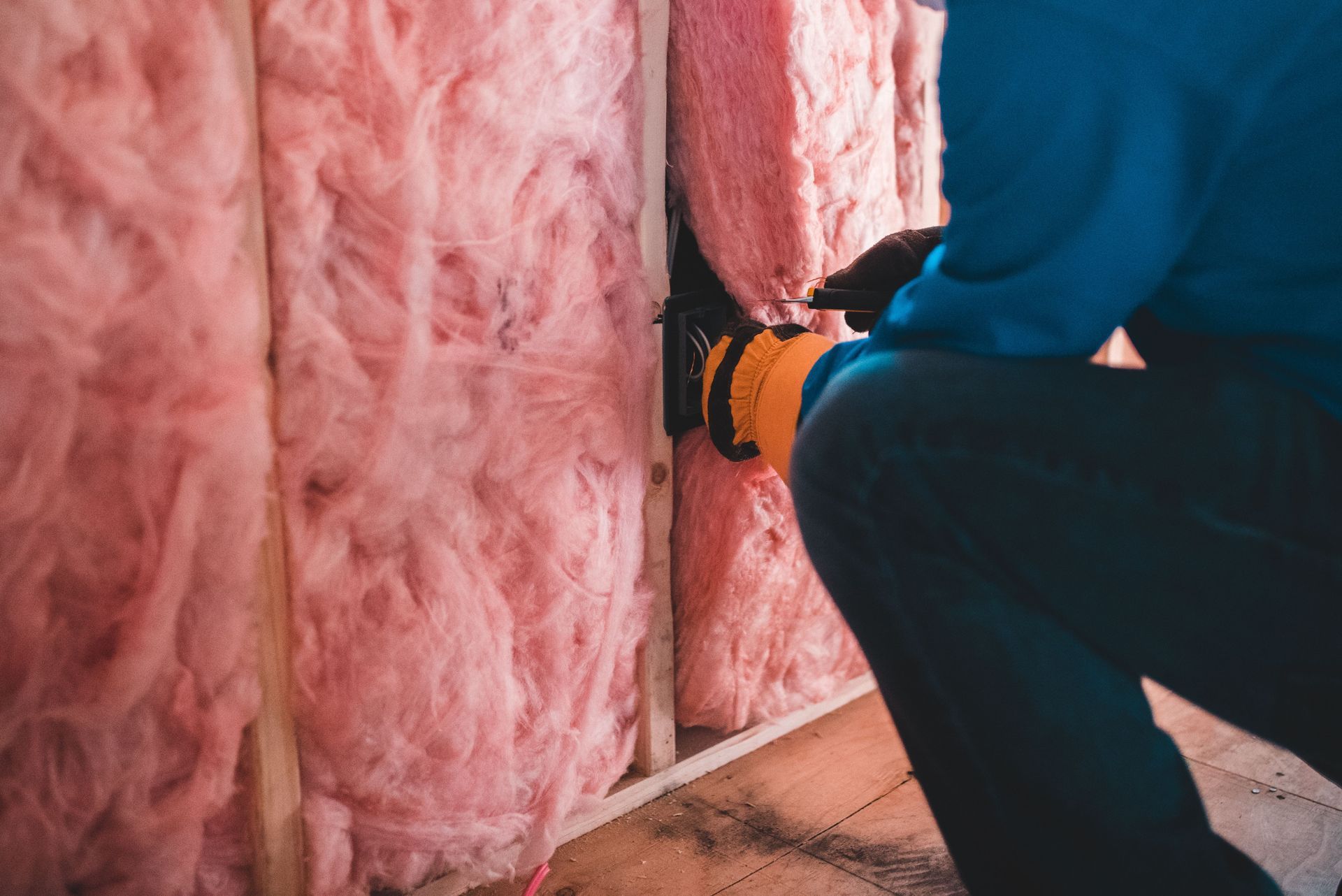
The space behind the board matters as well. A toggle needs room to open, so a cavity packed with material or a wall assembly with a layer tight against the back of the drywall changes the plan. A cellar wall can carry insulation and a vapor barrier, so the question comes up on cellar walls. An interior partition shared with a conditioned room may have only framing behind the board, which leaves the cavity open for a toggle.
When a Backer Still Makes Sense
Direct drywall mounting suits a modest display, and a backer is the better choice in these cases:
- Wall that fails the thickness test:
If the board is thinner than half an inch, a solid backer fastened to the framing gives the pins a surface that meets the minimum.
- Very large displays:
A wall covered edge to edge with pins loads one patch of drywall heavily. A backer panel, fastened to studs, spreads that weight across the framing.
- A finished panel look:
A backer in wood or another sheet material can match the cellar's racking, and wood of half an inch or more can then take the pins directly.
- A wall that may change:
Holes drilled in drywall stay behind if the display is ever removed, while a panel can come off as one piece.
A backer adds depth to the wall, so the designer accounts for it in the aisle width and in the clearance around the cooling unit's air path. A backer also gives the fasteners a continuous, solid surface to bite into, so the position of each pin no longer depends on where a stud happens to fall.
Who Does the Mounting
Mounting is installer work: it needs a level, a drill, bits matched to the kit and a pair of wrenches, plus the judgment to read what each test hole reveals. The reader task that fits is small. Run a stud finder across the planned wall, mark where the studs fall with painter's tape, and share that with the cellar's designer. That tells the designer which positions will take the stud fastener and which need the toggle, and nothing gets drilled until the layout is approved.
A peg wall that is planned from the wall type outward ends up looking effortless: bottles float label forward, nothing sags, and nobody has to think about the hardware again. The surface behind the pins decides all of that, which is why it gets settled before the first mark.
Frequently Asked Questions
Can a magnum hang on the same pins as a standard bottle?
Vino Pins hold 750 ml, 375 ml and 1.5 L bottles, but a 1.5 L bottle limits the row to single depth. A magnum position cannot be built as a two or three bottle stack, so any display that includes magnums keeps those positions in their own single-depth run.
How many bottles deep can a pin position go?
The pins accept a starter plus two extensions, which makes three bottles deep the ceiling. A fourth bottle puts more weight farther from the wall than the pin and its anchor are built for, so a larger collection grows sideways across more wall, with depth held at three.
Are the collars needed on masonry and wood too?
On those two surfaces the collars are optional, and the kits come in versions with and without them. A collar can still be chosen for the look, since it gives each pin a finished ring where it meets the wall.
Can the acrylic pins go straight onto drywall?
Yes, on drywall, masonry or wood at least half an inch thick, with the collars included. They come single-deep only, have no extensions, and include a thin mirrored disc that sits behind the clear collar.
What changes if a test hole lands on a stud?
The toggle bolt gives way to a machine and lag stud. It is driven into the framing until only its fine-threaded end still stands out from the wall, ready for the pin to screw onto, and the drywall collar still goes over it.
Does it matter which way the bottle necks point?
Yes, and the direction is chosen before anything is marked. Necks pointing right put the base pin on the left of the neck pin, and necks pointing left reverse that, so the installer sets the template to match the layout.
Review your peg wall with a designer â a design drawing shows the wall type, bottle count and mounting hardware for each row before anything is drilled. Cachet Wine Cellars serves Orange County and Southern California. Call (949) 569-7857.
Call (949) 569-7857