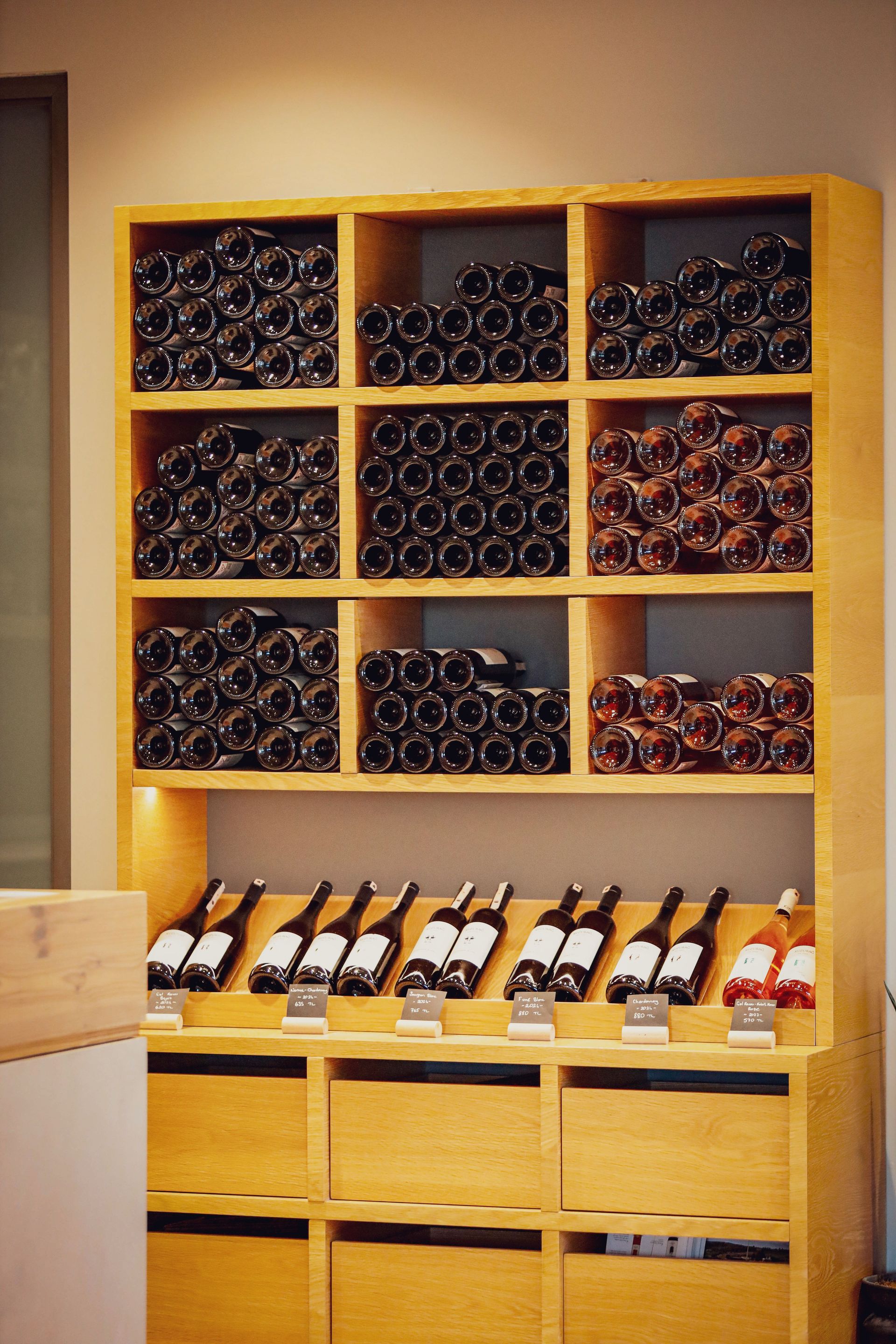
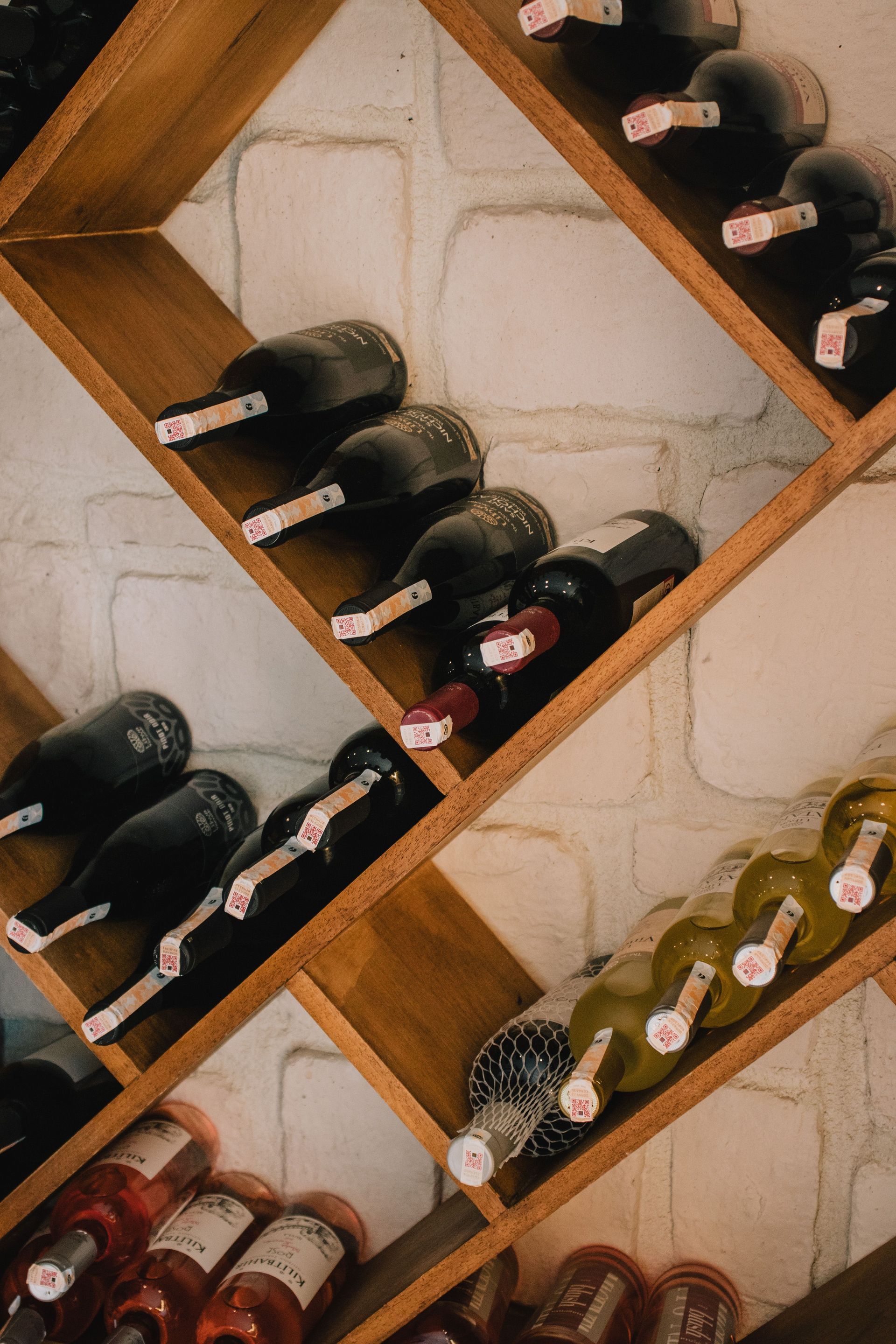
Bottles on an open back-bar shelf look settled. They sit within reach of the bartender, in view of guests, and the wine inside will be poured within weeks, so a short stay seems to make storage conditions beside the point. That belief is the reason a back bar can end up with a row of upright bottles under warm lights. A cork does not know how soon the bottle will be sold, and the shelf behind a working bar is built around service, not around keeping a closure sealed. Racking, an enclosure or a glass-fronted section changes what the bottles experience, and a refrigerated cabinet or a walk-in wine room beside the bar changes it further. The plan comes down to matching the storage to how long each bottle stays and how fast staff need it.
What Upright Bottles and Warm Air Do to a Cork
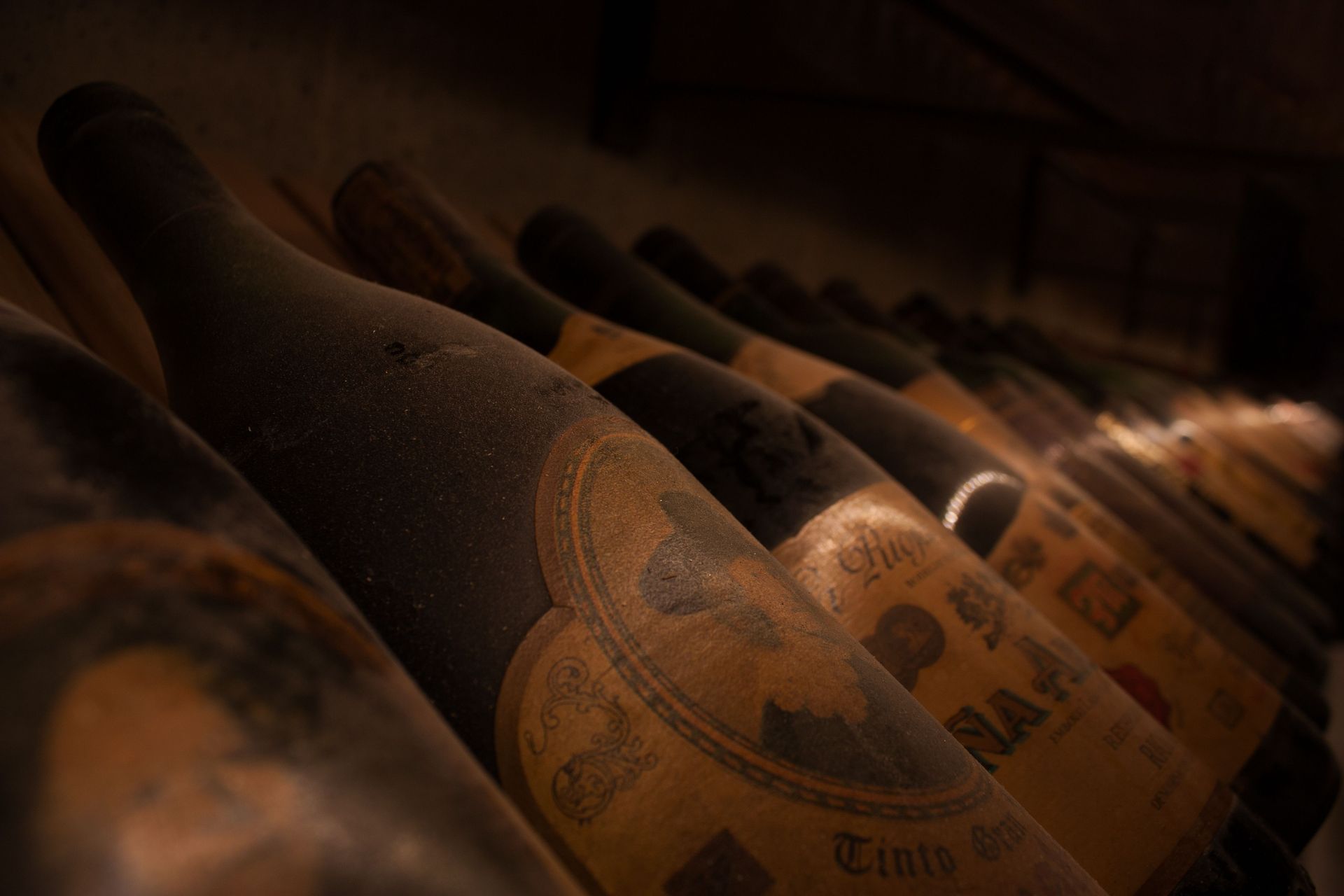
A natural cork seals because it stays swollen against the glass of the neck. On a bottle lying on its side, the wine keeps the inner face of the cork wet. On a bottle standing upright, the wine sits below the cork, and the cork depends on the humidity of the room to stay supple. Air that is too dry can shrink a cork enough to let air creep past it, and air getting into a bottle oxidizes the wine.
Heat works on the same closure from a second direction. The back bar is warm for a reason: guest lighting, the dish machine, the ice machine's condenser and espresso equipment all put heat into the same few feet of wall. A shelf at head height collects the warm air that rises. Wine that warms through a busy service and cools after close expands and contracts with the room, and each swing moves the cork a little in the neck. A steady 55 degrees F and 50 to 70 percent relative humidity are the conditions a cellar aims for, and a bar shelf can miss both at once: warmer than the target by day, and dry in an air-conditioned dining room.
Screw caps and synthetic closures do not dry out, so the cork problem does not apply to them. The temperature problem still does, because the wine itself warms.
TIP
Clip a thermometer-hygrometer to the top shelf behind the bar and read it at open, mid-service and close. The gap between those three readings shows the swing that a single reading hides.
Racking That Lays Bottles Down
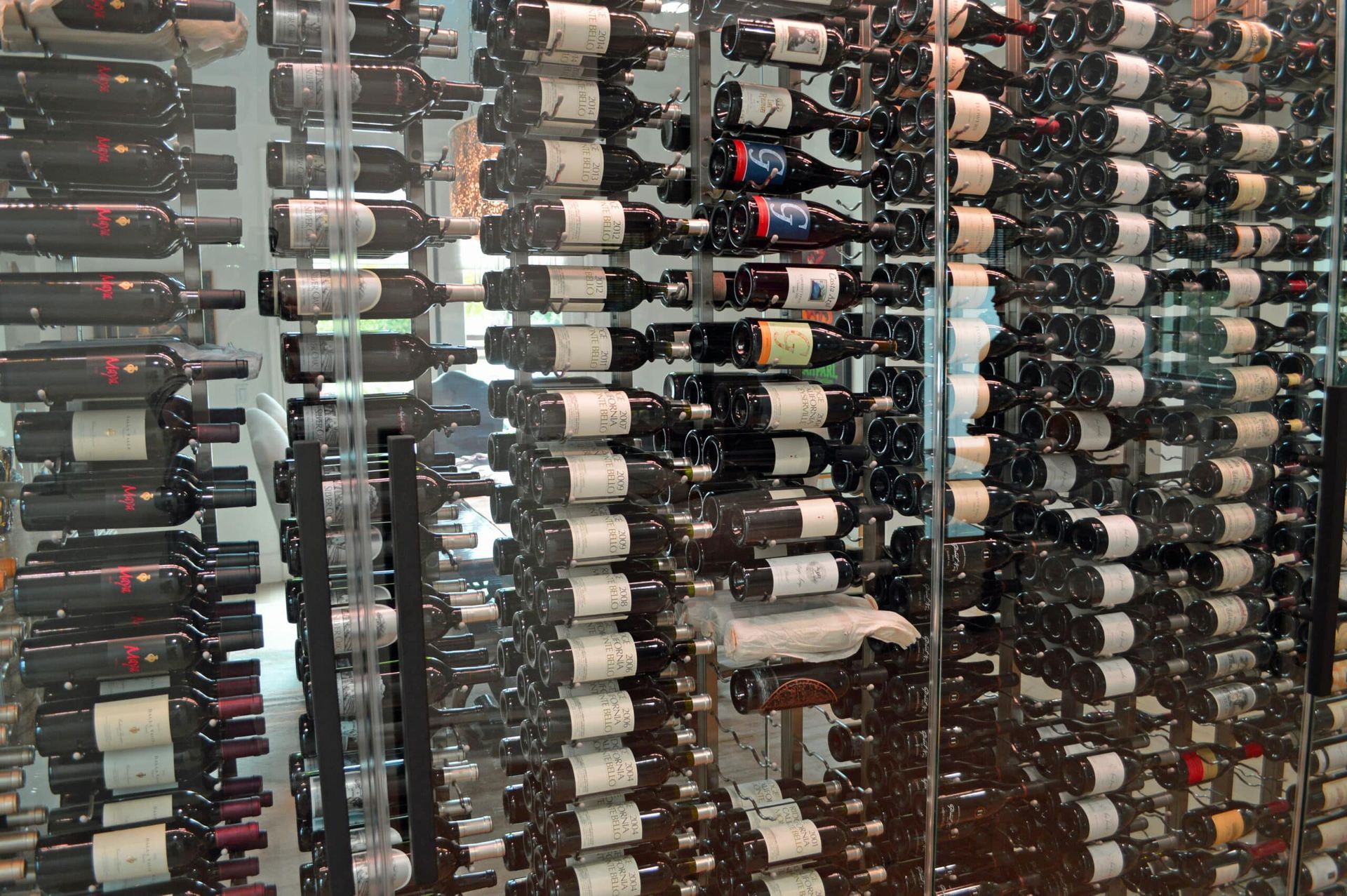
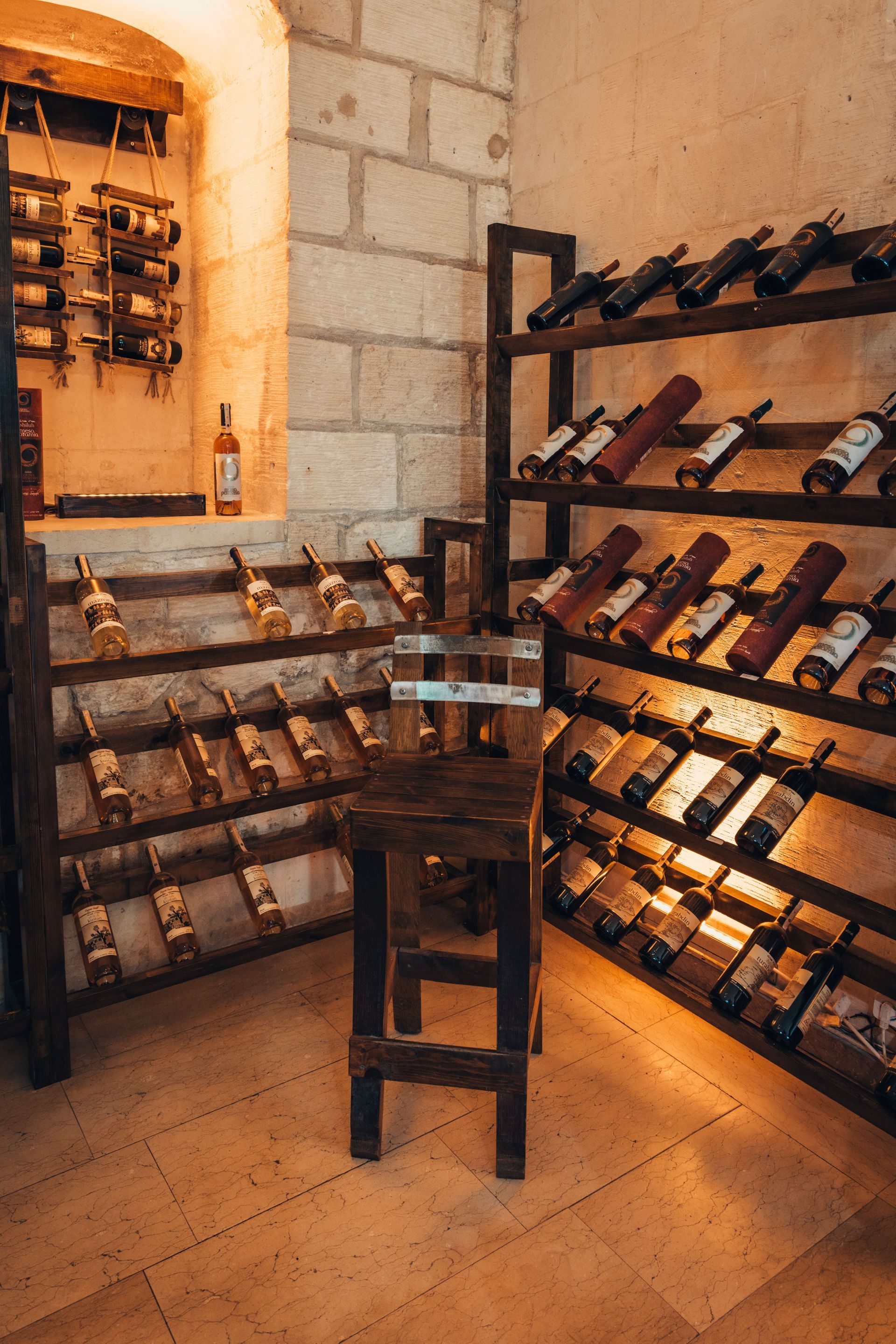
Racking is the first change, and it adds nothing to service time. A horizontal rack keeps wine against the cork, so the closure stays wet even when the room is dry. Racking also fixes each bottle in a position, which keeps bottles from rolling or being knocked during a rush.
Cubicle size sets the layout. A standard bottle cubicle is 3 3/4 inches square, which takes a standard still-wine bottle and a regular champagne bottle; magnums, large-format sparkling bottles and some wide-shouldered bottles need larger openings or a rack built for them. A wall that mixes bottle shapes works best as a custom layout with a few oversize openings, because a standard cubicle forced to take a wide bottle either jams or leaves the bottle sitting at an angle.
Racking solves the cork. It does not solve the heat, since the bottles are still in the same warm air. For a bar that turns its inventory within days, racking alone can be the right answer for the wines that sell that quickly. Wines that wait weeks or months for a guest belong in conditioned space.
Capacity and Staff Access at the Back Bar
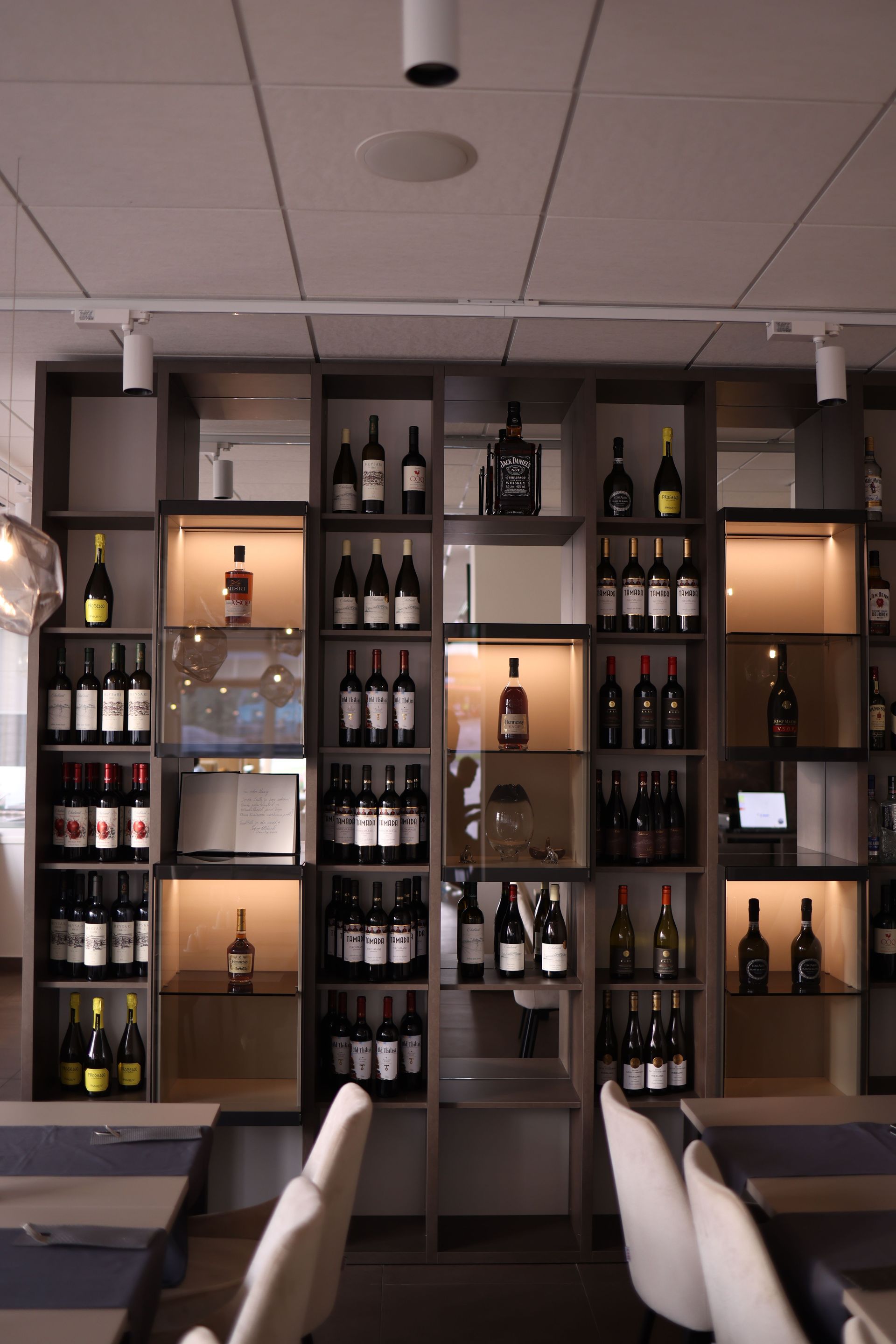
A back bar has two separate storage jobs. One is the working stock: the by-the-glass wines and the bottles a bartender reaches for again and again during a shift. The other is the reserve: the deeper bottles on the list, cases and backups. Mixing the two on one wall leaves a crowded bar and an unreadable inventory.
Plan capacity by counting the working stock at the amount sold between deliveries plus a backup bottle for each wine, then place only that count within arm's reach. Everything else moves to a cooled space a few steps away. Racking at the bar then holds fewer bottles and each one is easy to find.
Access follows from reach height and orientation. Bottles from waist to chest height are the ones staff can pull without looking. Label-forward racking lets a bartender read the wine without turning the bottle; cork-forward racking packs the bottles closer and reads only by the cork or capsule, which suits a stock that is a known list. A rolling ladder suits tall walls in a dining room, but a bartender with a hand full of glassware cannot use one, so the top rows belong to reserve bottles that someone fetches between services.
Enclosure and Glass-Fronted Sections
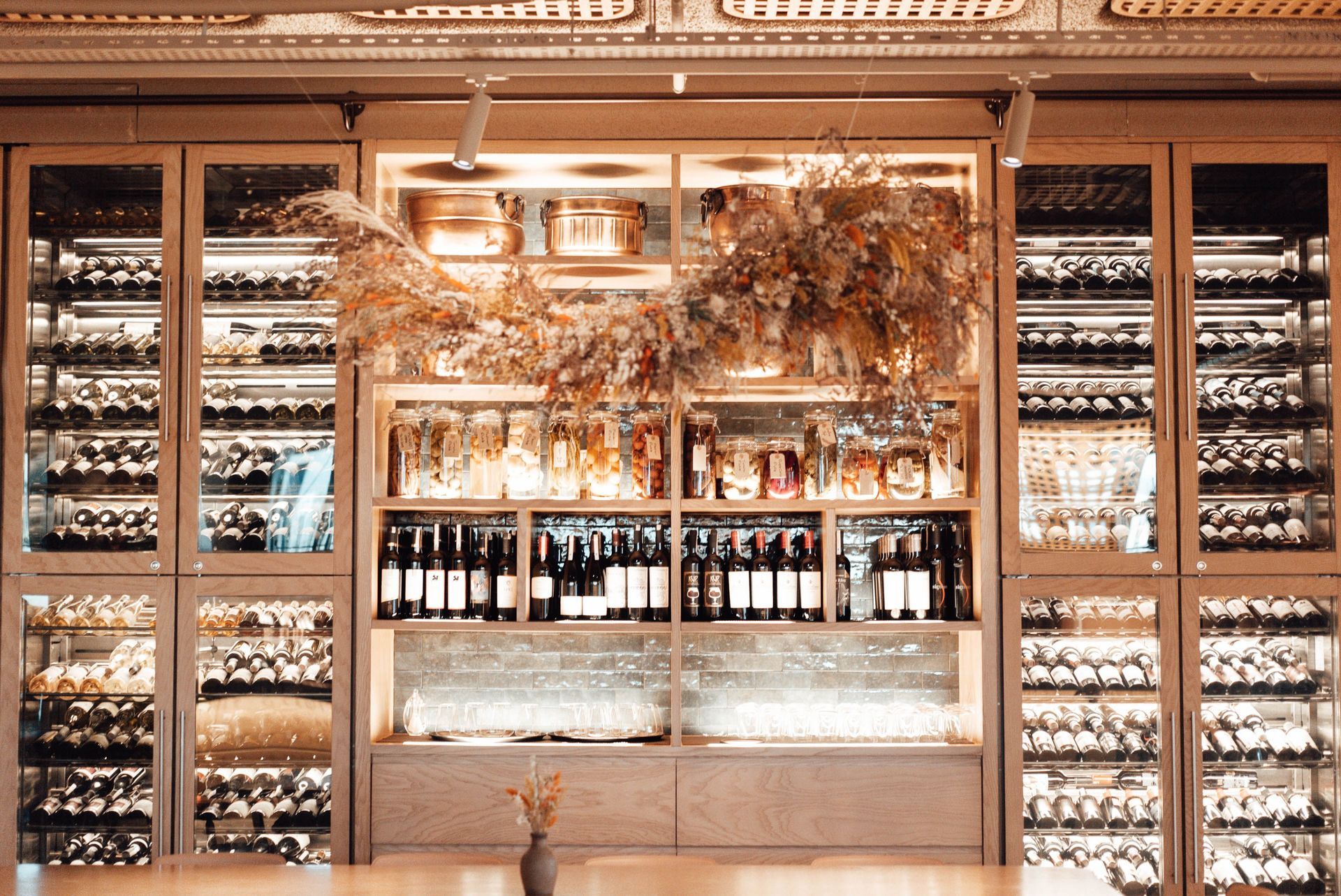
An enclosure changes the air around the bottles. A glass-fronted section behind the bar keeps the display and takes the shelf out of the room's warm, moving air. Dual-pane tempered glass suits the front because it insulates and holds up to a working bar. With a sealed door and a cooling source the enclosure becomes a small cellar; without cooling it becomes a shielded shelf that still follows the room's temperature.
That second case matters for planning. An enclosed section with no cooling dampens the swings and keeps splashes off the bottles, but it does not hold 55 degrees. If the bar's wine program is built around bottles that sell within a few weeks, a shielded section can do the work. If it holds wines for a longer stay, the glass needs a cooling unit behind it.
Glass also adds to what a cooling unit has to remove, since sunlight and room heat pass through it. A plan that puts a large glass front on a cooled section should be sized with the glass counted.
When a Refrigerated Cabinet Belongs Beside the Bar
A refrigerated wine cabinet fits a bar that holds a limited, fast-moving list. The cabinet carries its own cooling, insulation and door, so it can sit against a wall or in a nook with no construction around it. It holds the bottles at a steady temperature through the whole service, and staff can pull a bottle without leaving the service well.
Cabinets are limited by the number of bottles they hold and by the airflow the cooling unit needs. Capacity is fixed when the cabinet is ordered, and a list that grows past it sends bottles back to the open shelf. Placement matters too: a cabinet jammed against a heat source runs harder, so it goes where the back bar is coolest, not where the equipment already sits.
CAUTION
A cooled cabinet or wall unit needs its own electrical supply, and split systems need refrigerant lines. A licensed electrician and a licensed HVAC/R technician do that work. Never open an outlet box, cooling panel or line yourself.
When a Walk-In Wine Room Belongs Beside the Bar
A walk-in wine room fits when the list outgrows a cabinet, when cases arrive and need a home, or when the room itself is a feature guests see. It is a built, insulated room with a sealed door and cooling sized for it. Staff step in, pull what the service needs, and restock the bar in one trip.
Placement decides whether the cooling works. A self-contained through-the-wall unit pushes its hot air into an adjoining room, and that exhaust room has to stay at or below 80 degrees F. A storage room beside the kitchen, a back hallway with the dish machine, or an attic space can climb past 80 degrees F in a hot spell and leave the unit struggling. A cool basement or a ventilated mechanical room can stay under it all year. Cold weather raises the opposite question for split systems: a condensing unit set outdoors needs a low ambient kit once the outdoor air drops below about 40 degrees F. Where no suitable room sits next to the wine room, a model rated for exterior mounting can vent through an outside wall, and some of those are rated for air well above 80 degrees F.
Distance matters for service. A room two steps from the bar is used all night; a room across the building turns into a place staff visit only for restocking, and the bar shelf fills up again with bottles that were too far away to bother fetching.
Choosing the Plan Before the Bar Is Built
The sequence is to list what the bar pours, sort it into working stock and reserve, and then give each group the lightest space that protects it: racking for the fast sellers, a glass-fronted section or cooled cabinet for the middle, a walk-in for the reserve. Doing that before the bar is framed lets electrical, drainage and exhaust be placed in the walls. Doing it afterward leaves the cooling unit to fit whatever space remains.
A bar's wine storage works when the bottles that wait are the ones kept cool, and the bottles that move are the ones kept close.
Frequently Asked Questions
Can a glass-fronted section behind the bar hold wine without a cooling unit?
It can hold bottles for a short stay, but display lights inside a sealed, uncooled case have nowhere to shed their heat, so the case can run warmer than the bar around it. Keep the lighting outside the glass, or use low-heat LED strips, if the section will not be cooled.
How deep should racking behind the bar be?
Behind a bar, every inch of rack depth comes out of the bartender's walkway, so measure the clear aisle with the rack drawn in before choosing. A deeper rack that hides a second bottle behind the first suits a wine the bar stocks several of and pours steadily, while a single-deep rack keeps every bottle in sight.
Can reds and whites share one cooled space?
A cellar holds one set point, around 55 degrees F, and the wines are chilled further or warmed briefly for service. A dual-zone cabinet carries two set points, so a bar that sells chilled whites by the bottle can keep them in their own zone.
What should staff do with bottles already stored upright for weeks?
Look at the cork end for a cork pushed up out of the neck, check for wine leaking at the capsule, and compare fill levels from bottle to bottle. A lower fill or a raised cork is a reason to pour that bottle first and lay the rest down.
Can a screw-cap bottle stand upright at the bar?
Its seal does not depend on contact with the wine, so a screw-capped bottle can stand upright on a speed rail or a front shelf without harm to the closure. That makes screw caps the ones to keep upright at the bar, leaving the horizontal racking for corked bottles.
Can kitchen smells reach the bottles?
They can. Cork can take on strong aromas, and a back bar that shares air with the kitchen carries frying oil and cleaning chemicals along the shelf. Bottles behind a gasketed glass door or in a closed cabinet sit in their own air.
Sketch the back bar's wine storage before any shelving is built â racking, a glass front or a cooled bay can be drawn to the wall's real dimensions. Cachet Wine Cellars serves Orange County and Southern California. Call (949) 569-7857.
Call (949) 569-7857