
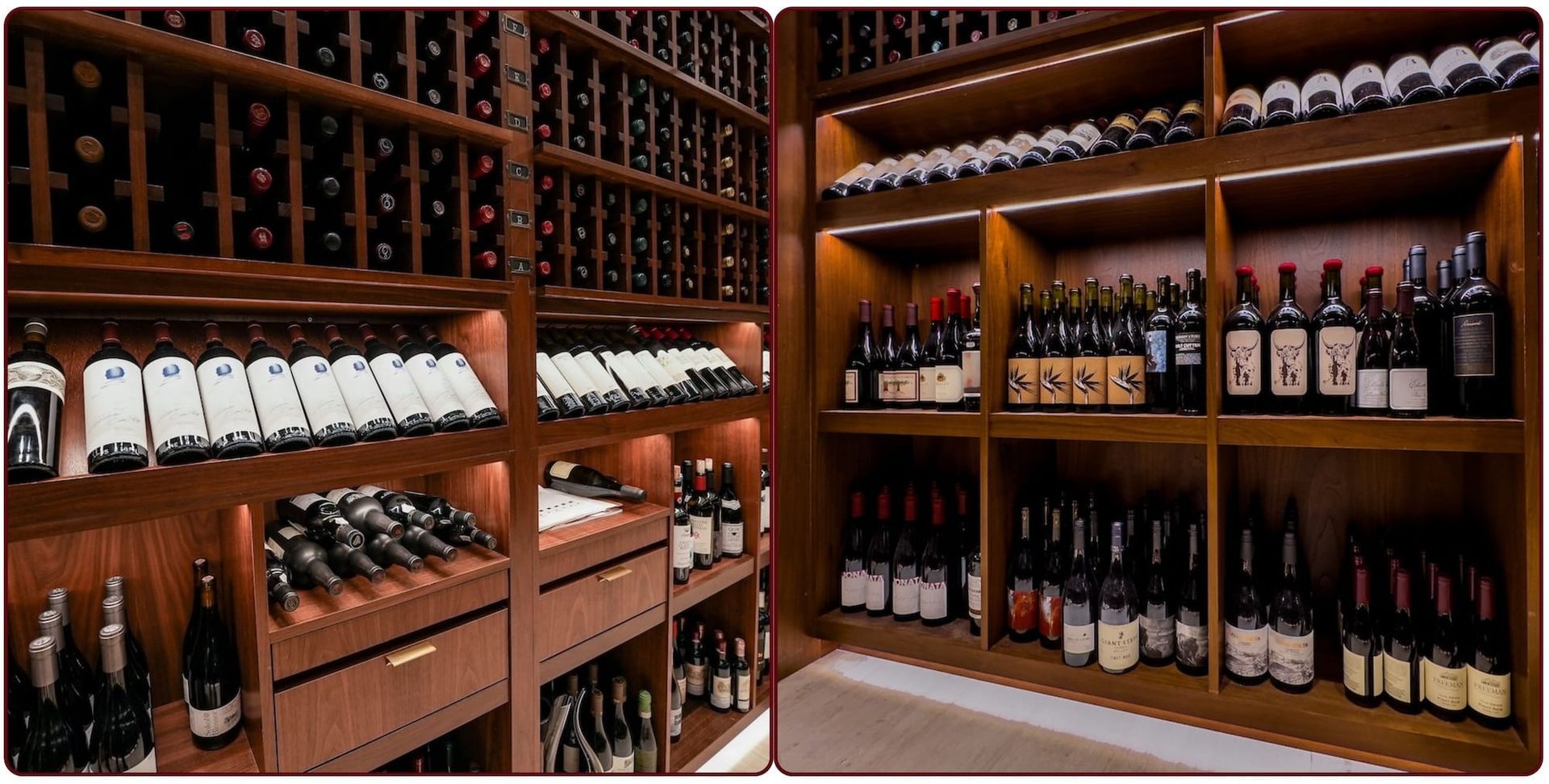
Why Private Wine Lockers Are the New Must-Have Luxury

May 8, 2026

Why Private Wine Lockers Are the New Must-Have Luxury


Wine lockers have gotten really popular in recent years, both in homes and in commercial spaces, and it’s pretty easy to understand why. They’re simple, flexible, and make storing wine feel a lot more organized and accessible without needing a massive custom cellar.


One of the biggest reasons people like wine lockers is how easy they are to use. Instead of dealing with a big wall of racking where everything blends together, lockers break storage into clear, individual sections. You always know where your bottles are, and you don’t have to move other bottles around just to grab one. It sounds like a small thing, but it makes a big difference in day-to-day use.

Convenience Without Compromise

They’re also really convenient. For homeowners, wine lockers are a great option if you want something more structured than a wine fridge but don’t want to go all-in on a fully custom display cellar. They keep everything neat, make better use of space, and give the room a more finished, intentional look. Plus, if your collection grows, it’s easy to add more lockers instead of redoing the entire setup.


In commercial settings, wine lockers are even more valuable. You see them a lot in restaurants, wine bars, and private clubs where customers can store their own bottles on-site. It creates a more personal experience—people like knowing they have their own dedicated space. They can come in, grab a bottle they’ve been saving, and enjoy it without having to bring anything with them.


From a business perspective, that’s a huge win. Wine locker programs give customers another reason to come back, and they build a sense of loyalty. It also adds a premium feel to the space. Instead of just being another guest, customers feel like members. At the same time, it creates an additional revenue stream, since lockers are often rented or sold as part of a membership.


Security is another big factor. Wine collections can be valuable, and lockers give people peace of mind. Whether it’s in a shared residential cellar or a commercial environment, having a locked, clearly defined space helps prevent mix-ups and keeps everything protected.


Design-wise, wine lockers are surprisingly versatile. They can be traditional and warm with wood finishes, or more modern with metal and glass. Either way, they tend to look clean and organized, and when done right, they can actually become a visual feature in the room instead of just storage.

Ease of access, organization, and everyday usability

Another thing people don’t always think about is how easy they are to manage. In commercial spaces especially, lockers simplify organization and tracking. Each locker belongs to a specific person, which cuts down on confusion and makes operations smoother. For homeowners, it just means less time reorganizing and more time actually enjoying the collection.


At the end of the day, wine lockers work because they’re practical. They’re easy to understand, easy to use, and flexible enough to grow with you. Whether someone has a small personal collection or a business is trying to create a better customer experience, lockers offer a straightforward solution that just makes sense.


That combination of simplicity, convenience, and flexibility is what’s really driving their popularity.


Ready to explore wine lockers for your space?

Recent Posts

Black glass door pull handles on a transparent door
October 16, 2026
Every lock, keypad, and handle on a cellar door cuts through the seal line. What each hardware penetration means for the gasket, and how to specify it right.
Tall glass wine cooler cabinet in a warm-lit restaurant hallway, with bottles visible inside.
October 16, 2026
A cellar door that worked for years can fail once work happens elsewhere in the house. Learn how to trace the real cause before blaming the door.
Open ornate glass doors into a warmly lit wooden dining room with a long table and chandelier
October 16, 2026
One face of a wooden cellar door sits at cellar humidity, the other tracks the house. That difference bows the panel; core and finish scope limit how far.
Wooden ceiling vent above a dark beam, with two bottles visible at the bottom edge.
October 16, 2026
A return grille placed near the door reads warm household air as cellar air. See where return air belongs, and the mistakes that cause the same error.
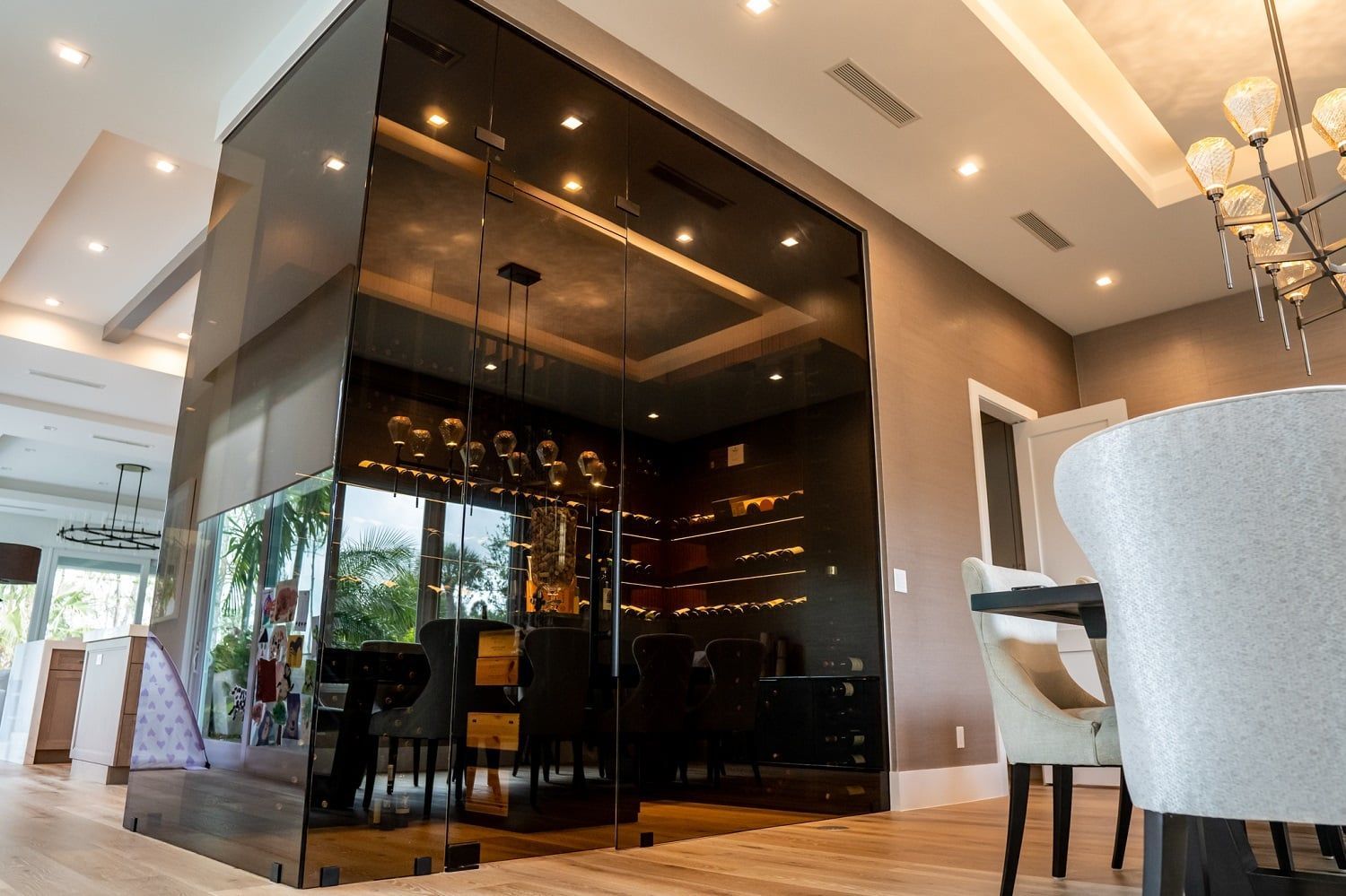
Glass wine cellar door in a dining room, the house-side pane where condensation appears
October 16, 2026
Condensation on a cellar glass door usually means humid house air met a cold house-side pane, not a cooling fault. Which side is wet is the diagnosis.
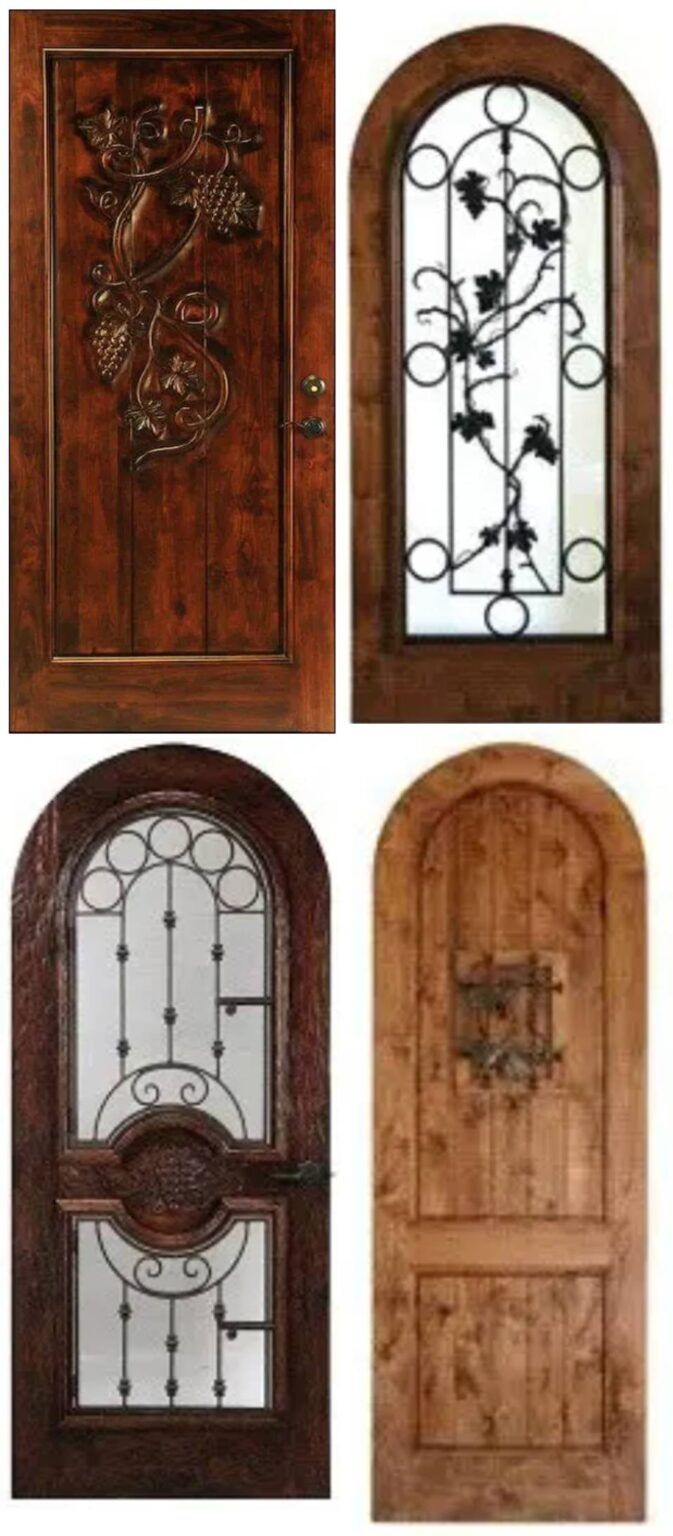
Four decorative wooden arched doors with ornate iron and carved detailing
October 16, 2026
Compare wine cellar door types by what rules each one out: the opening, the wall, traffic, and the view, not style alone.
Black metal pull handles on a glass door, viewed close up.
October 16, 2026
A cellar door can seal at the jambs and head and still fail at the floor. Why the threshold is different, and the two ways builders close it.
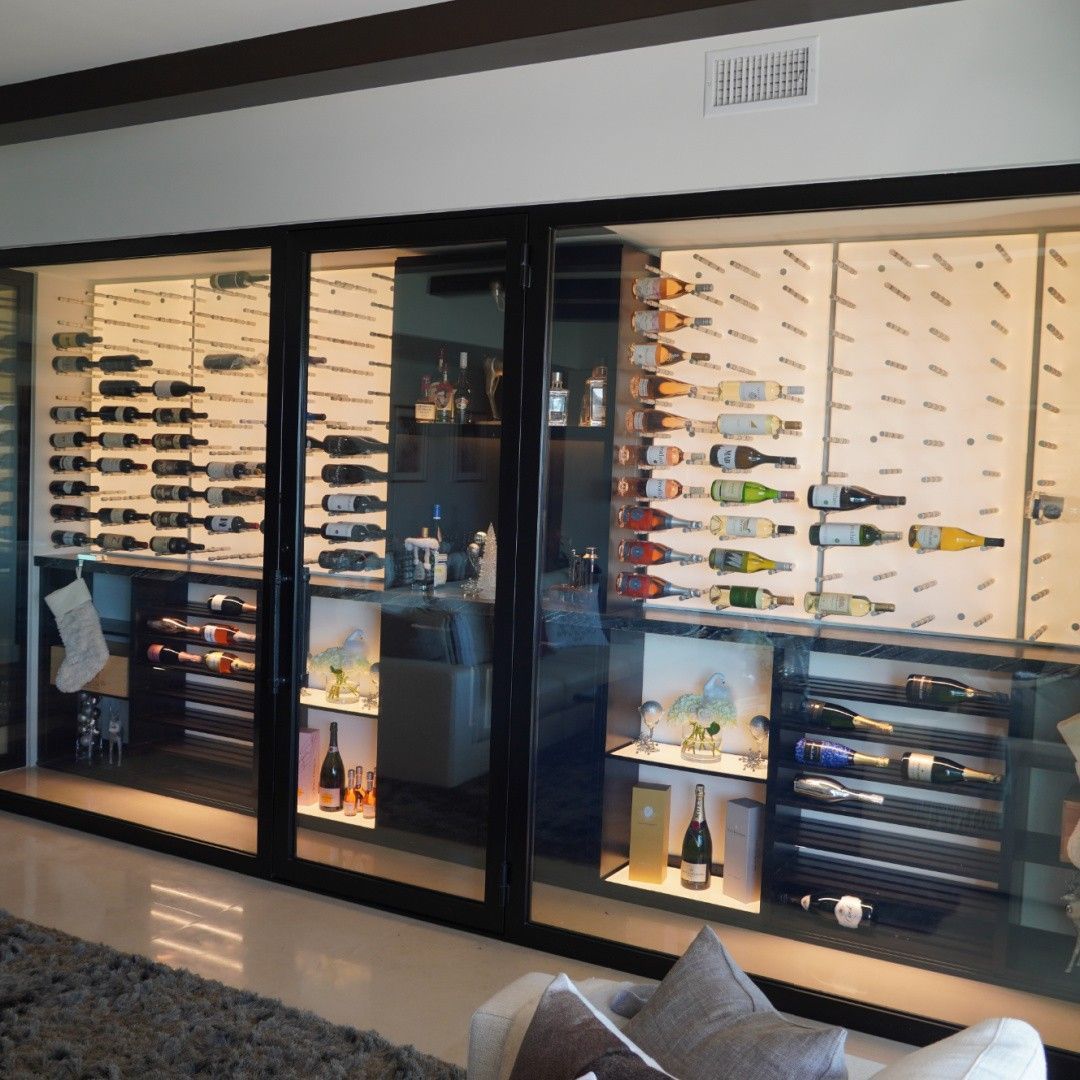
Modern wine display wall with glass-front cabinets and rows of bottles in a sleek interior.
October 16, 2026
A cellar door's swing needs clear floor inside the cellar and clear hallway outside it. See how clearance, opening width, and wall placement fit together.
Wooden double doors with glass panes in a tan hallway, flanked by framed wall art.
October 16, 2026
A custom cellar door built to the wrong opening can't be trimmed on site. What a GC and framer must confirm in writing before release to manufacture.
Custom home-built wall cabinet with hidden sliding shelves and a louvered wall vent in a room.
October 16, 2026
A leaking cellar door shows up first as cooling that runs longer with no setpoint change. The daily shape of that runtime is the real tell.

Show More