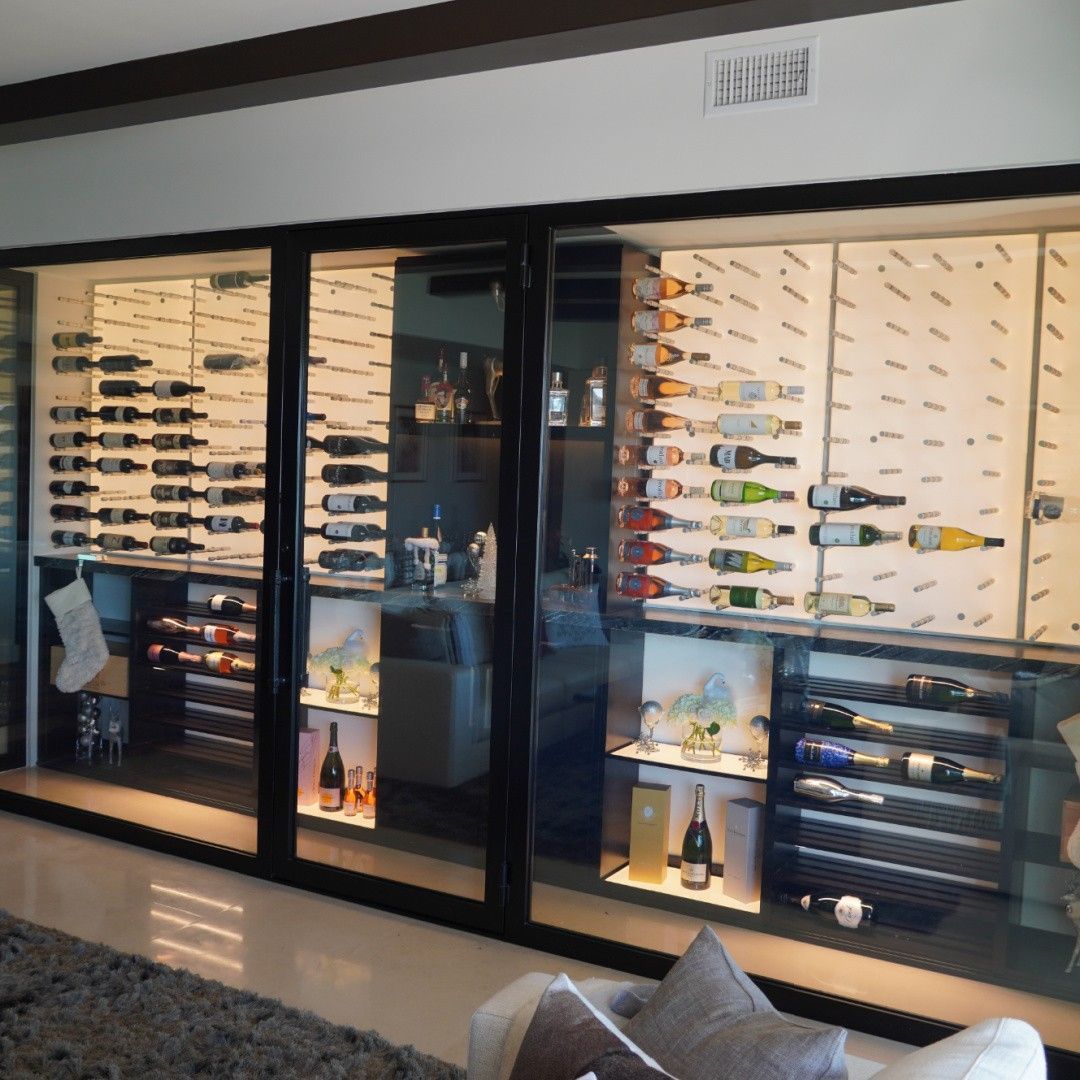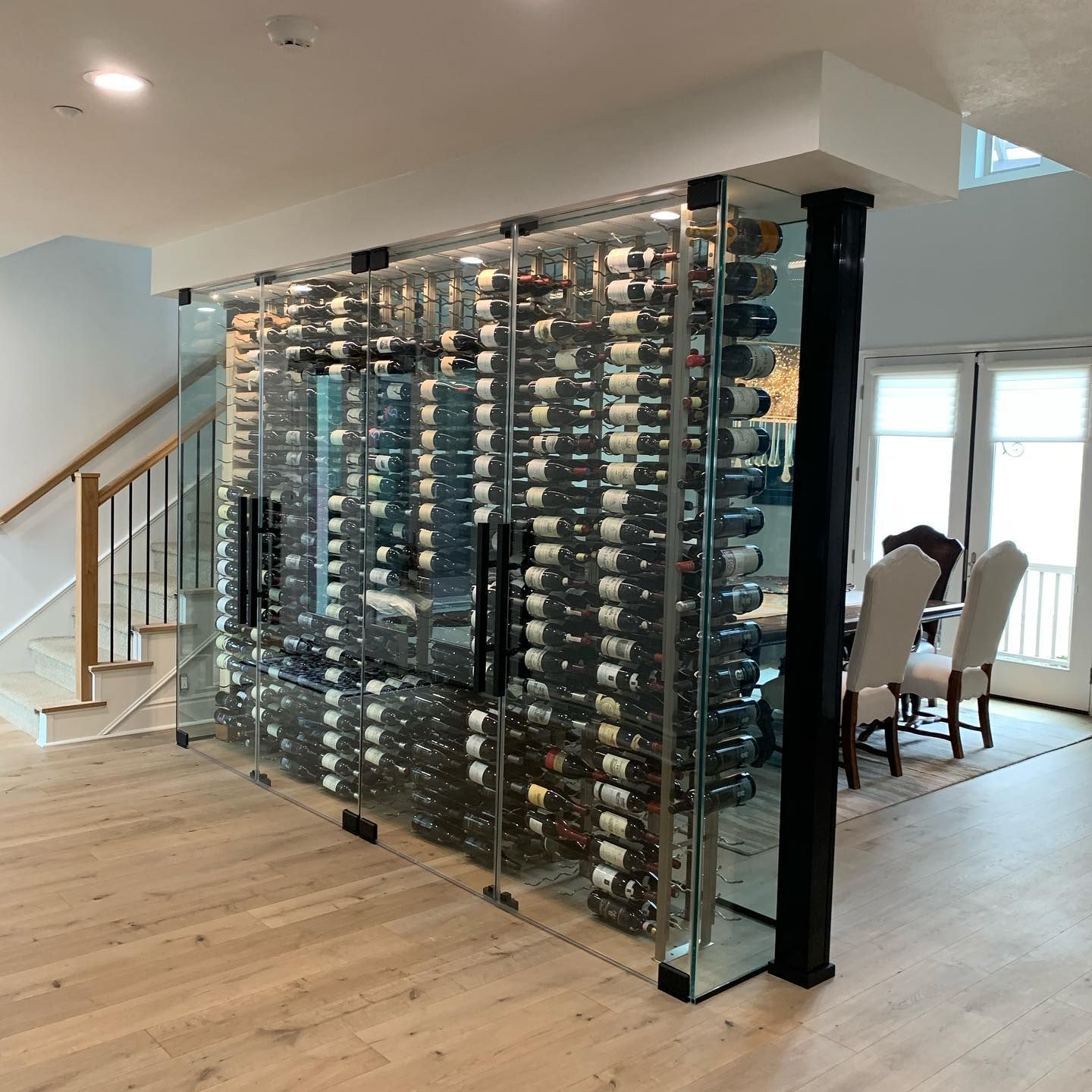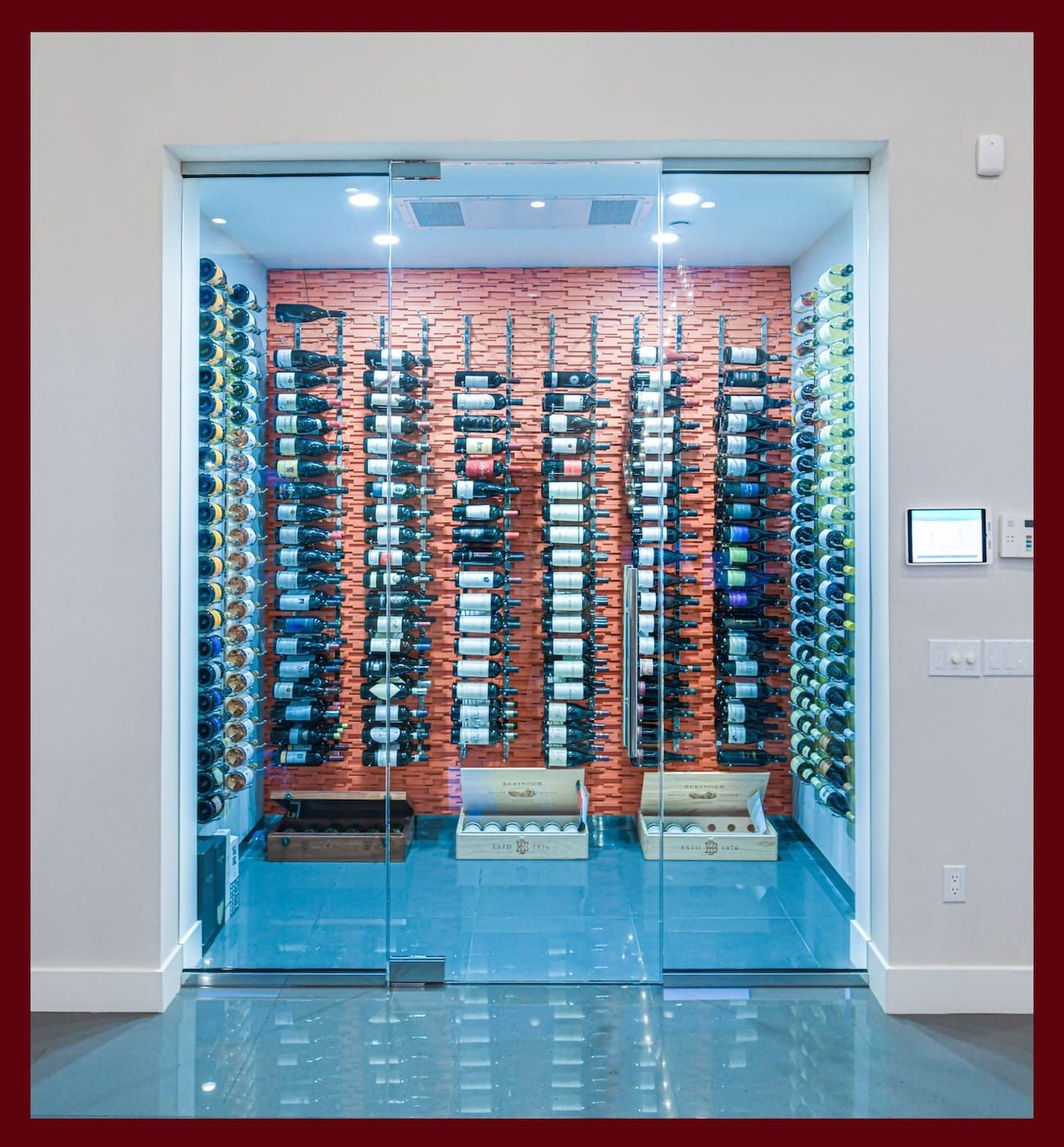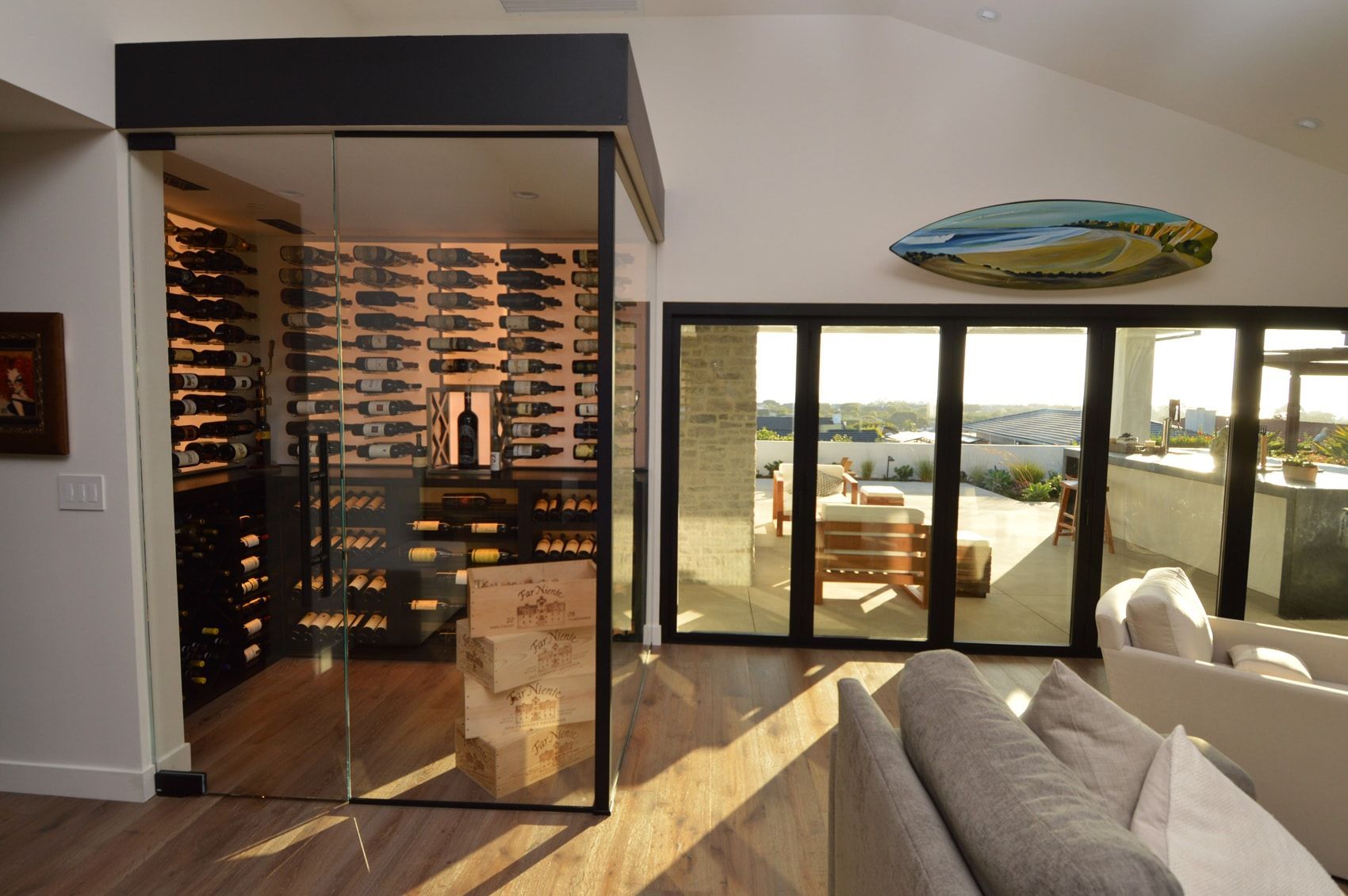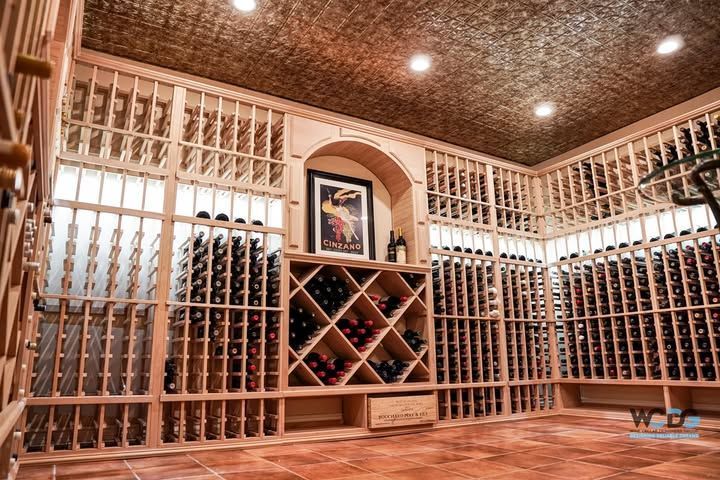
Wine Cellar Lighting for Wood Racks: Matching Kelvin to Species
Choosing Between Them for a Specific Run
Alder, mahogany, redwood, pine, and white oak each arrive with their own undertone before a lighting plan gets drawn. That species decision is close to permanent: racking gets glued, stapled, sealed, and hand-finished into place, with edges sanded smooth to protect the labels that will sit against them for years. A fixture, by comparison, is easy to change out later.
That asymmetry decides the order of operations. The color temperature over the rack has to suit the wood that is already installed. The fixture gets picked against the finished species, matched to its undertone and rendered accurately by the fixture's CRI rating. The same 3000K fixture that reads correctly over one species can push another toward a color it was never finished to show, which is exactly why a single default Kelvin for the whole room rarely serves every wall equally well.
QUICK ANSWER: Warm light pushes redwood and mahogany further toward red and turns white oak's pale blonde yellow; alder shifts least. Read the direction each species moves, then settle the actual number against a finished sample under the candidate fixture.
The Two Bands a Cellar Fixture Comes In
Fixture color temperature does not vary continuously. ANSI C78.377, the standard that sets the nominal white chromaticity targets for solid-state lighting, is why manufacturers cluster their output on a short list of values, and 2700K, 3000K, 3500K, and 4000K are the ones a residential cellar fixture is normally offered in. General lighting practice describes the first two as warm white and the second two as neutral white. In California the top of that list is also a ceiling: Title 24's Joint Appendix JA8 caps the color temperature of residential light sources at 4000K, so a cellar built to code in the state is choosing inside this range whether or not anyone frames it that way.
One constraint sits above the wood entirely. Where clear-glass bottles are on display, the warm end governs regardless of the wood. Everything below about moving toward the neutral end applies to runs holding dark glass; on a display row of flint-bottled whites, rosé, or blanc de blancs, the wood accommodates the bottles.
What is left is a question of direction. Each species moves a particular way when the source gets warmer, and knowing which way tells you which end of the list to test first. The value itself gets settled in front of a finished sample.

Alder's Honey Tone Shifts Least
Alder racking is finished to a warm honey tone with a fine grain. That mid-tone position, without the pronounced red of redwood and mahogany or the pale ground of pine and white oak, is what makes it the least reactive of the five species to a change in color temperature.
The shift: Alder moves least of the five. A warm source adds a small amount of yellow to the honey tone and a neutral source takes a little of it back out, but neither end sends the finish somewhere it was not stained to go. Push far enough past the neutral band and the honey starts reading thinner and slightly gray, closer to raw wood than to the finish applied over it. That narrow spread is what makes alder workable in a room where the racking wraps two or three walls and one fixture line runs the length of all of them.
Because alder moves so little, it is the species most collectors can light with a general fixture choice instead of a species-specific one, which matters most in a room that mixes alder with a second species on an adjoining wall.
Mahogany's Red-Brown Depth Reads Best Under a Neutral Source
Mahogany racking comes in two cuts, Sapele and Malaysian, both finished to a rich burgundy-brown and both dense enough to carry that color deep into the grain. Warm light pushes the burgundy-brown further toward red, and on a deep enough cut the added red can start to look muddy instead of rich, closing the gap between the grain and the shadow lines around it.
The shift: Mahogany moves toward red under a warm source, and it has the least room to absorb that move, because its base color is already the most saturated of the five. A neutral source holds the burgundy-brown closer to where the stain put it and keeps the contrast between heartwood and grain line visible.
Mahogany is one of the two species on this list, along with redwood, where a warm source works against the finish rather than for it. Where the run in front of that racking holds dark glass, the neutral end is the one to test first.
Redwood's Natural Red Undertone Deepens in Warm Light
Redwood racking comes in two grades, Premium and All-Heart, both finished to a warm reddish tone and both naturally moisture-resistant. The same behavior that affects mahogany applies here: a warm source deepens the red already in the wood, and a neutral source holds it in check.
The shift: Redwood moves toward red, in the same direction as mahogany but from a lighter starting point, so it takes a warm source with a little more room before the red begins to dominate the wood's figure instead of sitting behind it.
Redwood and mahogany share the same failure mode under the wrong light: both go redder than intended, and both lose the visual separation between grain and shadow that makes a finish look deliberate.

Pine's Light Cream Shows Every Color Cast
Pine racking is finished to a light cream tone. That pale, low-contrast ground is why pine shows a poorly matched fixture faster than any of the others: a slight color cast that would disappear into mahogany's depth or redwood's red reads as an obvious tint across pine's surface.
The shift: Pine moves in whichever direction the source moves, and it shows the move plainly at both ends. A warm source lays a visible yellow over the cream; a neutral source pulls it slightly gray. Neither result is automatically wrong, which is why pine is the species where CRI decides more than color temperature does. A low-CRI source at any Kelvin value still casts a tint across a light surface with almost nothing in the wood to mask it.
TIP: Ask for a sample board finished in the actual species and sheen, lit under the exact fixture being specified, before fixtures are ordered. A swatch under showroom lighting will not predict how the pairing looks in the finished room.
White Oak's Pale Blonde Turns Yellow in Warm Light
White oak racking is finished to a pale blonde and is the densest of the five species offered, which is why it turns up in commercial cellars that take daily handling. That same pale ground is the one that reacts hardest to a warm source, because there is very little pigment in the finish to absorb the added warmth before it shows.
The shift: White oak moves furthest of the five, and it moves toward yellow. A warm fixture over white oak reads as an obvious mistake, not a subtle drift, and it is the one pairing here a collector is likely to catch from the doorway rather than up close at the rack.
Why CRI Outranks Kelvin Once the Number Is Chosen
Kelvin describes only the color of the light source itself, how warm or cool the white appears to the eye. It says nothing about how accurately that source renders every other color it falls on, which is a separate measurement called the Color Rendering Index, scored on a 100-point scale.
Two fixtures can carry the identical Kelvin rating and still render the same piece of mahogany or redwood differently. A low-CRI source at the correct Kelvin number can wash out the distinction between grain and shadow that makes a red-brown wood look rich, even with the right number printed on the box.
The floor: California's Title 24 Joint Appendix JA8 requires residential light sources to deliver a CRI of 90 or higher, alongside a minimum R9 value. For a cellar built anywhere in the state that floor is the code minimum rather than a preference, and it is a reasonable place to start a fixture search outside California too.
Confirm CRI before comparing Kelvin numbers between fixtures. Once CRI clears that floor, color temperature becomes the variable worth fine-tuning to the species.
The Five Species Side by Side
| Species | Undertone | Direction of shift under a warm source |
|---|---|---|
| Alder | Warm honey, fine grain | Slight yellow; moves least of the five |
| Mahogany (Sapele, Malaysian) | Rich burgundy-brown | Further toward red; least room to absorb it |
| Redwood (Premium, All-Heart) | Warm reddish | Further toward red, from a lighter starting point |
| Pine | Light cream | Visible cast either way; CRI decides more than Kelvin |
| White Oak | Pale blonde | Toward yellow; the largest shift of the five |
No row in that table names a number. The number is a decision made against your stain, your sheen, and your bottle mix; what the table settles is the direction, which tells you which end of a fixture's range to test first. CRI then decides whether the fixture renders the wood accurately at whatever value you land on, and the two get confirmed together.
How to Read a Finish Sample Under a Candidate Fixture
Every direction above tells you which way a species moves. None of them tells you how far is too far on your particular stain, and that is what the sample settles. Semi-custom racking is ordered with a stain color chosen off a chart and custom work is hand-finished, so two alder cellars out of the same shop can sit a visible distance apart in tone before any light reaches either one. Set the evaluation up so the fixture is the only variable.
Match the sheen: ask for the sample in the sealed finish the racking will actually carry, since a gloss surface and a satin surface return the same source differently.
Kill the competing light: view the sample in a room dark apart from the candidate fixture. Daylight or a ceiling fixture mixes into what you are judging and hides the shift you are trying to see.
Hold it at rack distance and rack angle: a sample lying flat on a table under a downlight is taking a beam the finished wall never will. Stand it vertical, at the distance the fixture will sit off the rack face.
Put a bottle in front of it: the wood is never seen bare in a finished cellar. A label and a shoulder of glass in the frame is what the collector will actually be looking at, and dark glass changes the surround the eye is comparing the wood against.
Look past the color to the grain: the color shift is the obvious part. The one worth checking is whether the grain lines and the shadow between them still separate cleanly. When they flatten, the fixture is failing on rendering, and no change of color temperature repairs that.
Frequently Asked Questions
What CRI rating should you look for on a fixture spec sheet?
Check whether the spec sheet lists a separate R9 value alongside the overall CRI number. The general CRI figure is an average across eight unsaturated test color samples; R9 is a ninth, strongly saturated red sample that is scored on its own and left out of that average. The same California code floor that sets the CRI requirement also sets an R9 minimum of 50, which gives a published reference point for the second number.
Can one fixture serve two adjoining wood species at different Kelvin settings?
A fixed-Kelvin fixture cannot be adjusted after installation, so two adjoining species that want opposite ends of the range need either separate fixtures matched to each, or a tunable-white fixture, which lets the Kelvin output be adjusted after the racking is finished instead of locked in at the time of purchase.
Does a hand-finished, sealed sheen change how a given Kelvin reads compared to a matte one?
Yes. A sealed gloss finish creates small specular highlights that read slightly cooler and sharper under the same source, while a hand-finished satin sheen scatters light more evenly across the surface. The identical Kelvin number can look subtly different depending on which sheen the wood was finished to, which is why the sample and the racking need to match on sheen before the comparison means anything.
Does a Kelvin choice made at installation still suit the wood years later?
Wood finishes darken over years, a slow shift separate from the fixture itself. Alder is sold on developing a subtle patina over decades, and mahogany on deepening in color with age, so a cellar lit at the cooler end of a species' shift when new may read warmer later simply because the wood moved underneath it. It is one more argument for a tunable fixture on a long-horizon build.
Do the two mahogany cuts, or the two redwood grades, need different lighting from each other?
Both mahogany cuts sit on the same burgundy-brown base, and both redwood grades on the same warm reddish one, so the direction of shift is identical inside each pair. Any color difference between the two options in a pair is not published as a specification, and it is smaller than what the stain color and the sheen introduce. Judge the pair the same way and let the sample separate them.
Does the wood's grain figure change which CRI is worth specifying?
A pronounced figure catches raking light unevenly across the surface, so a heavily figured cut is the case for specifying above the CRI floor instead of at it. Cut direction is where most of that figure comes from: quartersawn stock, sawn radially out of the log, shows a tighter and more uniform ray pattern, while plainsawn stock from the same log shows the wide cathedral arches most people picture as wood grain. The plainsawn face carries the larger tonal range, and a larger range is what a weak source collapses.
Match the fixture's Kelvin and CRI to the wood already going on your walls — the finish sample settles it faster than any chart. Cachet Wine Cellars designs and builds custom wine cellars from Irvine, California, with a lifetime warranty on every installation. Call (949) 569 7857.