Some cellars ask more of a cooling system than others. A coastal home exposes equipment to salt air that corrodes standard parts, and a glass-enclosed cellar adds a heavy, constant heat load that ordinary sizing underestimates. Both are very doable, but they need the right equipment and design. This guide covers how to cool these demanding cellars.
Quick answer
Coastal cellars need corrosion-resistant equipment, such as coated or copper coils and stainless steel cabinets, to survive salty, humid air. Glass cellars need extra cooling capacity, because even dual-pane glass insulates to only about R2 and lets in a large, steady heat gain, plus care to prevent condensation. For a cellar that is both, the Vertical High Static series with coated coils, sized from a full heat-load survey, is a strong fit.
Cooling a coastal wine cellar
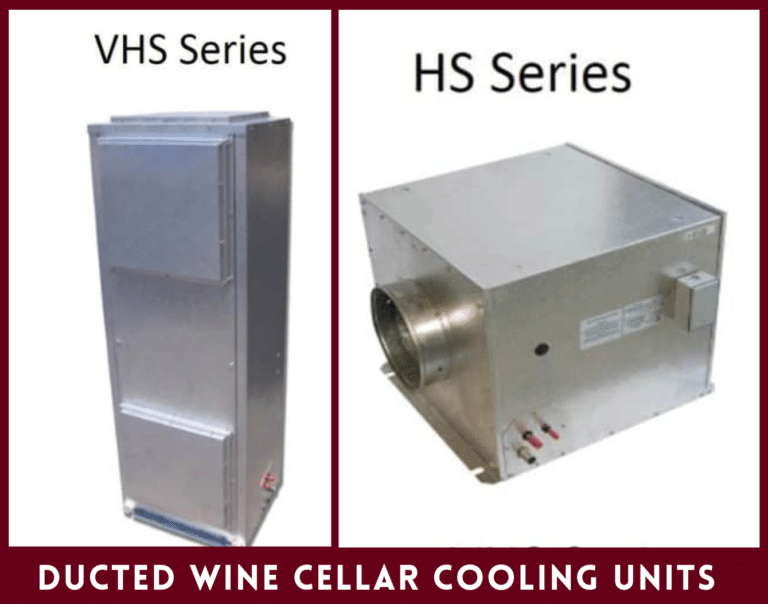
Salt air is hard on refrigeration equipment. Over time it corrodes standard aluminum and steel, which shortens the life of the system. The fix is to specify corrosion-resistant components from the start: the VHS Series
offers copper or coated coils made for coastal and corrosion-prone applications, and stainless steel cabinets are available across the line for high-corrosion environments. With the right materials, a coastal cellar runs reliably for years instead of degrading early.
Cooling a glass-enclosed wine cellar
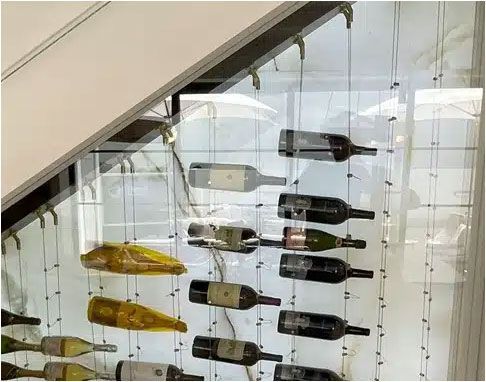
Glass makes a stunning cellar and a demanding one. Even insulated dual-pane glass has an R-value of only about 2, compared with well-insulated walls, so a glass wall or door lets in a large and continuous heat load. If the system is sized as though the room were solid-walled, it will run constantly and still struggle. A glass cellar needs capacity sized for that heat gain, drawn from a heat-load survey
that accounts for the glass area.
Preventing condensation on cellar glass
Glass cellars also invite condensation, the fogging that appears when warm, humid air meets cold glass. Insulated dual-pane glass, tight door seals, a complete vapor barrier, and a correctly sized system that balances humidity all work together to keep the glass clear. We cover this in depth in why wine cellar glass fogs up.
When a cellar is both coastal and glass
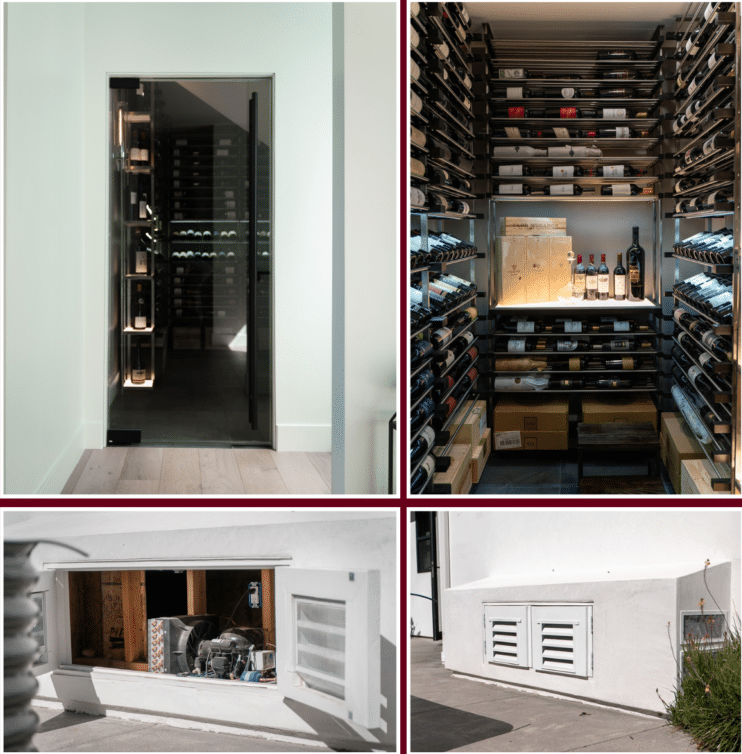
A glass cellar in a coastal home combines both challenges: corrosion resistance and extra cooling capacity. That is where a high-static, remote unit with coated coils earns its place. It keeps all equipment out of the room, resists salt air, and carries the capacity a glass room demands. We specify the materials and size the system together so the cellar performs in a tough environment and still looks the part.
Why salt air is so hard on equipment
Salt in coastal air speeds corrosion on the metal parts of a cooling system, especially the coils and the cabinet. As those parts corrode, efficiency drops and the system can fail years earlier than it would inland. Standard aluminum and steel are the most vulnerable, which is why coastal installs call for protection built in from the start rather than added later. Coated or copper coils resist the salt, and a stainless steel cabinet stands up to the humid, corrosive air around it.
Designing a glass cellar that stays stable
A glass cellar works beautifully when the whole design accounts for the glass. That means sizing the cooling for the real heat gain, specifying insulated dual-pane glass rather than single pane, sealing the doors tightly, and completing the vapor barrier around the opening. Skip any one of these and the room either struggles to hold temperature or fogs over. Handled together, a glass cellar holds a steady temperature and a clear view at the same time.
Maintenance in a coastal environment
Even with corrosion-resistant equipment, a coastal cellar benefits from a little extra care. Salt and humidity build up faster near the coast, so rinsing or wiping an outdoor condenser, keeping the coils clear, and checking the seals and cabinet for early corrosion all help the system reach its full life. Scheduling service a bit more often than an inland cellar is a small cost against the price of replacing a corroded unit early. The right materials and regular attention together are what keep a coastal cellar running for years.
Frequently asked questions
Do I need special equipment for a coastal wine cellar?
Yes. Salt air corrodes standard parts, so coated or copper coils and stainless steel cabinets are worth specifying to protect the system and extend its life.
Why does a glass wine cellar need more cooling?
Glass insulates poorly. Even dual-pane glass is only about R2, so it lets in a large, steady heat load that the cooling system has to overcome, which raises the capacity needed.
Will a glass cellar always have foggy glass?
No. Insulated dual-pane glass, tight seals, a vapor barrier, and balanced humidity prevent condensation in almost every case.
Which unit is best for a coastal glass cellar?
A high-static ducted unit with coated coils, such as the VHS, sized from a heat-load survey, handles both the corrosion and the heat gain well.
Can any cooling unit be used near the coast?
It is better to specify corrosion-resistant components. Coated or copper coils and a stainless cabinet protect the system from salt air and are worth it for the longer life they buy.
Does a glass cellar cost more to cool?
It needs more cooling capacity because glass lets in more heat, so the unit is often larger. Sizing it correctly from the start keeps it running efficiently rather than constantly.
How often should coastal cellar equipment be serviced?
More often than inland, because salt and humidity accelerate wear. A more frequent check of the coils, seals, and cabinet catches corrosion before it shortens the system life.
Coastal and glass cellars reward getting the equipment and sizing right. Tell us about your space and request a quote, and we will design a system built for it. Cachet Wine Cellars serves Orange County and Southern California. Call (949) 569-7857.
Call (949) 569-7857