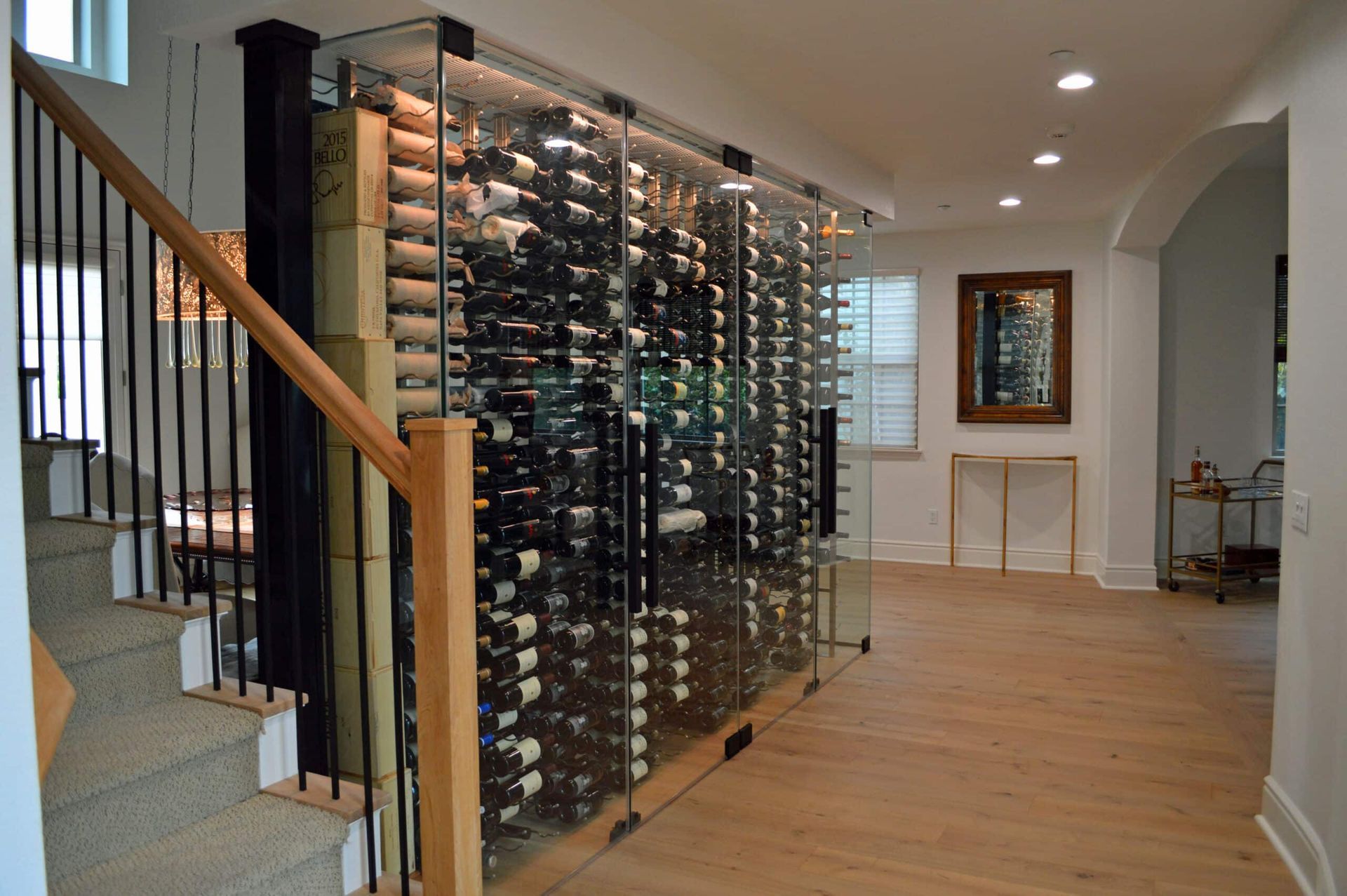
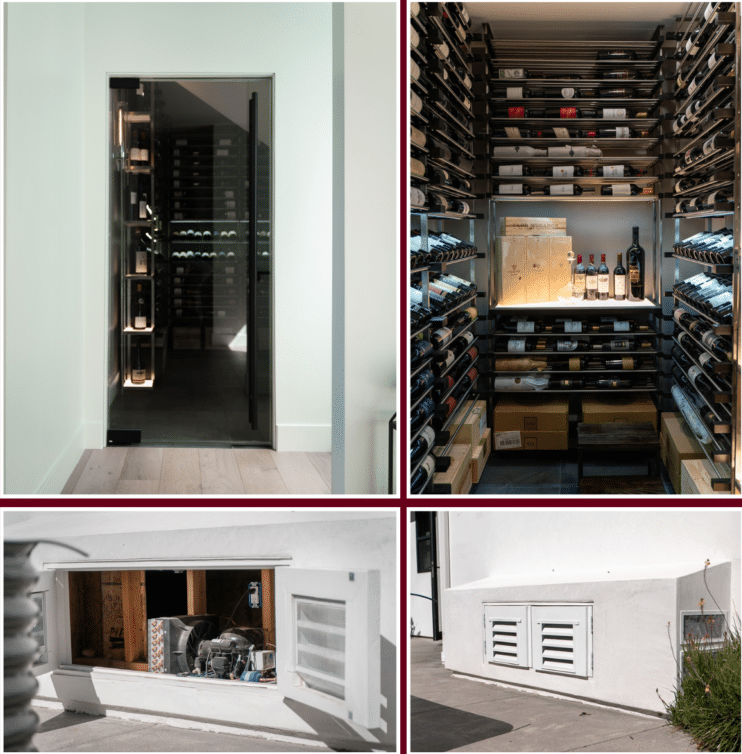
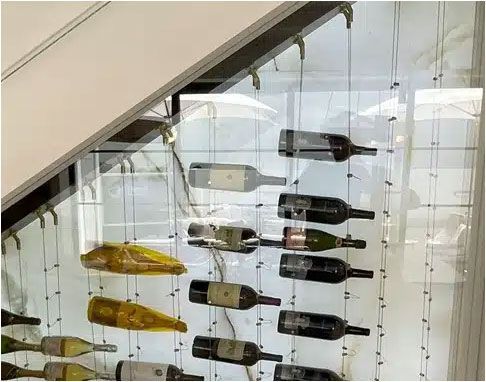
A glass-walled wine cellar is a showpiece, until the glass fogs over and the view disappears. Condensation on cellar glass is one of the most common problems we are asked about, and the good news is that it is almost always a construction or equipment issue that can be solved. Here is why it happens and how to fix it.
Quick answer
Wine cellar glass fogs up when warm, humid air meets a cold glass surface and the moisture condenses, the same way a cold drink sweats in summer. In a cellar it is usually caused by single-pane glass, a leaking door seal, or humidity that is too high. The fixes are insulated dual-pane glass, tight seals, a proper vapor barrier, and a correctly sized cooling system that keeps humidity in balance.
Why condensation forms
Condensation appears whenever a surface is colder than the dew point of the air touching it. Cellar glass is cold on the cellar side and exposed to warmer, more humid room air on the other. Where that warm air meets the cold glass, the water vapor in it turns to droplets, and the glass fogs. The bigger the temperature and humidity gap across the glass, the worse it gets.
Common causes in a wine cellar
- Single-pane glass.
A single pane has almost no insulating value, so its outer surface runs cold and fogs easily. This is the most frequent cause and the reason single-pane glass should be avoided in a cellar.
- Leaking door seals.
A small gap lets cold cellar air and warm room air mix right at the glass, which instantly condenses and can even fog the surrounding area.
- Humidity that is too high.
If the cellar or the surrounding room carries too much moisture, there is more water vapor available to condense on any cold surface.
- A missing or incomplete vapor barrier.
Without a proper vapor barrier, moisture migrates through walls and around openings and shows up as condensation.
- A cooling unit that is the wrong size.
An oversized unit short-cycles and lets humidity swing high, while an undersized one runs constantly. Both can push humidity out of balance and encourage fogging.
How to fix foggy cellar glass
- Use insulated, dual-pane glass.
A sealed dual-pane unit keeps the room-side surface closer to room temperature, so it stays above the dew point and does not fog.
- Seal the doors.
Tight, well-fitted seals stop warm and cold air from mixing at the glass. Check and replace worn gaskets.
- Complete the vapor barrier and insulation.
A continuous vapor barrier and proper insulation keep moisture where it belongs and the glass surface stable.
- Right-size and balance the cooling.
A correctly sized system holds a steady temperature and balanced humidity, which removes the excess moisture that drives condensation.
- Watch room-side humidity.
If the room outside the cellar is very humid, reducing that humidity helps too, since the glass sees that air.
When fogging signals a bigger problem
Persistent fogging, water pooling, or staining on surrounding wood is a sign that moisture is getting where it should not, usually a construction issue rather than an equipment fault. Left alone it can lead to warped labels, water stains, and even mold. If the glass keeps fogging after the basics are addressed, it is worth having the construction and the cooling system reviewed together. Good humidity control also supports mold prevention
throughout the cellar.
How to tell if it is the glass, the seals, or the cooling
A little detective work points to the cause. If only the glass fogs and the door seal feels tight, the glass itself is usually the culprit, most often a single pane that should be dual pane. If the fog appears around the edges or the frame, suspect a seal or a gap in the vapor barrier letting warm air reach the cold surface. If the glass is clear but the whole room feels damp, the humidity is high, which points to the cooling system or the construction. Checking in that order, glass first, then seals, then humidity, usually finds the problem fast.
Fixing fog in an existing cellar vs designing it out
If a finished cellar is fogging, the fixes range from simple to involved: replacing worn door seals is quick, while swapping single-pane glass for an insulated unit is a bigger job but the most effective. In a new build, the same problems are designed out from the start by specifying dual-pane glass, tight seals, a complete vapor barrier, and a correctly sized cooling system together. Either way the goal is the same, which is a cold surface that still stays above the dew point of the air around it.
Frequently asked questions
Is foggy wine cellar glass a cooling problem or a construction problem?
Usually construction, most often single-pane glass or a seal or vapor-barrier gap. Cooling plays a part because the system controls humidity, but the glass and the seals are the first things to check.
Does single-pane glass cause condensation?
Yes. Single-pane glass has almost no insulating value, so its surface runs cold and fogs readily. Insulated dual-pane glass is the fix.
Can high humidity alone fog the glass?
It can contribute. More moisture in the air means more water available to condense on a cold surface. Balancing humidity with a correctly sized cooling system helps.
Will fixing the glass stop condensation for good?
Insulated glass plus tight seals, a complete vapor barrier, and balanced humidity together solve it in almost every case. If fogging continues, the construction and cooling should be reviewed together.
Will double-pane glass alone stop the fogging?
Usually it solves most of it, because the room-side surface stays warmer and above the dew point. Pairing it with tight seals, a complete vapor barrier, and balanced humidity removes the rest.
Is condensation dangerous for my cellar?
Left alone it can be. Persistent moisture warps labels, stains wood, and encourages mold, so it is worth fixing the cause rather than wiping the glass.
If your cellar glass keeps fogging, or you are planning a glass cellar and want to avoid it from the start, we can help with the right glass, sealing, and cooling system. Tell us about your space and request a quote. Cachet Wine Cellars serves Orange County and Southern California. Call (949) 569-7857.
Call (949) 569-7857