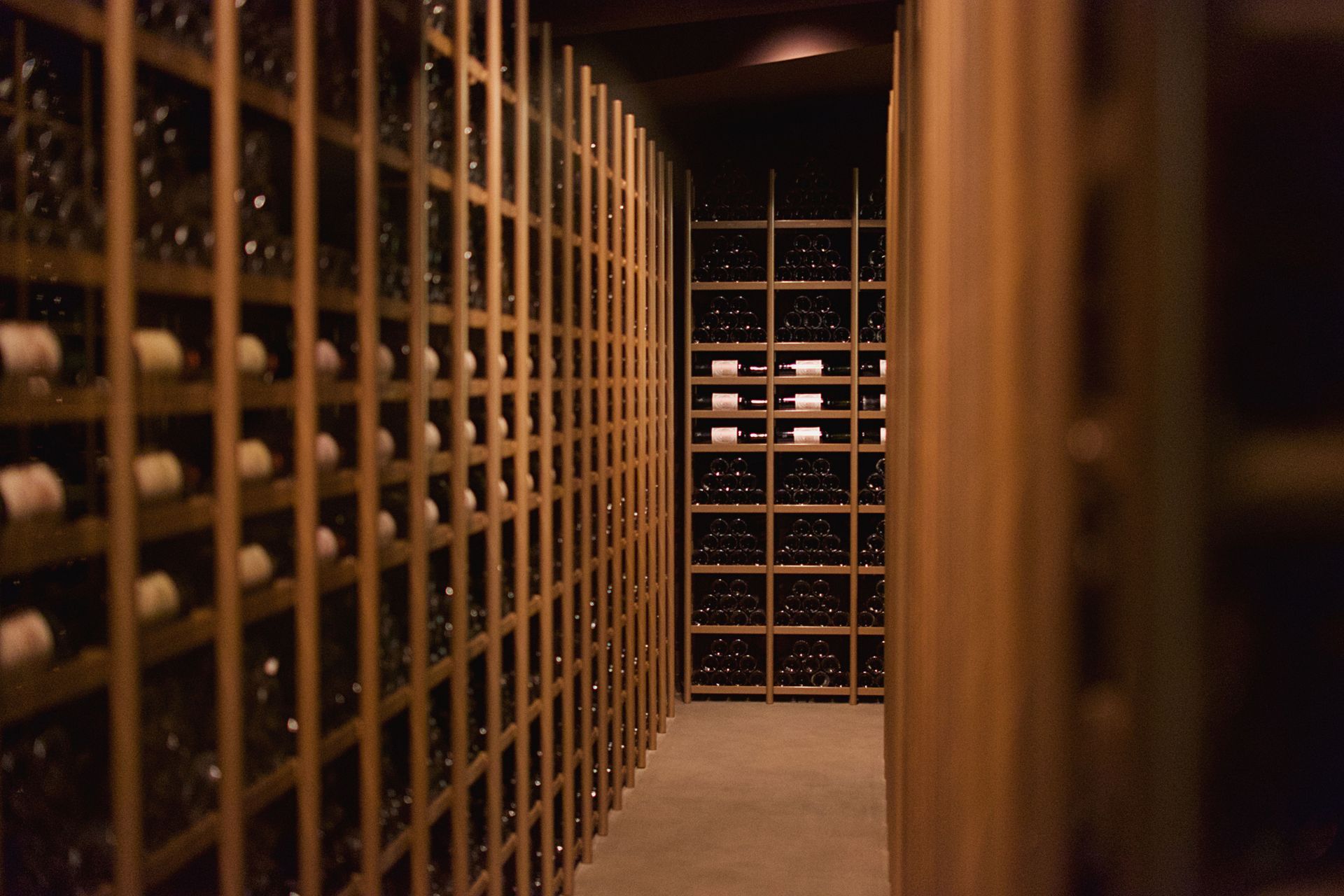
A wine cellar cooling unit protects a valuable collection, so catching trouble early matters. Most failures announce themselves well before the unit stops entirely. This guide covers the warning signs to watch for, what they usually mean, and what to do before your wine is at risk.
Quick answer
The common signs of a failing wine cellar cooling unit are a room that will not hold temperature, the unit running nonstop or short-cycling, humidity that is too high or too low, condensation or ice forming, water leaks, and new or louder noises. Any of these is worth acting on quickly, because a cellar that drifts out of range puts the wine at risk. When in doubt, have it serviced.
Warning signs to watch for
- The cellar will not hold temperature.
Warm spots or a steady climb above your set point means the unit is losing the battle against the heat load.
- It runs constantly.
A unit that never cycles off may be undersized, low on refrigerant, or struggling, and it will drive humidity down.
- It short-cycles.
Switching on and off rapidly points to a control, charge, or sizing problem, and it swings the humidity.
- Humidity is out of range.
Readings well above or below the wine-safe band suggest the cooling cycle is not running as it should.
- Condensation or ice.
Moisture on glass or ice on the coil signals a humidity or refrigerant issue.
- Water where it should not be.
A blocked or misrouted drain line can leak and damage the room.
- New or louder noise.
Rattles, buzzing, or a louder compressor often precede a mechanical failure.
- Rising energy use.
A unit working harder than it should can show up on your power bill before anything else.
What these signs usually mean
Some symptoms point to the equipment, such as a low refrigerant charge, a failing compressor or fan motor, or a blocked drain. Others point to the room, such as a seal that has failed, a gap in the vapor barrier, or a unit that was undersized for the space. Humidity and condensation problems in particular often trace back to sizing or construction
rather than a broken part. A good diagnosis looks at both the unit and the cellar.
What to do next
Do not wait for the unit to stop. If you see any of these signs, note your temperature and humidity readings, keep the cellar closed to limit heat gain, and arrange service
promptly. Sudden swings are harder on wine than a cellar that sits slightly off but steady, so acting early protects the collection. If the unit is near the end of its life, a correctly sized replacement will run more reliably than a repeatedly patched one.
How to monitor your cellar between services
The simplest protection is a good thermometer and hygrometer, ideally one that logs readings or sends alerts. Check that the cellar holds its set temperature and that humidity stays in the wine-safe band, and glance at the coil and drain now and then for ice or standing water. Small drifts caught early are easy to address, while the same problem ignored for months can cook or dry a collection. If you are away often, a sensor that sends alerts to your phone is worth having.
Repair or replace?
Not every warning sign means a new unit. A blocked drain, a worn seal, or a low refrigerant charge is a straightforward repair on a split system, which is one of their advantages, since they are serviced in place. Repeated failures, a tired compressor, or a unit that was undersized from the start are different, and in those cases a correctly sized replacement will cost less over time than chasing one fault after another. A good technician will tell you which situation you are in.
The risk of ignoring the early signs
The reason these signs matter is what happens if they are missed. A cooling unit rarely fails all at once. It drifts, and the cellar drifts with it, often slowly enough that nothing looks wrong until a heat wave or a long absence pushes the room well out of range. By then a collection can be heat-damaged or dried out, which is permanent. Treating an early warning sign as a prompt to act, rather than something to watch, is the difference between a service call and a loss.
Frequently asked questions
How long does a wine cellar cooling unit last?
A quality split system that is correctly sized and maintained lasts many years. Self-contained units tend to have shorter lives. Regular service extends any system.
Is constant running always a sign of failure?
Not always, but it is a red flag. It can mean low refrigerant, a struggling unit, or a system that was undersized for the room. It is worth checking.
My humidity is high. Is the cooling unit broken?
Maybe, but high humidity often comes from an oversized unit short-cycling or from a construction gap, not a broken part. A proper diagnosis checks both.
Can I keep using the cellar while it is serviced?
For short periods, keep it closed to limit heat and monitor the temperature. If the room drifts well out of range, move the wine to stable storage until it is fixed.
How often should a wine cellar cooling unit be serviced?
A yearly check is a reasonable baseline: inspect the coil, drain, seals, and refrigerant side, and clean as needed. Cellars in dusty or coastal settings may need attention more often.
Does a noisy unit always mean a problem?
Not always, but a new or louder noise is worth checking. Rattles and buzzing can signal a loose part or a failing motor, which is cheaper to fix early.
If your cellar is showing any of these signs, do not risk the wine. Tell us what you are seeing and request a quote for service or a correctly sized replacement. Cachet Wine Cellars serves Orange County and Southern California. Call (949) 569-7857.
Call (949) 569-7857