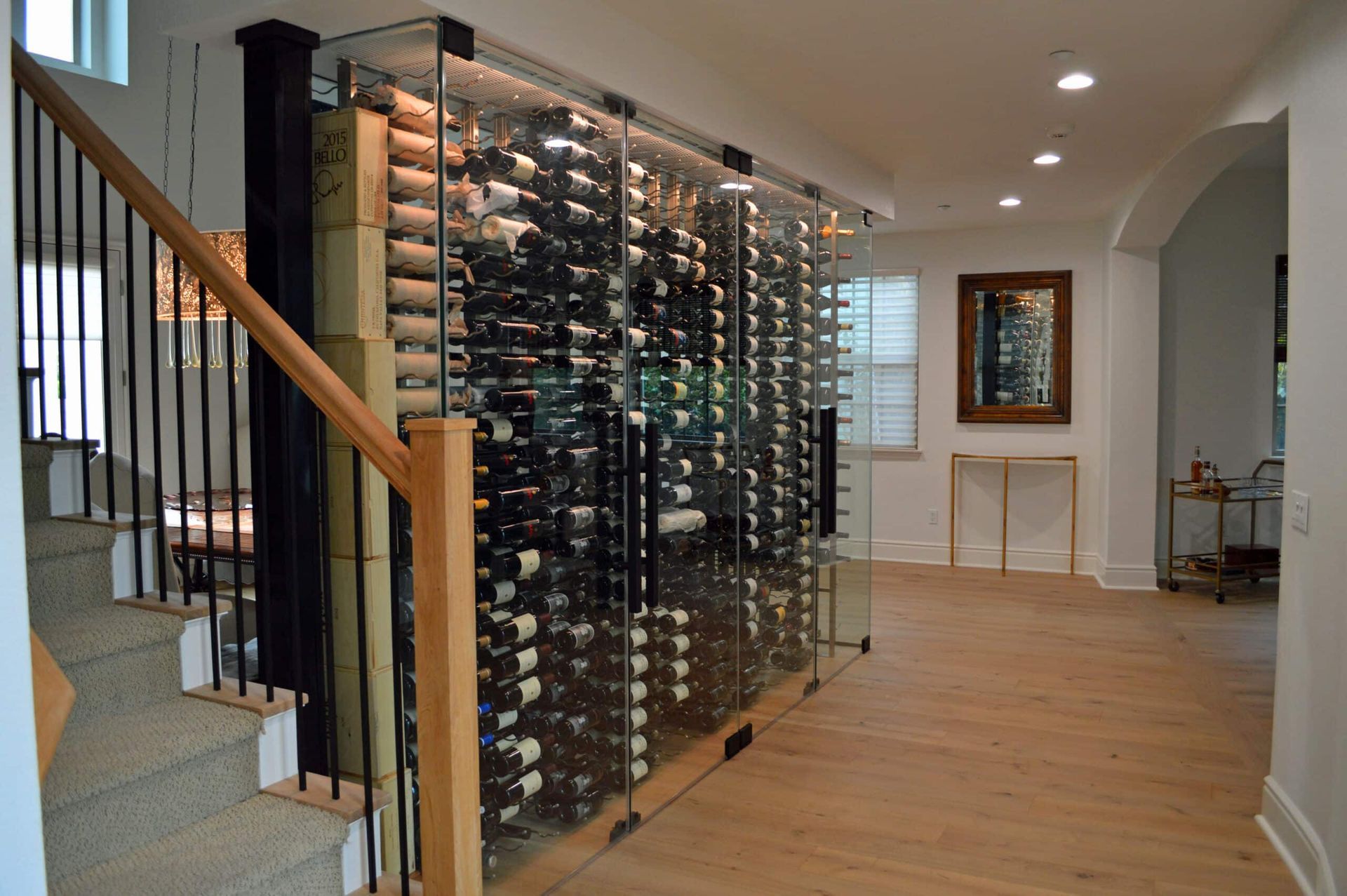
It is a common question: if a cellar just needs to be cold, why not run a small air conditioner into the room? It seems like an easy, inexpensive fix. The problem is that wine storage and human comfort are two different jobs, and a standard air conditioner is built for the wrong one. Here is why it does not work, and what a dedicated wine cellar cooling unit does instead.
Quick answer
A regular air conditioner cannot cool a wine cellar properly because it is built to keep people comfortable at around 72 degrees, not to hold wine at a steady 55 with balanced humidity. It cools in short bursts, dries the air, switches off overnight, and has no humidity control, so temperature and humidity swing in exactly the ways that damage wine. A dedicated wine cellar cooling unit is designed to hold those conditions continuously and gently.
Wine storage is a different job than comfort cooling
Wine ages best at a steady temperature near 55 degrees Fahrenheit with humidity held around 55 to 70 percent. A home air conditioner is designed to pull a room down to a comfortable 72 or so, then shut off. It is not built to reach 55, to hold it precisely, or to manage humidity, because none of that matters for human comfort.
Why a standard air conditioner fails in a cellar
- It cannot reach or hold 55 degrees.
Most residential systems are not designed to run that cold and will struggle or shut down trying.
- It dries the air.
Air conditioners strip humidity as a feature. In a cellar that dries corks, which lets air in and spoils wine.
- It cools in bursts.
It overshoots, then switches off, so the room temperature swings instead of holding steady.
- It has no humidity control.
There is no mechanism to keep humidity in the wine-safe range.
- It cycles off when you are away.
Thermostats and schedules let the room drift overnight or on vacation, exactly when stability matters most.
Sudden, repeated swings in temperature and humidity are more damaging to wine than a cellar that sits slightly warm or cool but steady. That stability is the whole point, and it is what a comfort air conditioner cannot provide.
What a dedicated wine cellar cooling unit does differently
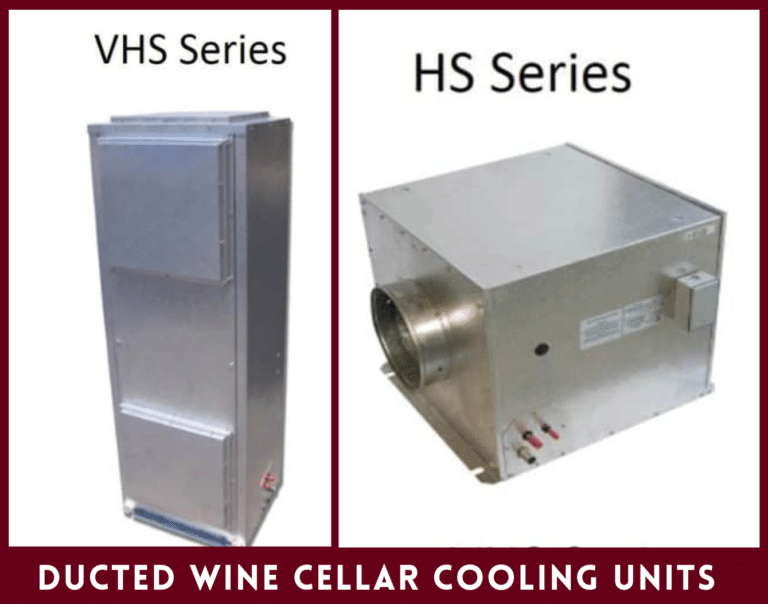
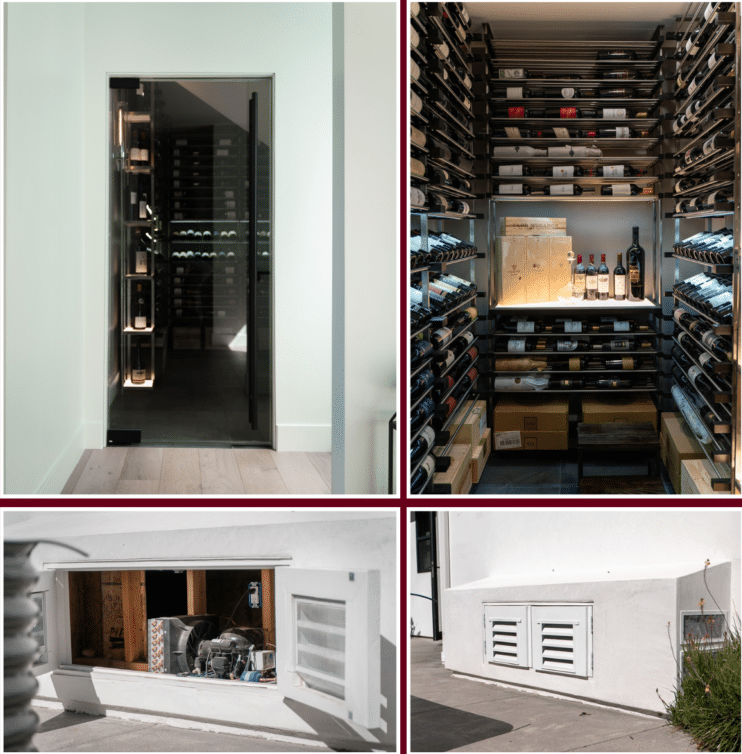
A wine cellar cooling unit is engineered to hold a low, stable temperature and to balance humidity rather than strip it. It runs a gentle, controlled cycle designed to keep the room within a tight band, and it is built to operate continuously at wine-storage temperatures. Paired with proper insulation and a vapor barrier, it keeps the room in the right range year round. You can compare the different types in our guide to choosing a cooling unit.
Humidity is the part people forget
Temperature gets the attention, but humidity is where a regular air conditioner does the quiet damage. Air conditioners remove moisture on purpose, because dry air feels more comfortable. A wine cellar needs the opposite, with humidity held in roughly the 55 to 70 percent range so corks stay sealed. Run a comfort air conditioner in a cellar and it strips the air dry, the corks shrink, and air works its way into the bottles, which oxidizes the wine and ruins long-term storage. No amount of temperature control fixes a room that is too dry.
Why stability matters more than the exact number
A cellar that holds a steady 57 degrees protects wine better than one that bounces between 50 and 68 while averaging 58. Each swing expands and contracts the wine and the air in the bottle, stressing the cork and speeding aging. A comfort air conditioner, cycling to a wall thermostat and shutting off overnight, creates exactly those swings. A dedicated unit is built to avoid them, holding a tight band continuously, which is the whole point of cellar cooling.
What about a wine fridge or cabinet?
A wine fridge is sometimes offered as a middle ground, and for a handful of bottles it is fine. It is a small, self-contained appliance built to chill a cabinet, not to condition a room. Once you are storing a real collection or cooling a walk-in space, a fridge cannot keep up, and running several of them is noisy and inefficient. A dedicated cellar cooling unit is the right tool once the space grows beyond a cabinet.
Frequently asked questions
Can I modify a regular AC to work in a wine cellar?
It is not advisable. Even with a low-temperature adjustment, a comfort air conditioner still dries the air and has no humidity control, so it cannot protect wine the way a purpose-built unit does.
What temperature and humidity should a wine cellar hold?
Around 55 degrees Fahrenheit with humidity in roughly the 55 to 70 percent range. Stability matters as much as the exact numbers.
Will a dehumidifier plus an AC do the job?
That still leaves you fighting two appliances that are not designed to work together at wine-storage temperatures. A dedicated unit handles temperature and humidity balance together, which is simpler and more reliable.
Is a wine fridge the same as a cellar cooling unit?
A wine fridge is a small self-contained appliance for a cabinet. A cellar cooling unit is sized and installed to condition a whole room to wine-storage conditions.
Can I just run my home AC colder for the cellar?
No. Most home systems are not built to run near 55 degrees and will struggle or shut down, and even if they reached it they would still dry the air and cycle off, leaving the humidity and stability problems unsolved.
Is a wine cellar cooling unit expensive to run?
A correctly sized unit runs in efficient cycles rather than constantly, so running cost stays reasonable. An undersized or oversized unit costs more because it never settles into a steady rhythm.
If you are planning a wine room, start with a cooling unit built for the job. Tell us about your space and request a quote, and we will size and install the right system. Cachet Wine Cellars serves Orange County and Southern California. Call (949) 569-7857.
Call (949) 569-7857