Sizing is the single most important decision in a wine cellar cooling project. Get it right and the room holds a steady temperature and balanced humidity for years. Get it wrong and the system either never keeps up or wears itself out. This guide explains how cooling units are sized, why a cubic-foot estimate is not enough, and what a proper heat-load survey accounts for.
Quick answer
A wine cellar cooling unit is sized by its cooling load, measured in BTU per hour, not by room size alone. The load depends on the glass, insulation, whether the room is above or below grade, lighting, target temperature, and the volume of wine stored. A heat-load survey weighs all of these to find the right capacity. Sizing by cubic feet alone often leads to an under- or oversized unit and the problems that come with each.
Why cubic feet is not enough
The quick cubic-foot method assumes a standard, lightly insulated box with no glass and average conditions. Real custom cellars are rarely that. A room with a glass wall, a below-grade location, or display lighting has a completely different load than its volume suggests. Sizing on volume alone ignores the very features that make a custom cellar unique, which is why it so often misses.
What a heat-load survey accounts for
A proper survey weighs every factor that adds or removes heat from the room:
- Glass.
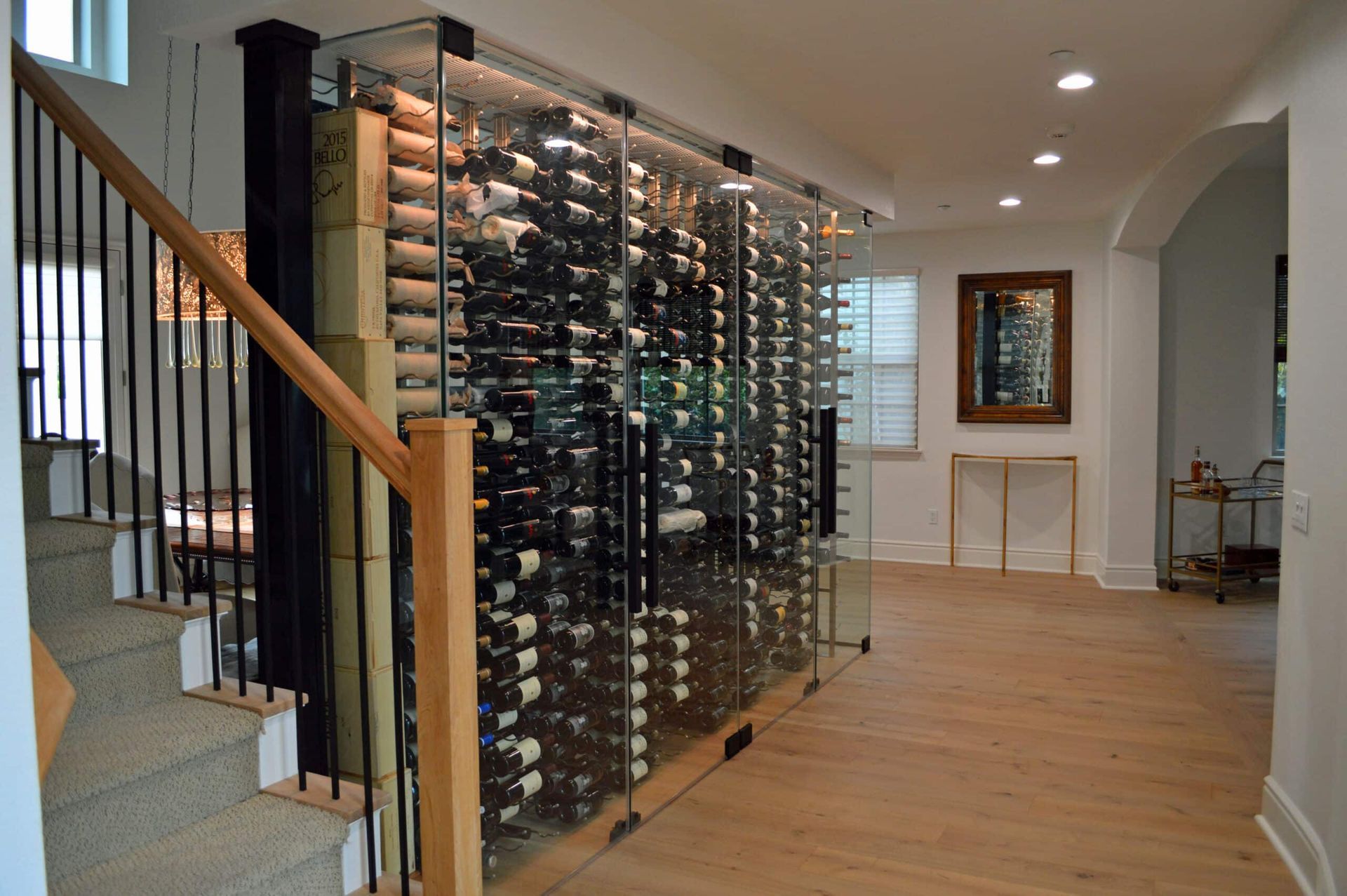
Windows and glass doors add significant heat gain. Dual-pane glass has an insulation value of only about R2, so a glass wall can shift the load dramatically. Single-pane glass should be avoided entirely.
- Insulation.
The R-value of the walls and ceiling, and whether the room is above or below grade, change the requirement. Below-grade rooms sit against cooler ground and often need less equipment.
- Lighting.
Can and halogen fixtures give off real heat, especially if left on for hours. LED lighting adds so little heat it barely enters the calculation.
- Set point.
Around 55 degrees Fahrenheit is ideal for storage. A cabinet or room held colder, for serving whites or champagne, needs more capacity and faster recovery.
- Thermal mass.
The wine itself adjusts about 75 percent slower than the air. A cellar loaded with room-temperature bottles takes hours to settle, and turning the thermostat colder will not speed that up.
- Added features.
Refrigerators, televisions, electronics, and fireplaces all give off heat and have to be counted.
For reference, manufacturer BTU ratings are calculated at a set of standard conditions (around a 17-degree temperature differential, a 38-degree saturated suction temperature, and a 55-degree room), which is another reason the real-world number should come from a survey rather than a label.
What happens if the unit is the wrong size
Undersized:
the unit runs almost constantly, struggles to hold temperature, and drives the humidity down, which dries corks and can void the warranty.
Oversized:
the unit short-cycles, turning on and off too quickly to run its humidity-balancing cycle. That swings the humidity up, can cause condensation, and stresses the equipment toward early failure. Bigger is not safer.
How the pros size it
We size every system from a full heat-load survey
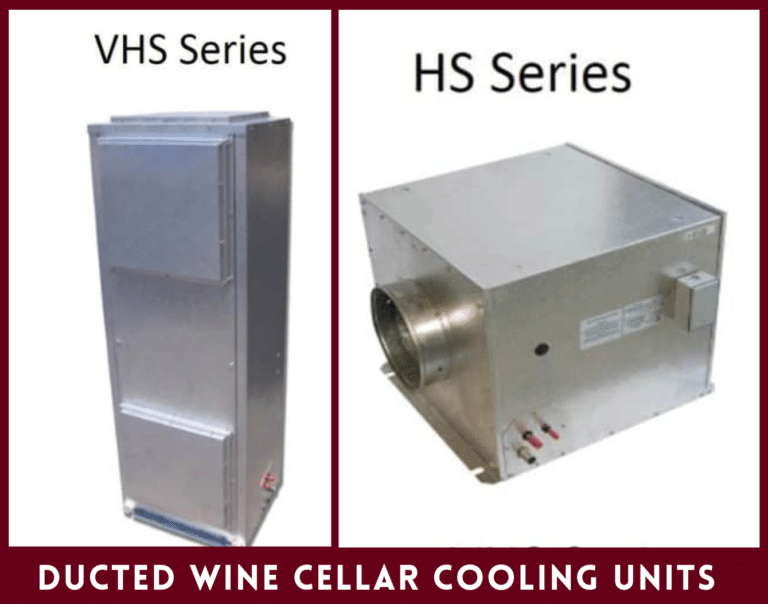
rather than a rule of thumb, then match the capacity to the right series and configuration. Because the factors interact, two rooms of the same size can need very different units. Once the load is known, choosing the series is straightforward, which you can preview in our guide to choosing a cooling unit.
An example of how the factors add up
Picture two cellars of the same size. The first is below grade, well insulated, with a solid door and LED lighting. The second sits above grade against an exterior wall, has a full glass door, and uses warm display lighting. On volume alone a chart would call for the same unit, yet the second room has a far larger cooling load from the glass, the warmer surroundings, and the lighting. Sized the same, the second cellar would run constantly and still struggle to hold temperature. This is why a survey, not a size, decides the unit.
Sizing is the cheapest insurance in a cellar
Of every decision in a cellar project, sizing is the one that pays back the most. The survey costs nothing, and getting it right avoids the two most expensive outcomes: a unit that cannot keep up and a collection at risk, or an oversized unit that swings the humidity and wears out early. Spending a little care on the number up front protects both the wine and the equipment for the life of the cellar.
Frequently asked questions
How many BTU does my wine cellar need?
It depends on far more than size. A small glass-walled room can need more cooling than a larger insulated one. The only reliable way to get the number is a heat-load survey that weighs glass, insulation, lighting, set point, and thermal mass.
Can I just size by cubic feet?
A cubic-foot estimate is a starting point, not an answer. It assumes a standard insulated box with no glass, so it misses the features that define most custom cellars.
Is a bigger cooling unit safer?
No. An oversized unit short-cycles, swings the humidity, and can fail early. Correct sizing, not extra capacity, is what protects the wine.
Does glass really change the sizing that much?
Yes. Dual-pane glass insulates to only about R2, so a glass wall or door adds a large, steady heat gain that the system has to overcome.
Does a below-grade cellar need less cooling?
Often, yes. Ground temperatures tend to be cooler than indoor air, so a below-grade room gains less heat and can need a smaller unit than the same room above grade.
How much does a glass door change the load?
A lot. Dual-pane glass insulates to only about R2, far less than an insulated wall, so a glass door adds a steady heat gain that raises the capacity needed.
A free heat-load survey is the surest way to land on the right unit the first time. Tell us about your space and request a quote, and we will size the system to your room. Cachet Wine Cellars serves Orange County and Southern California. Call (949) 569-7857.
Call (949) 569-7857