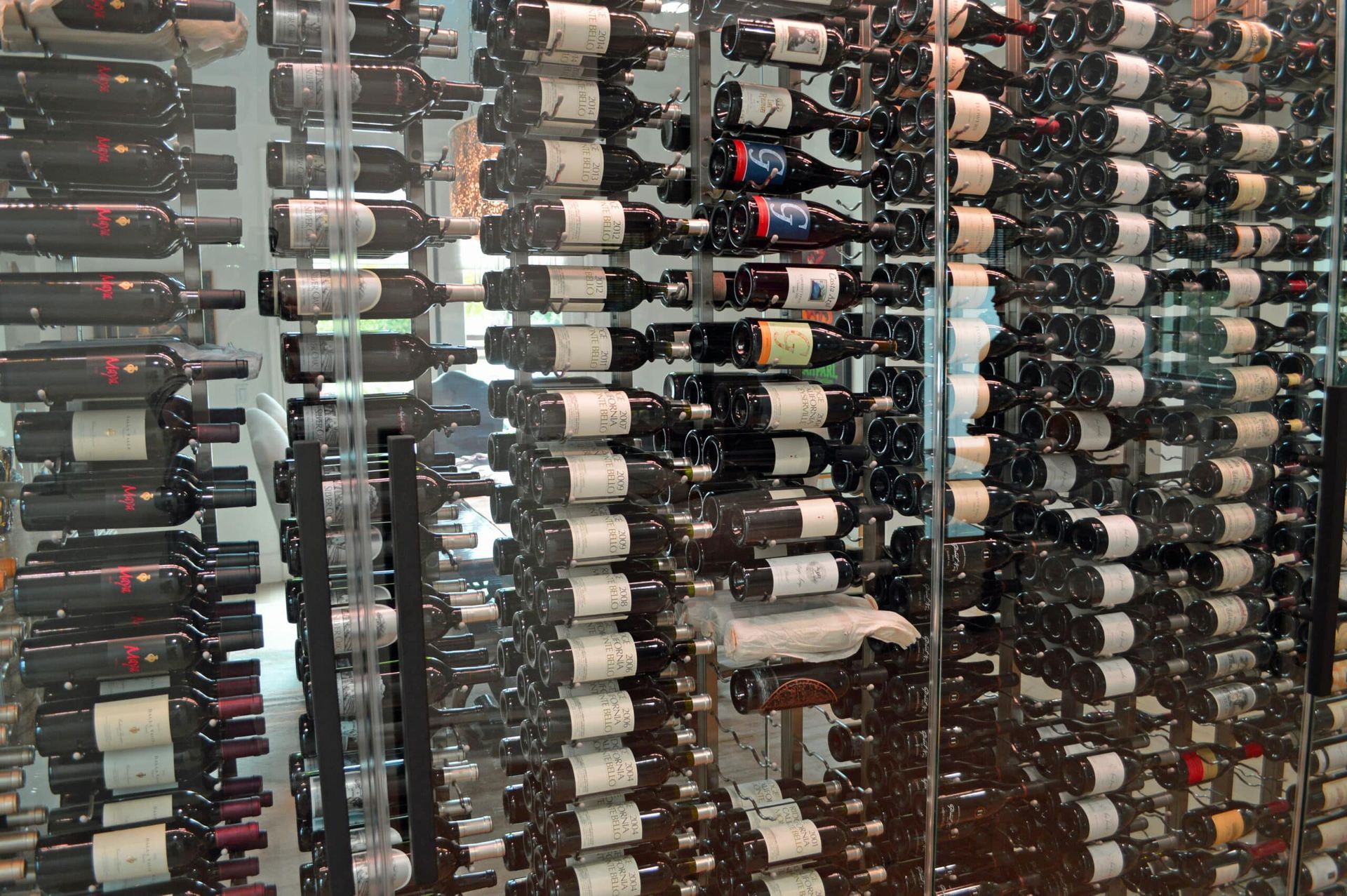
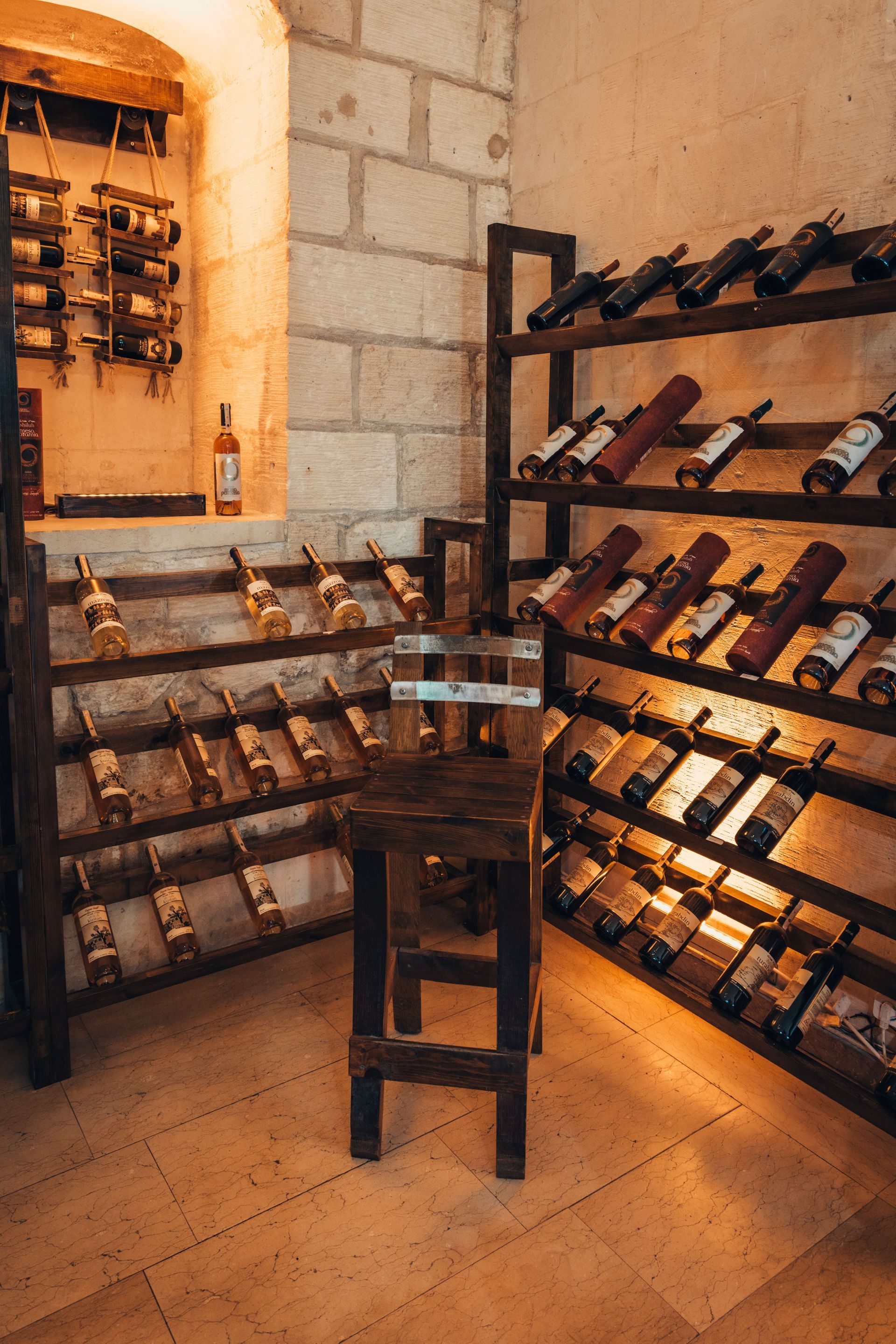
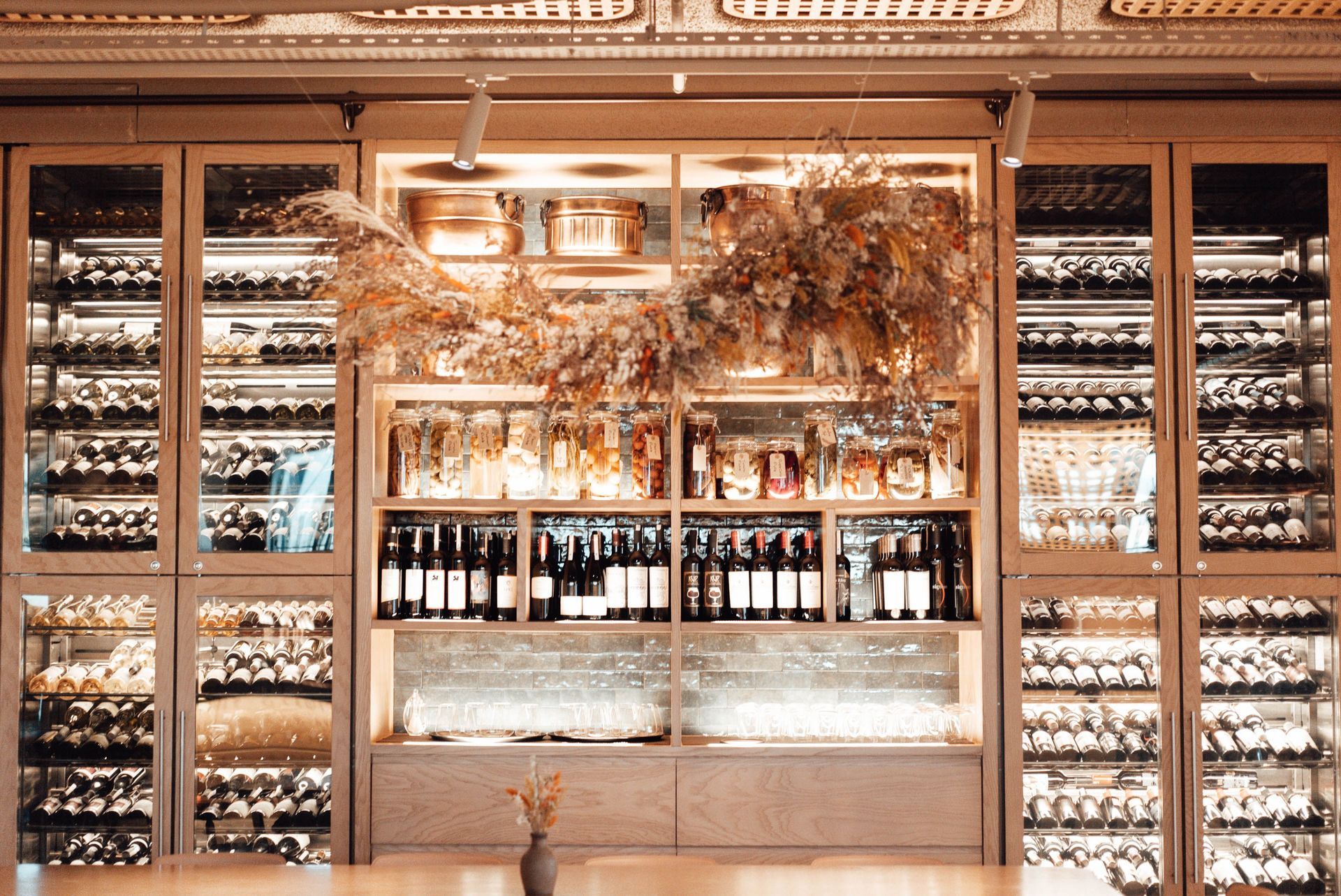
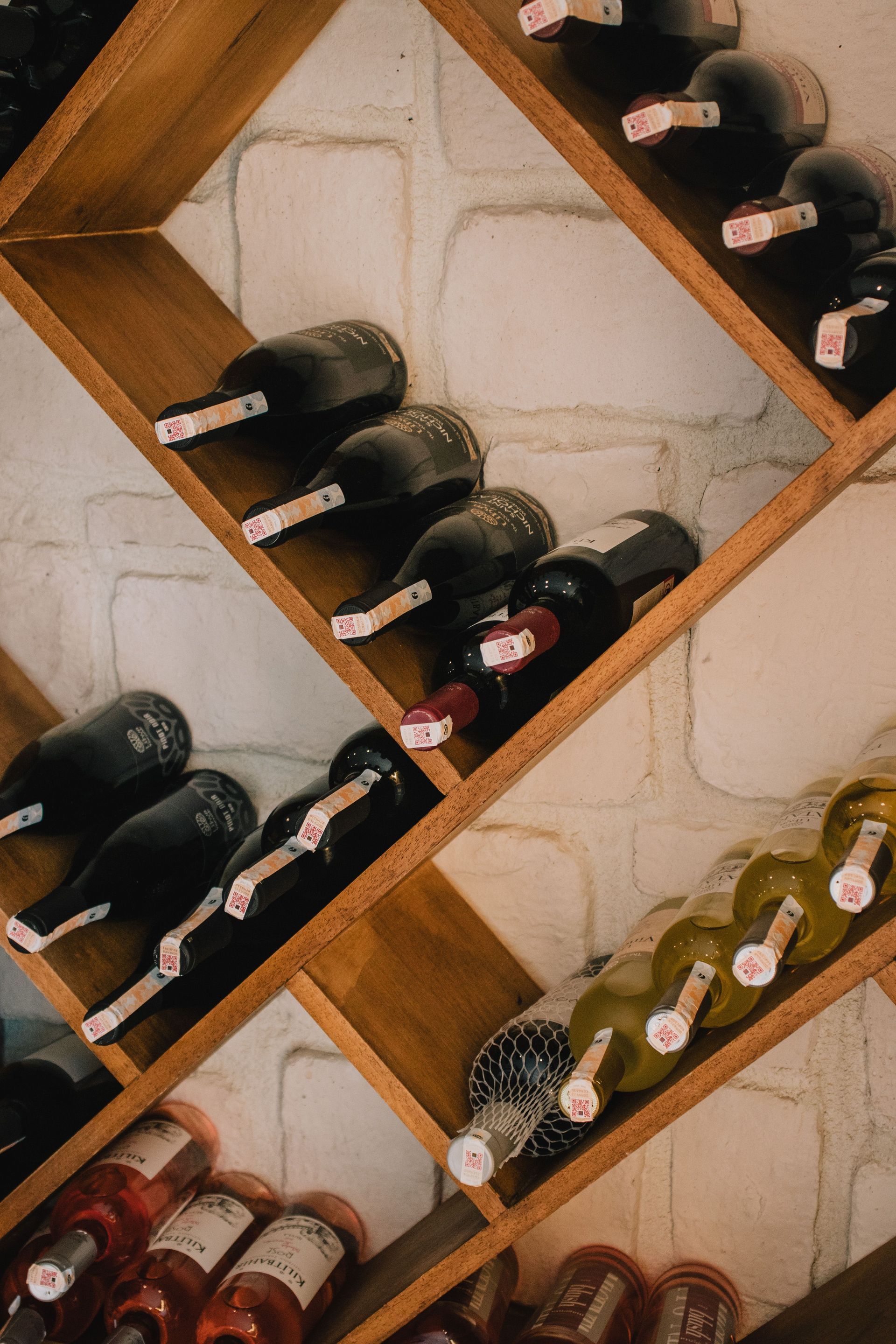
A bare wall and a collection that deserves to be seen leave you with one real decision: which hardware carries the bottles. Five of the metal lines on offer give the floating look, and they get there by different routes: aluminum track panels, slim horizontal rods, cork-forward rails on a post, machined pegs on a backer and cradles on metal hardware. Each answers the same three questions differently. Which end of the bottle faces the room, what has to be behind the wall or in front of it, and how much of the system you see besides the bottles themselves.
Decide Which End of the Bottle Faces the Room
Orientation is the first filter because it sets how the wall reads and how fast you can find a bottle. A label-forward wall shows the front of the bottle, so a guest can read the producer and the vintage without touching anything. A cork-forward wall shows the closure end, which makes a tidy pattern of circles and keeps the hardware looking thin, but identification then depends on a reader leaning in or on your memory of the layout.
The five lines divide on this point:
- STACT:
takes either orientation. It comes in a cork-out version and a label-out version.
- VintageView Evolution:
mostly label forward, with horizontal rods carrying the bottles.
- VintageView Vino Rails:
cork forward, on slim rods that project from a post or wall.
- Ultra Peg:
the horizontal HZ pegs show the label.
- Kessick:
label forward or neck out, with display rows for featured bottles, chosen per design.
If you pull bottles from the wall every week, a label-forward system saves reading time. If the wall is for looking at and you keep a list elsewhere, cork forward gives the lightest visual weight.
Compare How Each System Holds the Bottle
The hardware shapes what you see between the bottles, which decides whether a wall reads as floating or as shelved.
STACT: Track and Panel
STACT pairs a patented aluminum track, machined and then anodized, with a panel finished in wood. Each bottle sits in an aluminum support set into the panel, so you see a composed surface with the bottles standing slightly proud of it. The system is modular, which lets a wall start small and be extended along the same track.
VintageView Evolution: Horizontal Rods
Evolution carries bottles on horizontal rods, and the tower versions combine acrylic and metal. The rods are thin, so the bottle becomes the visible mass. Finishes include black and chrome, with the choice varying by collection, which lets you match door hardware or fixtures in the room.
VintageView Vino Rails: Cork-Forward Rods
On Vino Rails each bottle lies cork forward on a very thin rod. The rails are aluminum and fix to a steel post and frame built for commercial use. Because a single rod is all you see, a full column shows bottles with almost no visible support. The rails come in single, double and triple bottle depths, and the depth you choose sets how far the wall projects.
Ultra Peg: Pegs on a Backer
Ultra pegs are machined metal pegs set into a backer board or panel. The HZ version holds one to three bottles deep, label out, and comes in matte black, satin aluminum and brushed aluminum. The grid is exposed, so the wall reads as a deliberate pattern with bottles between the pegs, and the spacing is a design choice made for each wall.
Kessick: Cradles on Metal Hardware
On a Kessick wall each bottle rests in its own cradle, and the cradles snap onto slim metal rods fixed to the wall. Every Kessick wall is drawn for its room, cabinetry included. Choose clear acrylic cradles and the support almost disappears behind the glass; choose the timber version and the wood warms a modern room without making it look traditional.
TIP
Cut paper templates the size of one bottle and tape a grid of them to the wall at the spacing you are considering. Leave the sheets up for a week and note which rows you read from across the room.
Weigh What Each System Needs From the Wall
Mounting is where the five diverge, and it decides whether the project is a quick install or a coordinated build.
Wall-direct systems:
STACT mounts directly to the wall and ships ready to install. Ultra pegs depend on the backer: the pegs attach to a board or panel that is itself fixed to the wall, so the finished wall is only as sound as the board and its fasteners.
Post-and-rail systems:
Vino Rails use a floor-to-ceiling post that is cut to fit on site, and the rails attach to the post. Check what sits above the ceiling line and below the floor finish before you commit, because the post bears on both.
Mixed formats:
Evolution comes in freestanding, floating (floor to ceiling) and wall-mounted formats from one family. One rod design can then serve an alcove, a divider and a feature wall in the same house. Kessick builds to a custom design, so the wall, the lighting and the cradles are settled together before anything ships.
A rack full of wine is heavy, and each system's fasteners have to suit what sits behind the finish: framing, a properly fixed backer, or the wall anchors that system's own kit is made for. That is work for the installer who builds your cellar, and the plan should name the framing locations before racks are ordered.
Judge How the Wall Reads From the Room
Photographs flatter every one of these systems. In person, three things decide the look.
Visible hardware:
STACT and Ultra show their layout, so the pattern is part of the design. Vino Rails and Evolution show thin rods that recede. Kessick with acrylic cradles shows the cradle and little else.
Lighting:
Backlighting or a spot from above changes a wall at night. Some systems are designed around light and others are lit as an afterthought, so settle the lighting before you settle the rack.
Scale of the wall:
Narrow bays of one to three bottles wide suit a corridor or a stair wall. A full wall can take a larger layout, but a layout that is too regular reads as a uniform field. A display row at eye level breaks the pattern and gives a featured bottle a place to sit.
Match the System to the Room You Have
Use the room, not the catalog, to narrow the five.
- A feature wall that guests see first:
STACT or Kessick, where the surround is part of the design.
- A long, shallow wall in a hallway or tasting room:
Ultra HZ pegs in single depth, label out, keep the projection small.
- A freestanding divider or an alcove corner:
Evolution, because it comes in freestanding and floating formats.
- A column that reaches the ceiling:
Vino Rails on a floor-to-ceiling post.
- A collection with a few showpiece bottles:
Kessick display rows.
If two systems still look right, ask for the same bottle count laid out in each. Differences in projection, in the number of rows and in how much blank wall remains show up on a drawing before any order is placed.
Plan the Bottle Count Before You Pick
A floating look depends on space around each bottle, so a wall that holds a collection comfortably in packed wood racking may hold only part of it in any of these systems. Count the bottles you own and the bottles you buy by the case, then decide which belong on the display wall and which belong in deeper racking elsewhere in the cellar. A common split puts show bottles on the metal wall and the working inventory in conventional racks.
Settle the temperature question early too. Metal racks sit in the room they are installed in, so a display wall in an uncooled space shows wine and does not store it well. If the wall is inside a cooled cellar, the hardware sits in constant humidity, so ask about the finish and its corrosion resistance for the exact finish you choose.
The right system is the one whose orientation, mounting and lighting you stop having to explain. Pick it by how you will use the wall on an ordinary weeknight, and the display will take care of the dinner party.
Frequently Asked Questions
Do all Ultra pegs show the label?
No. The HZ pegs hold the bottle label out, while the standard Ultra Peg series holds it neck out on smooth pegs half an inch across and 9 inches long. Those come in brushed aluminum or chrome with or without rubber rings, black or silver powder coat, or clear acrylic.
Can a Kessick wall carry lighting?
Yes, and the design assumes it. With the acrylic version, LED light diffuses through the cradles, so the rack itself glows. The timber version leans on wood and metal, so its lighting plan changes with the material you pick.
How is a freestanding Evolution tower kept from tipping?
A wall clamp ties the tower to the wall, gripping the acrylic panel in its top third and fastening into drywall or wood with hardware packed in the box. On a run of towers joined side by side, every second acrylic panel gets a clamp.
Can Vino Rails be set at any height on the post?
Rows can sit anywhere along the post as long as each is at least 5 inches from the next, so the spacing follows your own design and not a fixed grid. The post comes in matte black, gloss black, golden bronze or gunmetal.
Can a STACT wall include shelves and glassware?
Yes. Cork-out and label-out racks can share a wall with presentation shelves and stemware racks on the same track-and-panel system. That gives you a spot to stand a featured bottle or hang glasses beside the wine.
What keeps a bottle in place on an Ultra HZ peg?
O-rings made from recycled rubber grip the bottle on the horizontal peg. The rubber is what holds a label-out bottle level on a smooth metal rod.
Lay out the five systems on a drawing of your own wall â each rack drawn at the same bottle count, so projection, lighting and capacity sit side by side. Cachet Wine Cellars serves Orange County and Southern California. Call (949) 569-7857.
Call (949) 569-7857