
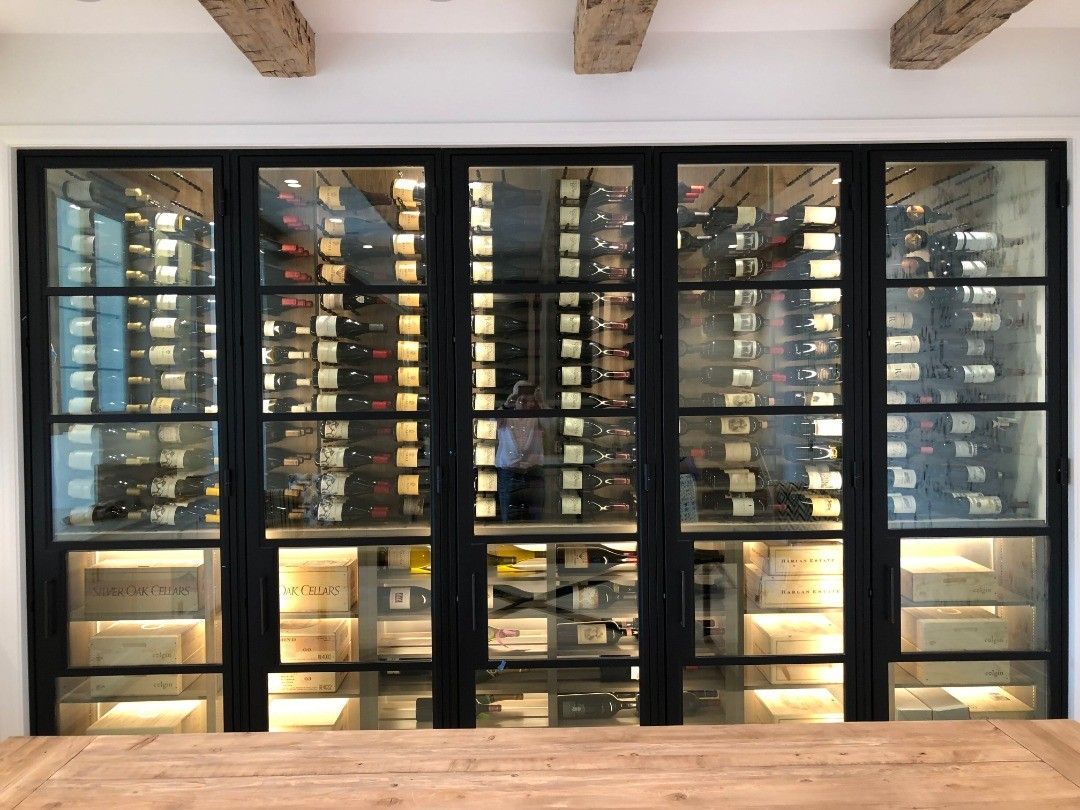
Wine Cellar Ceiling Lighting Ideas: Why Downlights Fall Flat

September 25, 2026

Choosing Between Them for a Specific Run

Once a schedule has been issued to anyone, changing a value quietly is worse than not changing it. A revised schedule carries a new revision number, a new date, and a marker against every row that moved, so a reader holding both versions can tell in seconds which lines are different. Reissuing a corrected sheet with no revision marker leaves two documents in circulation that look interchangeable and are not.


The reissue also has to reach the people working from the old one. A cellar's fixture order, the racking shop drawings, and the electrical rough-in can all be running from the same schedule at the same time, and a Kelvin value corrected on the designer's copy changes nothing until the version carrying that correction lands with whoever placed the order.

Fixture substitutions happen at bid, at order, and occasionally after delivery, and a fully populated schedule is what sets the terms of one in advance. A substitution proposed against a complete row has to hold every value on that row, including the ones a supplier would find inconvenient to match. A fixture matching wattage, beam angle, and trim size while dropping below a stated CRI floor is a different specification, and a populated row makes that visible without an argument about intent.


The burden of showing it sits with whoever proposes the swap. A substitution request arriving as a catalog number and a price, with no line-by-line comparison against the scheduled values, has not been made yet; it has been asked about. Requiring that comparison in writing is what keeps the substitution a decision the specifying professional is still making.

The Sheet Has to Say What It Is

TIP: A schedule reissued after fixtures are ordered should say so on the sheet. A revision that arrives post-order is a change order in practice, and marking it as one keeps the cost conversation attached to the line that caused it.

QUICK ANSWER: A beam aimed straight down lights the top of a bottle and stops there. It never reaches the label. Cross-lighting, rack-integrated fixtures, and cove lighting put light on the vertical face you actually look at.

Two identical racks, same mahogany construction, lit two different ways. One sits under a row of small recessed cans spaced evenly across the ceiling, aimed straight down. The other sits under a continuous line source mounted at the top of the rack, aimed down across the bottles at a shallow angle. Stand in front of the first and the wall reads flat: a grid of dark glass necks under an even wash of ceiling light, labels fading into shadow a few rows down. Stand in front of the second and the same wall reads dimensional, every label lit, the rack itself showing visible depth instead of a uniform gray plane.


Nothing about the wine or the racking changed between the two rooms. What changed was the direction the light traveled before it reached your eye.

A Beam Aimed Down Stops at the First Surface It Hits

Recessed downlighting is a point source aimed straight down a cone. Wherever that cone terminates is where the light stops. It does not wrap around a corner or continue traveling once it meets an opaque surface. In your cellar, the first opaque surface a downward beam meets is almost never the label you want to read. It's the top edge of the rack, the shoulder of the topmost bottle, or the horizontal top rail of the racking system itself.

That's a matter of geometry, not fixture quality. A tighter beam angle, a brighter lamp, or a better color-rendering LED all change how much light lands on that top surface. None of them change which surface the light lands on first. The bottle rows below the top course sit in the shadow the top course casts, because a beam traveling straight down cannot pass through a horizontal rack rail or a row of bottle shoulders to reach the row underneath it.


Where a downlit cellar loses the most ground: the loss compounds with rack height. A four-foot display niche can get away with a single downlight because there's little vertical distance for shadow to accumulate over. A floor-to-ceiling rack, the more common case in a serious collection, has six or eight courses of bottles between the ceiling and the floor, and every course past the first is fighting the one above it for whatever light escapes past the row edges.

A wine rack stores bottles horizontally, label facing out toward the aisle. The plane you actually read is vertical: the front face of the rack, where every label lines up in a column. The plane a ceiling downlight illuminates is horizontal: the top edge of that same rack, the tops of the bottle necks, the crown detail if the racking has one.


Those are two different surfaces at roughly a right angle to each other, and light aimed straight down primarily serves one of them. A rack ten bottles tall can get strong, even light on the top course and almost none on the bottom five, because the light that reaches the top course has already been absorbed or blocked before it can reach the rows below. The label a collector wants to read, three or four rows down, was never in the beam's path to begin with.

A room reads as three-dimensional partly because of shadow: a subtle gradient where a raised or projecting element blocks part of the light and darkens the surface behind it. Overhead downlighting, spread evenly across a ceiling grid, tends to wash a room in flat, non-directional light with very little of that gradient. Every surface facing up gets roughly the same amount of light. Every surface facing sideways, toward the rack, gets very little. Your eye reads that lack of contrast as flatness, even in a room that a lux meter would call well lit.


This is a design problem. The cellar's temperature and humidity setpoint doesn't care where the light comes from. You do.

A Low Ceiling Removes the One Variable Downlighting Needs

A downlight's beam widens as it travels. The farther the throw distance between the fixture and the surface it's lighting, the larger and softer the resulting pool of light. That throw distance is the one variable that makes overhead lighting workable at all in some rooms: a tall ceiling gives the beam room to spread before it lands.


Most residential cellars don't have that room. They're closet, under-stair, or converted-bedroom builds with a finished ceiling that leaves only a foot or two of clearance above the top of the racking. A downlight mounted that close has almost no throw distance to work with. The beam lands as a small, hard-edged hot spot directly beneath the fixture and does nothing for the bottles a few feet to either side. Trim depth and housing clearance become the limiting factor before beam angle ever does, and in a shallow ceiling cavity there's often no room for a standard recessed housing regardless of how it's aimed.

TIP: A ceiling tight on clearance is a reason to choose fixtures that don't depend on ceiling depth. Crowding more downlights into a shallow cavity multiplies hot spots without solving the throw-distance problem they were meant to fix.

WARNING: Cutting a recessed housing into a cellar ceiling means cutting through the vapor barrier and insulation envelope built to keep humidity out of the wall and ceiling cavity. Every penetration needs sealing back to spec, or moisture can condense inside the assembly.

Light Traveling Parallel to the Rack Reaches the Face

If the surface that needs light is vertical, the fix is a source whose beam travels roughly parallel to that surface instead of perpendicular to it. A source mounted at the top of the rack and aimed down at a shallow angle, or mounted to the side and aimed across, delivers its beam along the label plane instead of dropping onto it. Every bottle row gets a share of that beam, because the light is traveling down the face of the rack rather than landing only on whatever happens to sit directly beneath the fixture.


That's the same reason a rack-mounted or shelf-integrated fixture reads as more even than a ceiling grid at comparable output: it isn't putting out more light, it's putting the light it has onto the plane where you're actually looking.

Four Fixture Types Put Light on the Vertical Plane

Cove lighting, run along the top of the racking and aimed down at a shallow angle, keeps the source out of your sightline while still grazing the label plane on its way down. Rack-integrated lighting, built into the shelving or toe-kick itself, sits close enough to the bottles that a low ceiling stops being a constraint, since the fixture never depended on ceiling clearance to begin with. Wall-grazing fixtures, mounted to one side of the rack and aimed across it, put the beam parallel to the labels instead of perpendicular to them. Track heads, aimed by hand after installation rather than fixed straight down, can be pointed at the rack face specifically and re-aimed later if the layout changes.


Glare off the bottle glass itself is a separate issue, governed by the angle between the source, the bottle, and your eye, and worth solving once the fixture type is settled. Fixture type is what decides whether the beam reaches the label plane at all; glare control is what happens after it does.

Downlights Still Have a Job, Just Not This One

None of this makes recessed ceiling lighting wrong for a cellar. It's the right tool for general room illumination: lighting an aisle so you can walk it safely, lighting a tasting table, or providing enough ambient light to find the switch. What it isn't well suited for is functioning as the sole source that makes the racking itself legible. A cellar that layers general overhead light for the room with a separate source aimed at the rack face gets both jobs done by the fixture built for each one, instead of asking a single ceiling grid to do work it was never positioned to do.

Frequently Asked Questions About Wine Cellar LED Driver Placement

  • Can a downlight ever reach the label if the beam angle and throw distance are right?

    Occasionally, but not from the ceiling plane. Mounting the fixture lower, on a bulkhead or soffit built a foot or two below the ceiling, shortens the gap between the source and the rack face enough for a narrow beam to clear the top course and land on the label plane instead of stopping short of it.

  • Can track lighting fix a cellar that's already downlit?

    Often, and usually without opening the ceiling. Surface-mounted track can run along the same wall or bulkhead the recessed cans sit near, aimed at the rack face, so the fix layers onto an existing installation rather than requiring new housings to be cut in.

  • What happens on a sloped ceiling, like an under-stair cellar?

    The geometry gets harder to manage. A downlight aimed perpendicular to a sloped ceiling throws its beam away from the rack on the low side, so a gimbal or adjustable trim that can be re-aimed independent of the housing angle matters more here than it does under a flat ceiling.

  • Does adding more downlights make up for the shadowing?

    No. Extra fixtures on the same cellar lighting circuit still land their beams on the horizontal plane, and pushing enough of them onto one switch leg can exceed what a standard circuit is rated for, turning a coverage problem into a wiring problem too.

  • Does a mirror-backed or glass-backed rack change any of this?

    It compounds it. A mirrored or glass back reflects a downlight's beam a second time, sending part of the glare already bouncing off the bottle glass back through the same bottles from the opposite direction, so the shadowing and glare problems stack rather than offset each other.

  • Does the rack's cubicle depth affect how much of this is fixable after installation?

    Somewhat. A cubicle opening around 3.75 inches wide with a depth in the 10 to 18-inch range recesses each bottle far enough from the rack's leading edge that a ceiling beam has to clear that whole horizontal run before it reaches the shoulder, let alone the label.

Book a free 3D design and rendering — see how cross-lighting reads on your rack layout before any material is ordered. Cachet Wine Cellars designs and builds custom wine cellars from Irvine, California, with a lifetime warranty on every installation. Call (949) 569 7857.

Recent Posts

Wooden staircase with garland, wine fridge, and glass-fronted storage in a bright home interior
September 25, 2026
Bright dots in every bottle shoulder and glass panel usually trace to the LED strip, not the racking. What causes it, and three fixes that end it.
Built-in wine wall with glass doors, warmly lit in a modern living room.
September 25, 2026
A cork-forward bottle and a label-forward bottle present two different surfaces to a light source. See which beam direction reaches each one.
Wooden wine cabinet with glass doors, filled with neatly stacked wine bottles.
September 25, 2026
A published lighting ratio looks precise on a page. See what each layer is physically doing in a cellar, and when the split should bend.
Luxury living room with a glass-front wine cabinet, dark chairs, and hardwood floors
September 25, 2026
Chrome pegs, brushed steel, and acrylic panels each throw light back differently. See how finish and aim keep metal wine rack lighting glare-free.
Wine bottles stacked on wall-mounted racks in a dimly lit cellar room
September 25, 2026
A slab cellar with no ceiling cavity rules out recessed cans. See which lighting methods actually replace what an open plenum would have hidden.
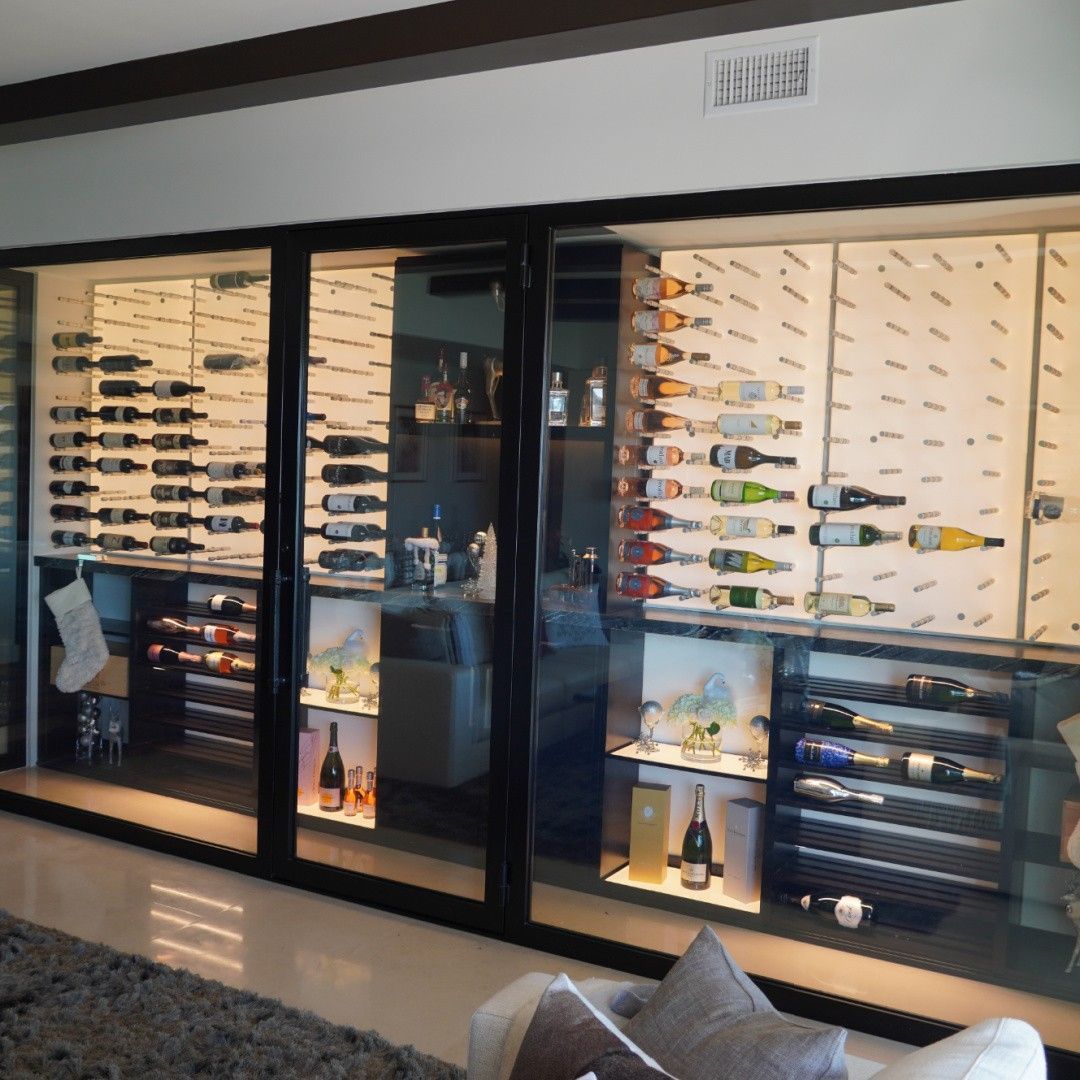
Wine display in a glass-fronted cabinet with neatly arranged bottles and stemware in a modern room
September 25, 2026
Bottle glass reflects light instead of showing labels when the angle is wrong. Learn how aiming and shielding fix cellar lighting glare for good.
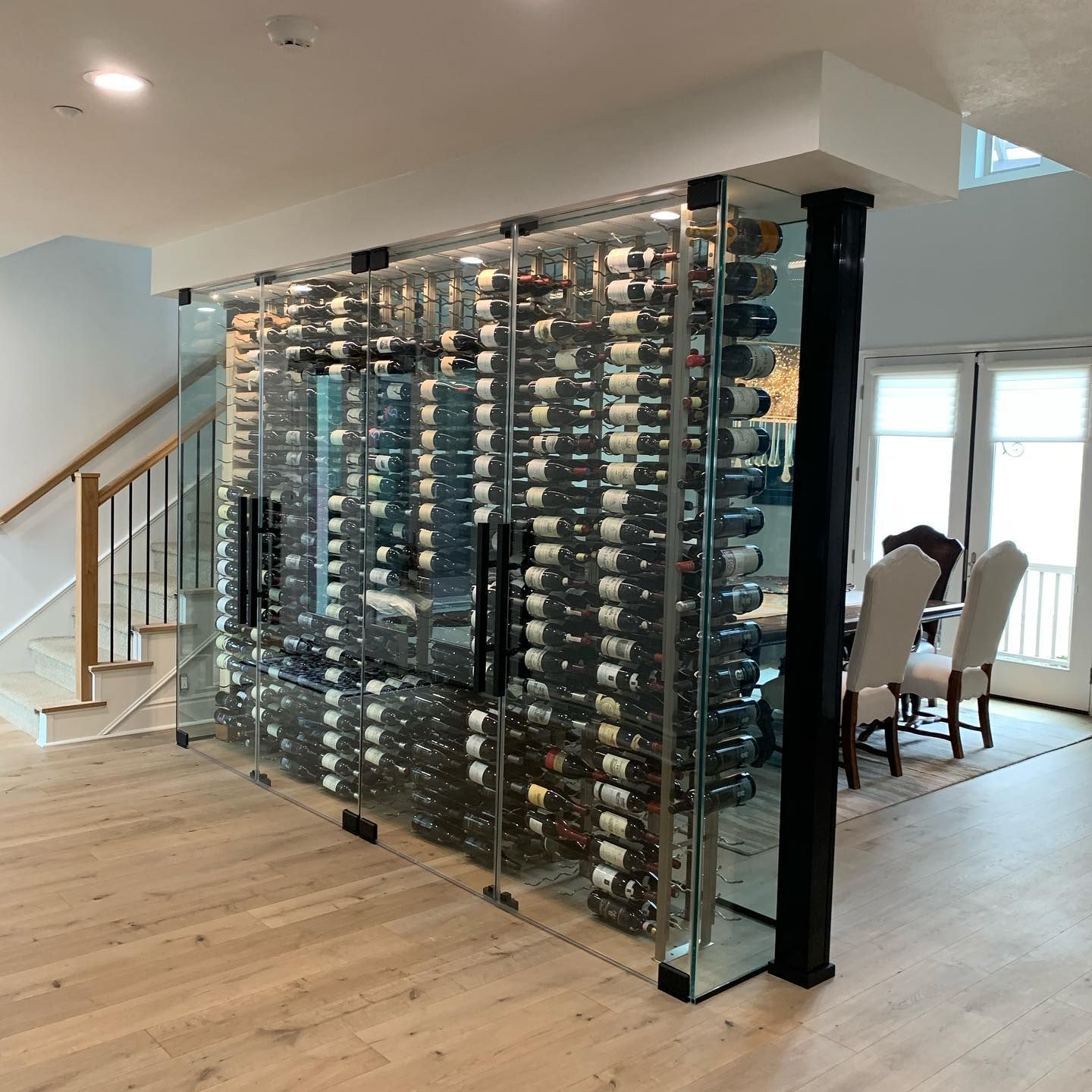
Glass wine cellar divider in a modern home, filled with wine bottles beside a staircase and dining area.
September 25, 2026
Wet wool or cabbage in a bottle that should have been perfect? Light strike is photochemical, and the glass color decides which wines need room.
Wine bottles stored in a tilted wooden rack behind a glass-front cabinet
September 25, 2026
Warm light reddens redwood and yellows white oak. See which way each species shifts, and the CRI floor California code sets, before fixtures are ordered.
Wall-mounted wine rack filled with bottles in a dimly lit storage room
September 25, 2026
A living-room lighting schedule under-specifies a cellar in predictable ways. The seven lines a cellar schedule needs and what happens when each one is blank.
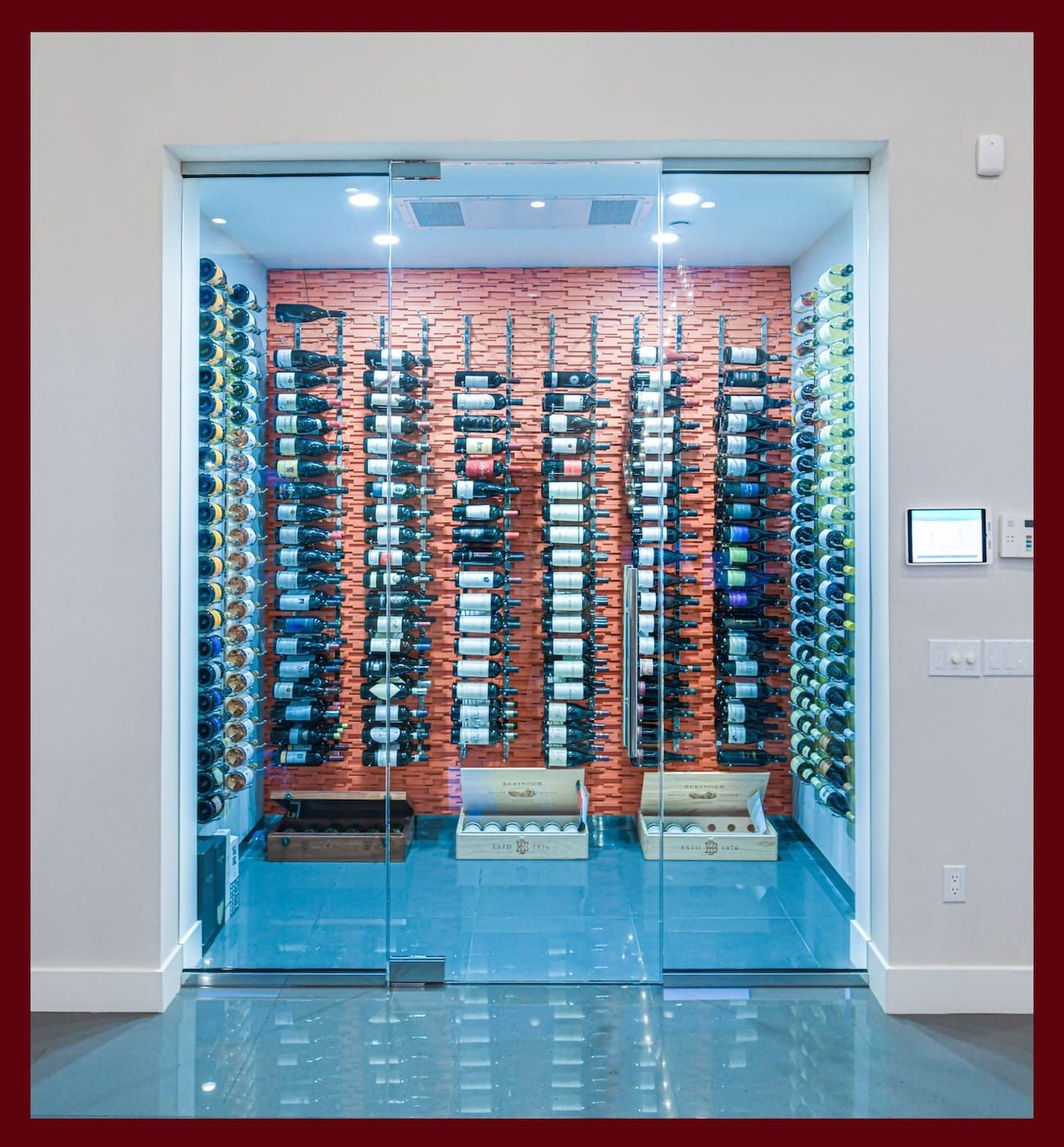
Glass wine cellar with rows of bottles behind a clear door in a modern interior
September 25, 2026
Storage runs stay dark. Display runs stay lit. See how one cellar assigns each job to the runs that need it.

Show More