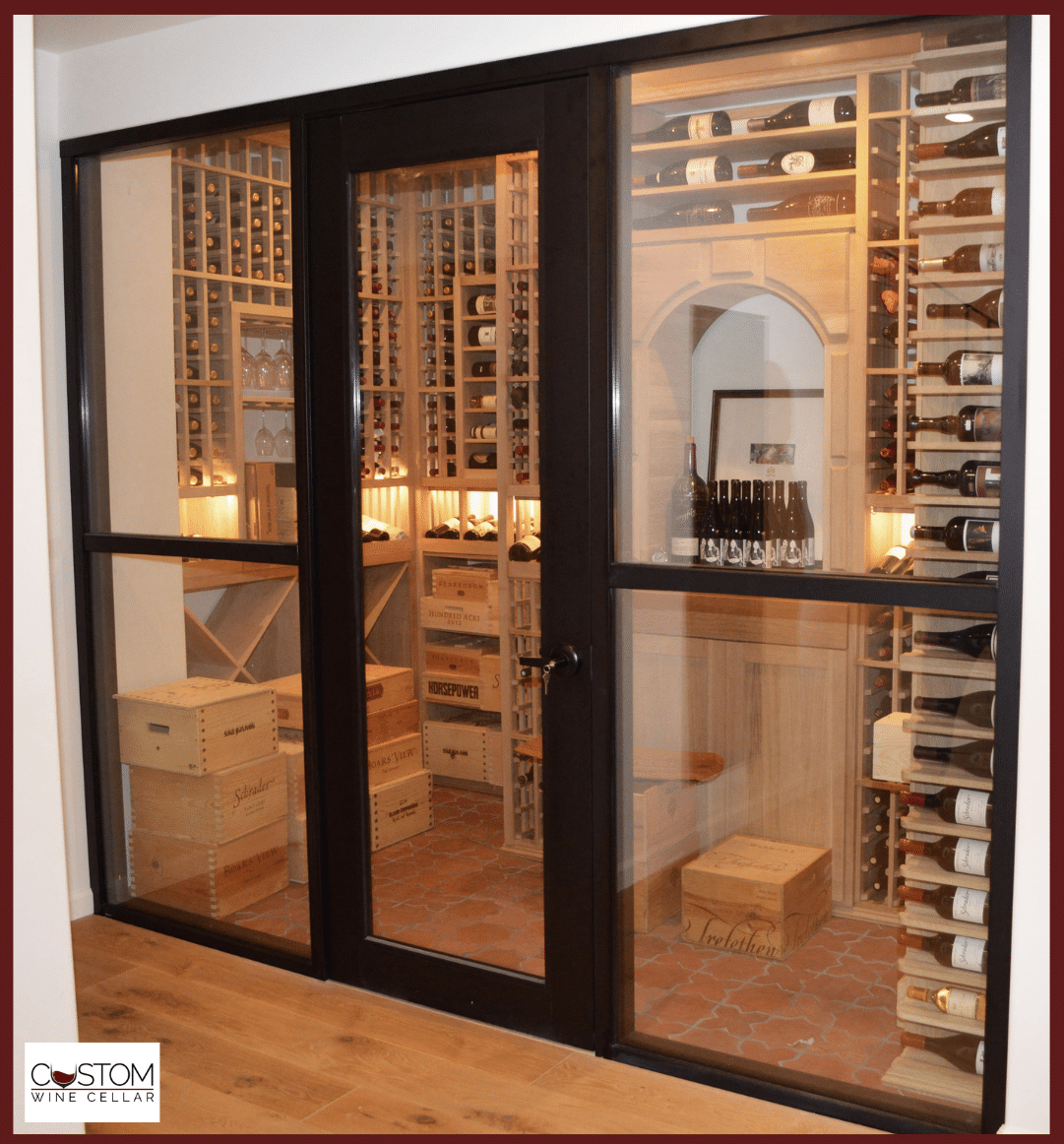
Wine Cellar Door Hard to Open? Blame the Air Pressure
Choosing Between Them for a Specific Run
Once a schedule has been issued to anyone, changing a value quietly is worse than not changing it. A revised schedule carries a new revision number, a new date, and a marker against every row that moved, so a reader holding both versions can tell in seconds which lines are different. Reissuing a corrected sheet with no revision marker leaves two documents in circulation that look interchangeable and are not.
The reissue also has to reach the people working from the old one. A cellar's fixture order, the racking shop drawings, and the electrical rough-in can all be running from the same schedule at the same time, and a Kelvin value corrected on the designer's copy changes nothing until the version carrying that correction lands with whoever placed the order.
Fixture substitutions happen at bid, at order, and occasionally after delivery, and a fully populated schedule is what sets the terms of one in advance. A substitution proposed against a complete row has to hold every value on that row, including the ones a supplier would find inconvenient to match. A fixture matching wattage, beam angle, and trim size while dropping below a stated CRI floor is a different specification, and a populated row makes that visible without an argument about intent.
The burden of showing it sits with whoever proposes the swap. A substitution request arriving as a catalog number and a price, with no line-by-line comparison against the scheduled values, has not been made yet; it has been asked about. Requiring that comparison in writing is what keeps the substitution a decision the specifying professional is still making.
The Sheet Has to Say What It Is
TIP: A schedule reissued after fixtures are ordered should say so on the sheet. A revision that arrives post-order is a change order in practice, and marking it as one keeps the cost conversation attached to the line that caused it.
| What you observe | Points to |
|---|---|
| Present since installation, color consistent, dim points evenly spaced | Spacing and mounting height |
| Boundary lines up with a material seam in the racking, present from day one | Rack depth or finish change |
| Color shifts across a boundary, not just brightness | Mixed LED bins from a partial replacement |
| Whole run dims, flickers, or fades together; appeared after a period of looking fine | Driver channel losing output |
Owners describe three separate complaints about a wine cellar door. It is hard to pull open, worst right after the cooling system has been running. It will not stay latched, or drifts open a crack on its own. It whistles, clicks, or ticks as the system cycles on and off. These usually get reported to three different people, a hardware installer, a builder, a cooling technician. They are one mechanism read from three sides: a sealed cellar under active cooling sits at a different pressure than the house around it, and a magnetic seal responds to that difference in three ways.
Where the Pressure Differential Comes From
A wine cellar built to hold 55°F ±2° and 60-70% relative humidity is airtight on purpose. Walls and ceiling are heavily insulated, and the door closes against a continuous magnetic gasket rather than a series of point latches, which is what lets a cooling system hold a narrow band inside a much larger, much less controlled house.
Cooling a fixed volume of air lowers its pressure unless something replaces what the cooling took out. In a normal, leaky room, house air seeps in fast enough that the change never registers. In a cellar built tight enough to hold 55°F against a house held well above it, there is nowhere near enough leakage to keep up. Room pressure sits slightly below the house's while the system works, and does not catch back up until the system cycles off. The system is pulling moisture out of the air at the same time, though that is a small share of what is in the room and not what drives the pressure change.
Two different things then happen at your threshold, and they are easy to run together. One is a density-driven exchange: air moves through the same gap in both directions at once, sorted by weight rather than by any imbalance in pressure, and the two volumes roughly cancel. Buoyancy is doing that work, so it moves air without closing a pressure difference. The second is the pressure deficit itself, which pulls house air inward through every gap at once, high and low alike, on top of whatever the exchange is already moving.
Why a Magnetic Seal Behaves Differently Than a Latch
A latch and a magnetic seal hold a door shut by different means, and a pressure difference only matters to one of them. A latch is a positive connection, a bolt or pin engaging a strike plate, and the force needed to open it is set by spring tension and hardware condition, not by air pressure on either side.
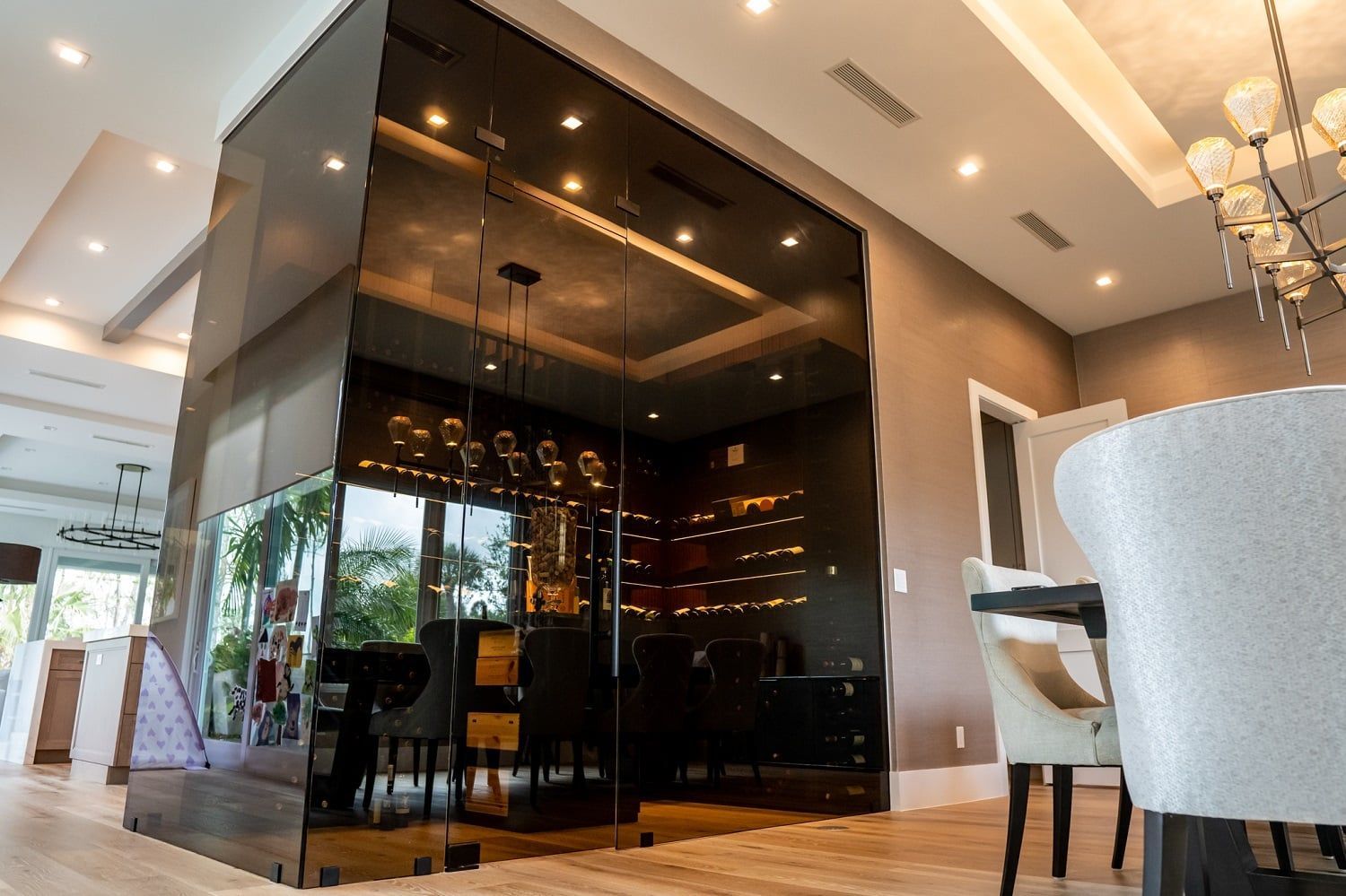
A frameless glass door has no latch at all, and no perimeter frame either. The panel is 13.5mm tempered glass, carried on pivots at top and bottom that take its full weight, and the closing force comes from magnetic gaskets at the two jambs and the head. Those gaskets pull the glass into contact with the jambs and head; there is no mechanical engagement to release, only magnetic attraction to overcome. When the cellar side sits at lower pressure, atmospheric pressure pushes on the glass from the house side, adding to the magnetic hold across the full face of the panel rather than at one point.
The pivots are a separate system, carrying the door's weight and rated for a very large number of cycles. None of that changes how much force it takes to break the magnetic seal. A pivot in perfect condition can sit behind a door that is hard to start moving, because it was never what held the door shut.

The Door That Is Hard to Pull Open
This face is the easiest to notice, because it tracks the run cycle. A door that takes real effort right after the system has been running, and opens with less an hour later once idle, is showing the pattern a pressure difference produces: force needed is highest while the system is actively cooling, lower once the room has re-equalized with the house.
Because the gaskets run along both jambs and the head rather than concentrating at a single latch point, the added force shows up as the whole door feeling heavier to start moving, not as one corner sticking. Nearly all of it sits in the first fraction of an inch of travel, where the gaskets release; after that the swing moves normally.
WARNING: A door that is hard to open from the inside is a safety issue, not just an inconvenience. A cellar door should always open easily from the inside, no matter what a pressure difference is doing to it from the outside.
The Door That Will Not Stay Shut
This face is the same mechanism working the other way. Once the system cycles off, the pressure gap does not close instantly; air keeps moving through the threshold until the two rooms settle. Somewhere in that transition, the net force across the door's face can briefly favor drifting toward its resting position instead of staying fully engaged.
A magnetic seal is not backed by a positive catch the way a latch is. If your door was pulled to but never given the last fraction of an inch of travel where the gaskets make full contact, nothing mechanical is holding it there, only the magnets, which need full contact along their length to hold at rated strength. A door that looks closed but was not pushed fully home can walk open a crack as pressure shifts, though nothing about the door has changed.
A latch either engages or it does not. A magnetic seal has a partial state, a door that looks shut but is not fully seated, and that state is where pressure movement has room to act.
Two Different Sounds with Two Different Sources
A whistle is air moving through a gap under pressure. Any small gap, a corner where a gasket is not fully contacting, a recess around a pivot, a spot where the threshold seal is not compressed, becomes audible once a pressure difference pushes air through it. The louder the whistle, the larger the gap or the greater the difference.
A click or a tick has a different source: hardware making a small physical movement as conditions change, not air moving through a gap. Metal contracts and expands slightly with temperature, and small position shifts happen as the panel and its seal settle under a changing load. That is the assembly reacting to the same swing that produces the other two symptoms, not air escaping.
TIP: A whistle or click that starts within moments of the compressor or blower cycling on, and stops within moments of it cycling off, is describing the pressure event directly. A sound with no relationship to the run cycle is describing something else.
When the Fault Is in the Swing
Not every hard-to-open, will-not-stay-shut, or noisy door is a pressure story. The mechanical causes divide in two: the ones in how the door moves, and the ones in how it seals.
A leaf out of plumb, hanging slightly out of true vertical rather than square in its opening, binds at one point in the swing no matter when the system last ran. The force sits at a specific point in the arc rather than spread across the panel, and it is there at any hour of the day.
A pivot wearing shows up as physical drag or grinding at a specific point in the swing, not as an even pull the moment the door is closed. The pivots carry the door's weight, not its seal, so wear there changes how the door travels through its arc rather than how hard it is to break magnetic contact. A door can be hard to swing and perfectly easy to unseal, and the two complaints sound identical over the phone.

When the Fault Is in the Seal Itself
A gasket that has taken a compression set, meaning it has lost its spring-back after sitting compressed too long, produces the opposite complaint: a door that swings easily and will not hold shut even with the system idle, because the gasket no longer makes full contact regardless of air pressure.
A threshold gap of even one-eighth of an inch undermines the seal whether or not the system is running, which is why a poor threshold installation misbehaves constantly rather than only after a cooling cycle. That is the clearest line between the two families of cause. A seal fault does not wait for the compressor.
TIP: A cellar's cooling system does not have to be malfunctioning to produce a pressure-driven door. Hard to open right after a cycle, easier once the system has been idle, is the seal responding to a room working correctly.
The Test That Separates Them
The test is consistency. Pressure-driven symptoms change with whether the system just ran or has been idle; mechanical symptoms show up the same way at 6 a.m. and 6 p.m. Try your door twice, once within minutes of the system shutting off and once after several idle hours, and the pattern usually declares itself.
What you observed is worth more to a technician than the complaint itself. Hard to open describes an outcome four different causes produce. Hard to open only after a run cycle, normal by morning, describes one of them, and points at the seal and the envelope rather than the swing hardware.
Frequently Asked Questions About Wine Cellar Door Air Pressure
Does the type of cooling system change how noticeable this is?
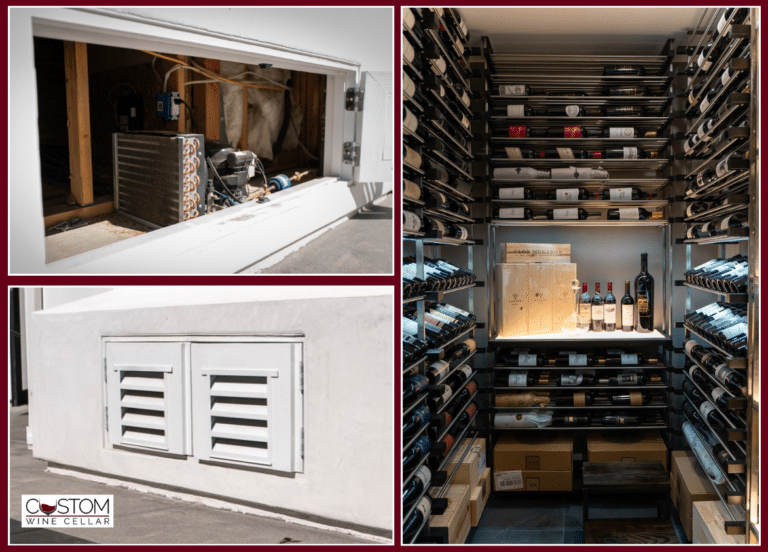
Cellar cooling comes in three architectures, self-contained, ducted, and split, built by WhisperKOOL, CellarPro (variable-speed models), Wine Guardian (Pro Series split, 24V thermostat), Breezaire (Sentry III+ controls), and US Cellar Systems. All five create the same pressure relationship at a sealed door.
How does the door's warranty apply to this kind of problem?
A door that is harder to open right after a run cycle and easier once idle is the seal working as designed. Materials and craftsmanship on the installation carry a lifetime warranty. Where the door, the cooling system, and the envelope were built by one team, the question does not have to be sorted out between a door supplier and a cooling contractor first.
Does the size of the cellar change how quickly the pressure settles?
Yes. A closet conversion holds so little air that the equipment can pull it below house pressure within moments of starting, and it recovers almost as fast once the compressor stops, so the effect at the handle is sharp and short. A large room takes longer to draw down and longer to come back, which reads as a door that stays heavy for a stretch rather than for a moment.
Does a wooden or metal cellar door behave the same way?
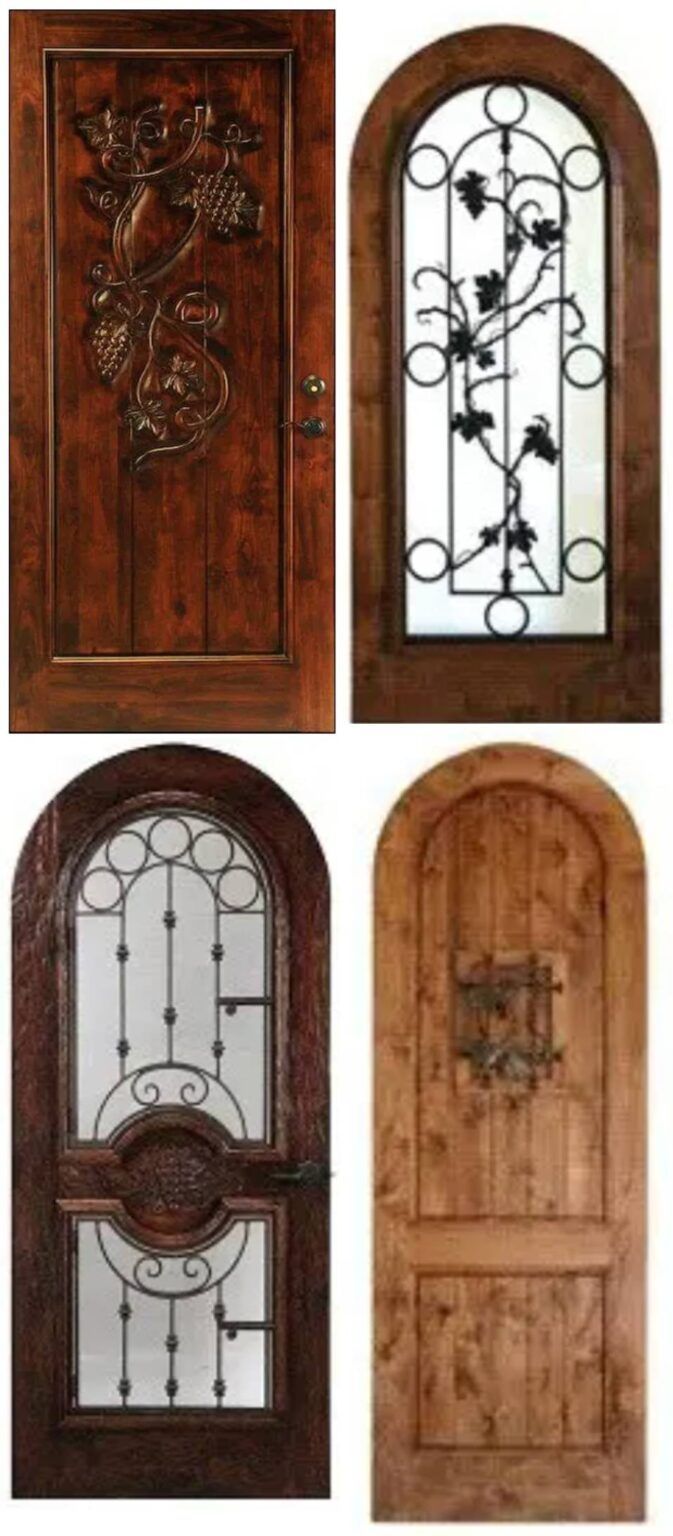
The load is the same; the way it reads at the handle is not. A wooden door or a thermal-broken metal one closes against a compression gasket seated in a kerf milled into the jamb and is held by a latch bolt in a strike, so the pressure difference reads as a stiffer pull concentrated at the latch edge rather than an even hold across the panel. The latch also gives it a positive catch, which is why the will-not-stay-shut half of the complaint turns up far more often on frameless glass.
What is the pivot hinge rated for?
More than 500,000 open-close cycles, a durability figure for the hinge itself, not a measure of sealing force. A door well within that rating can still feel hard to open under a pressure load, and a door near the end of its hinge life can still seal perfectly well; the two ratings are unrelated.
Why does so small a pressure difference produce so noticeable a pull?
Because the force at the door is that difference multiplied by the area of the panel. A gap far too small to feel on your ears, spread across a full-height leaf, adds up to a real number of pounds at the handle. That is why the effect reads strongest on the largest door in the house and barely registers on a narrow one hung off the same room.
Ask a cellar builder to read the pattern your door is showing — a hard pull that tracks the run cycle and a hard pull that ignores it point at completely different parts of the installation. Cachet Wine Cellars designs and builds custom wine cellars from Irvine, California, with a lifetime warranty on every installation. Call (949) 569 7857.