Wine Rack Lighting Placement Changes with Every Rack Style
Choosing Between Them for a Specific Run
QUICK ANSWER: Each rack configuration presents a different surface to a light source: a cork circle, a curved label plane, a triangular diamond-bin void, a longer magnum cylinder. Beam direction should follow that geometry section by section across the wall.
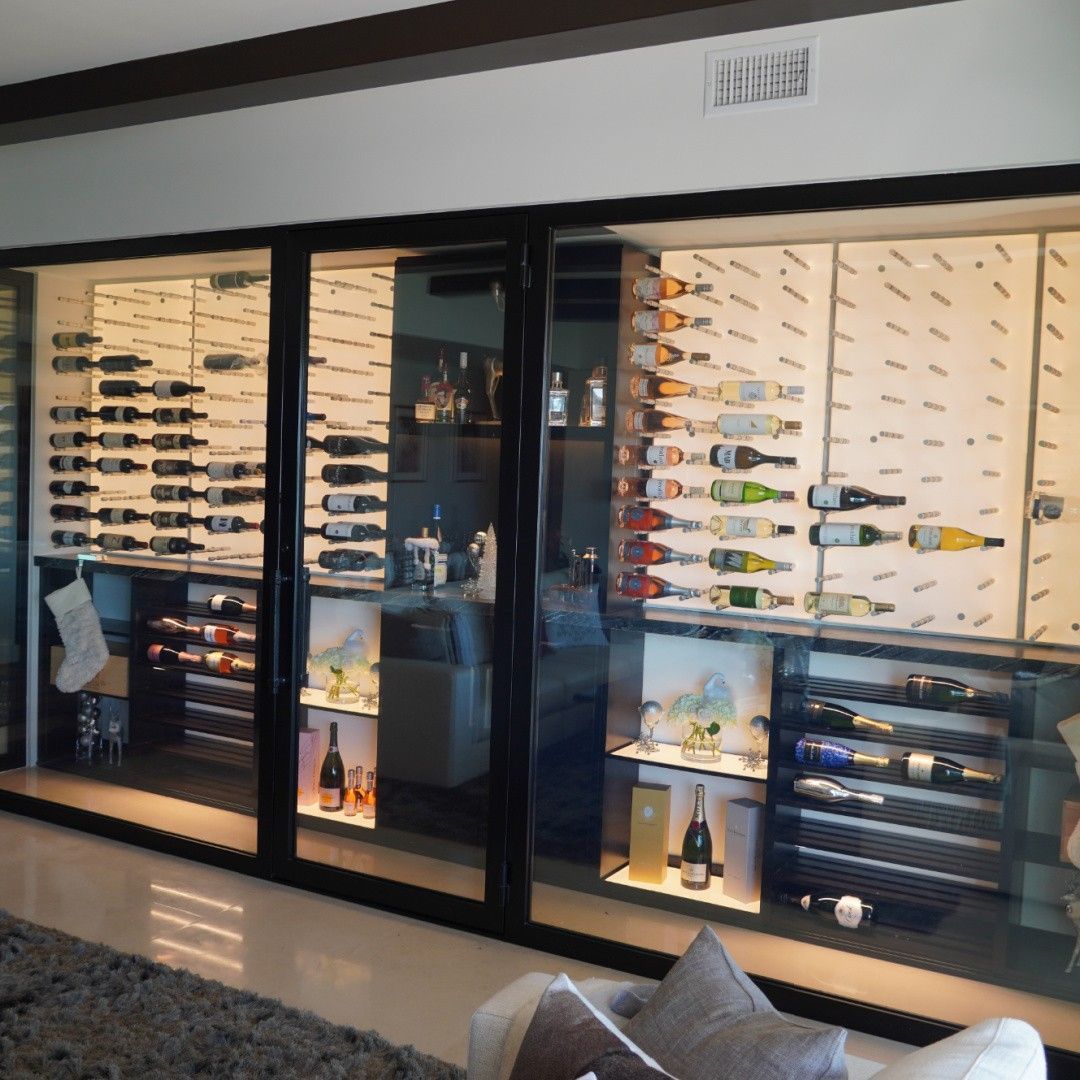
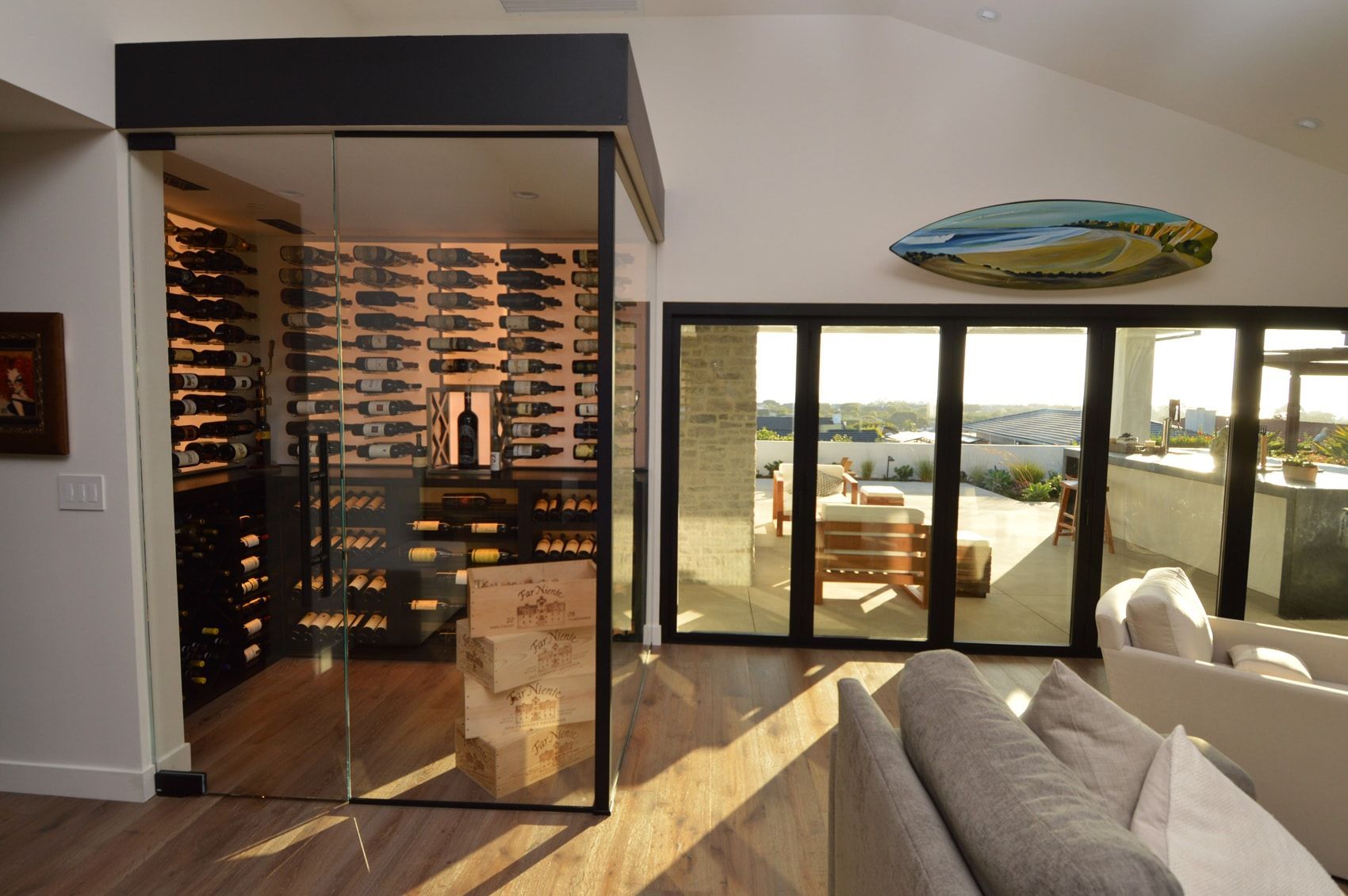
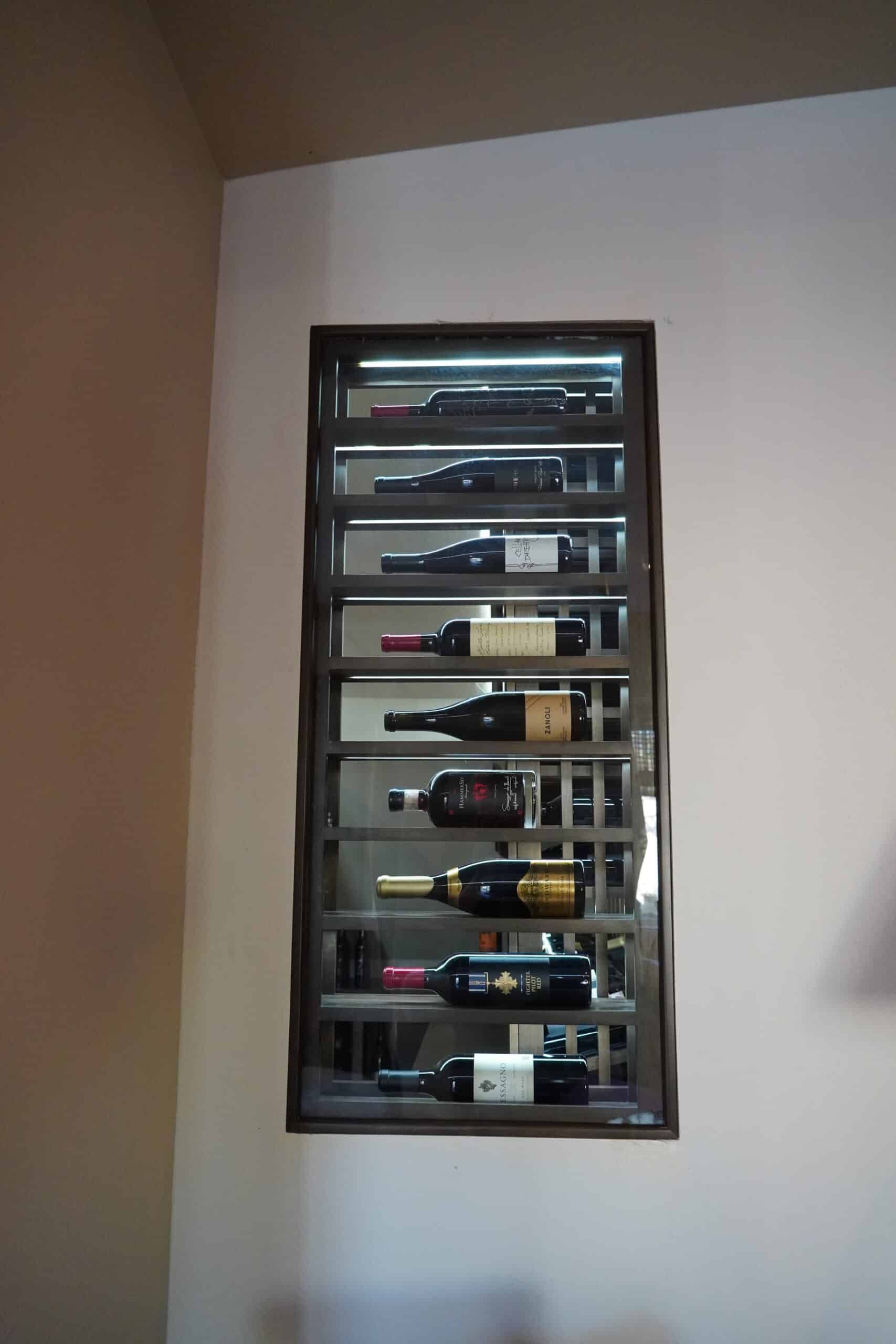
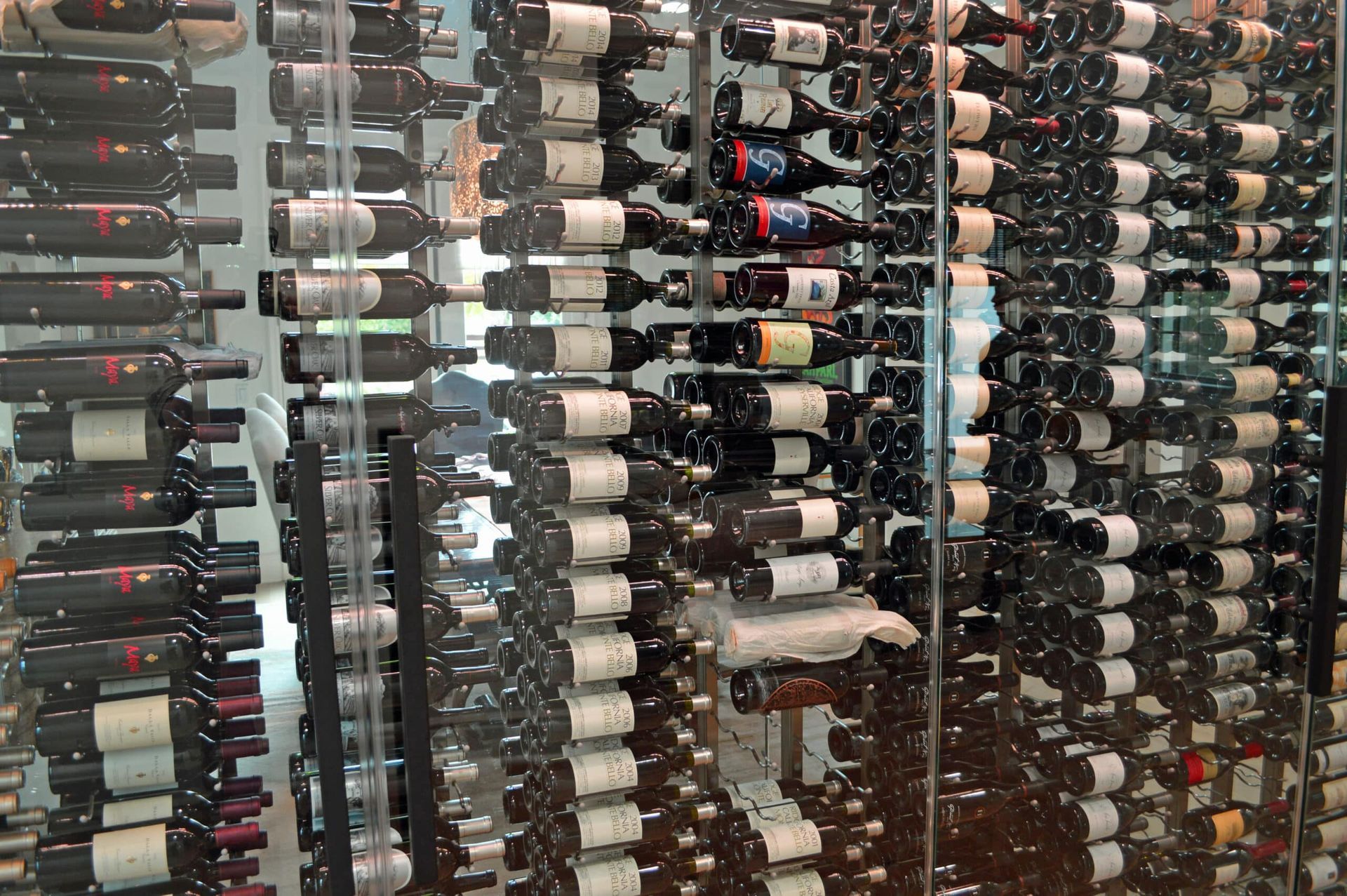
A rack elevation drawing rarely shows just one configuration. A single wall might carry a cork-forward course at eye level, a label-forward run above it, a diamond bin built into one corner, and a magnum course along the base, each opening cut to a different shape and depth.
A cork-forward opening presents a circle of cork ringed by the glass shoulder of the neck, roughly the diameter of the neck bore, with the rest of the bottle receding into the cubicle behind it. A label-forward opening presents a curved rectangle of paper wrapped around a glass cylinder, sitting close to the front where it can be read without leaning in. A diamond bin presents a triangular void holding several bottles stacked at different depths, rather than one bottle lined up on a single flat plane. A magnum course presents a longer run of glass before any label comes into view at all.
A display-row cubicle presents one bottle meant to be seen whole, with open space on either side where a neighboring bottle would normally sit. A cable-hung bottle presents almost nothing but itself, held by a neck ring with open air on every other side and no rack face behind it at all. Six configurations on one elevation, six different surfaces facing the room, and six different answers to the same question: where the beam should come from.
TIP: A rack elevation drawing needs each configuration boundary marked before fixture positions get set, since a beam direction assigned to the wrong section of a mixed wall lights the neighboring configuration and misses the one it was aimed at.
Cork-Forward Bins Present a Cork Circle That Needs an Axial Beam
A cork-forward bin turns the bottle so the cork faces the aisle, with the body of the bottle pushed back into the cubicle's depth. What's visible from the front is almost nothing: a cork end and a shoulder of glass, with no vertical plane of text facing the aisle at all.
A beam that skims parallel across the rack face, the kind that lights a label plane efficiently, does almost nothing in a cork-forward run. It grazes the front rim of the cubicle opening and continues past it, never traveling far enough into the recessed depth to reach the cork itself. What actually lights a cork-forward bin is a beam angled to travel down the cubicle's own depth axis and into the opening, past the front edge and back to the cork itself.
Where mixed racking makes this worse: a wall combining cork-forward bins with other styles under one fixture line leaves every cork-forward cubicle in that run looking hollow and dark, no matter how bright the rest of the wall reads.

Label-Forward Bottles Present a Curved Plane That Needs a Parallel Graze
A label-forward bottle turns the opposite way: the label faces the aisle directly, sitting near the front of the cubicle where you can read it without leaning in. The visible surface is a curved rectangle of paper wrapped around a cylinder, close enough to the opening that almost any beam reaching that plane registers on the label at some brightness.
The direction that works best here travels down the rack face at a shallow angle, the same principle behind a cove line run along the top of the racking. A graze parallel to the label plane reaches every course in the run.
Depth barely factors into a label-forward run, since the label sits close to the opening rather than receding into it. The direction problem here is almost entirely about the vertical axis: getting the beam to travel the full height of the rack, from top course to bottom.
A Diamond Bin's Triangular Void Calls for Steep, Angled Light
A diamond bin holds several bottles at once inside one triangular opening, corks in, stacked so the bottles behind sit deeper and lower than the ones in front. There's no single flat surface here: the visible plane is a cluster of glass ends and punts sitting at different distances from the opening, changing shape as bottles are added or pulled for service.
A beam traveling parallel to the rack face, the direction that serves a label run well, clips only the front edge of a diamond bin and misses everything behind it. What reaches into a stacked triangular void is light coming down and forward at a steeper angle, entering from above to reach the bottles set back in the stack.
Diamond bins are usually built into the same wall as flat-fronted cubicles for standing bottles. The two styles sitting side by side is exactly why a single beam direction across an entire wall rarely serves both.
Magnum Cubicles Present a Longer Neck Before Any Label
A magnum cubicle is built wider and deeper than a standard opening to hold the larger bottle, which pushes the label plane further back from the front edge than it sits in a standard course. The neck alone runs longer before any label starts, so the surface a beam needs to reach sits deeper in the opening than it does behind a standard bottle.
A fixture aimed to catch a standard bottle's label near the front of its cubicle often points short of where a magnum's label actually sits, since that surface sits further back in the opening. A magnum course usually needs its own aiming point, set independently from the standard bottles nearby..
WARNING: A rack section holding magnums or full cases carries significant weight once loaded. Repositioning or removing filled racking to reach a fixture mounted above or behind it should always account for the load's actual weight, since bottle count alone underestimates it.
Display Rows Present a Freestanding Bottle That Needs Light from More than One Angle
A display-row cubicle is built to hold one bottle with room around it instead of glass touching glass on either side, the kind of placement used for a single standout vintage or a bottle meant to anchor a wall. Because nothing crowds the bottle, its full shape is visible: neck, shoulder, body, and base all read as one continuous form instead of a flat plane of stacked labels.
A single beam traveling parallel to the rack face lights the label but leaves the rest of the bottle's curve in flat, even light with almost no shading to show its shape. Adding a second source, angled in from above or to one side instead of relying on the same flat graze used for a standard row, gives the bottle's curve enough contrast to read as a form.

Open Cable Grids Still Need Light Aimed from the Front
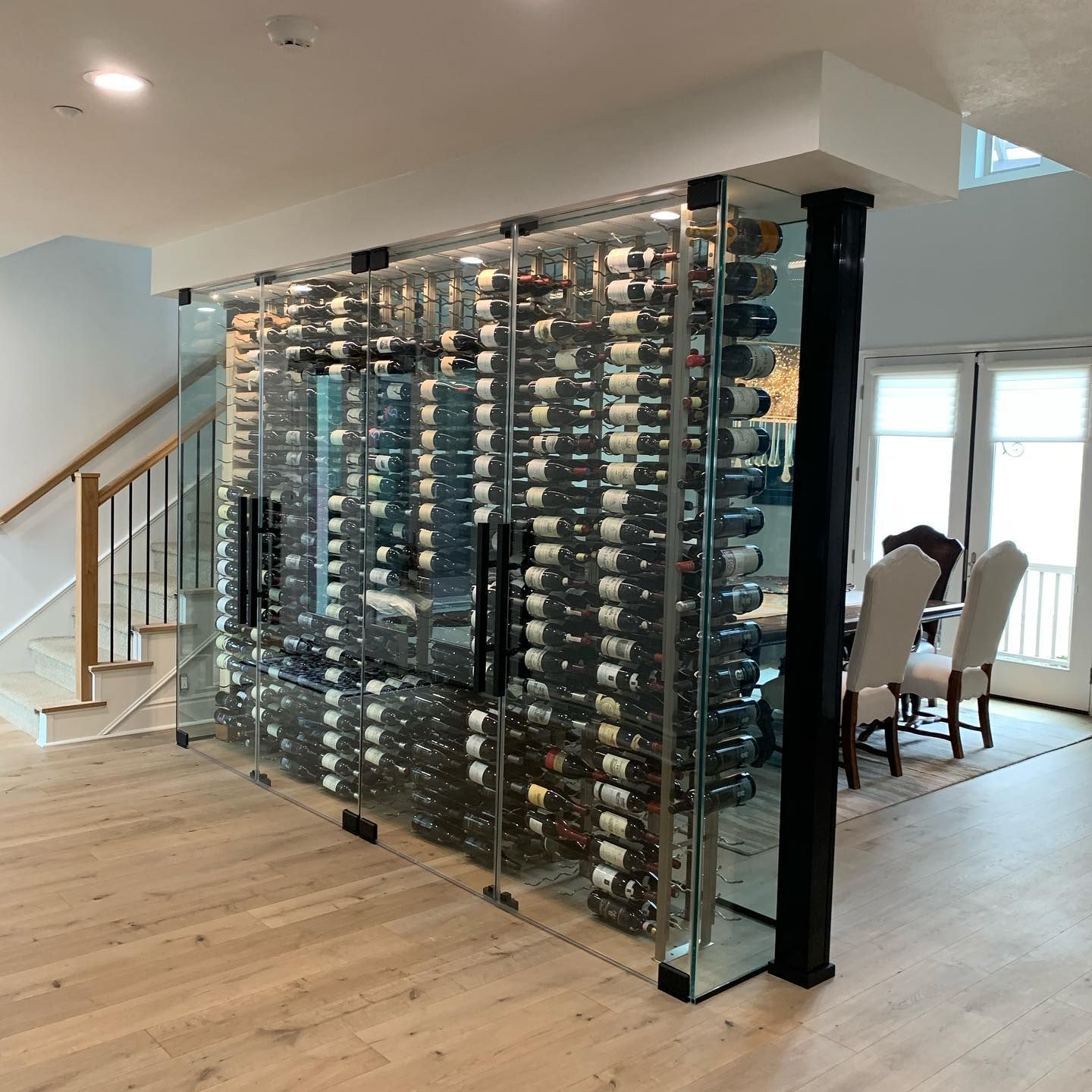
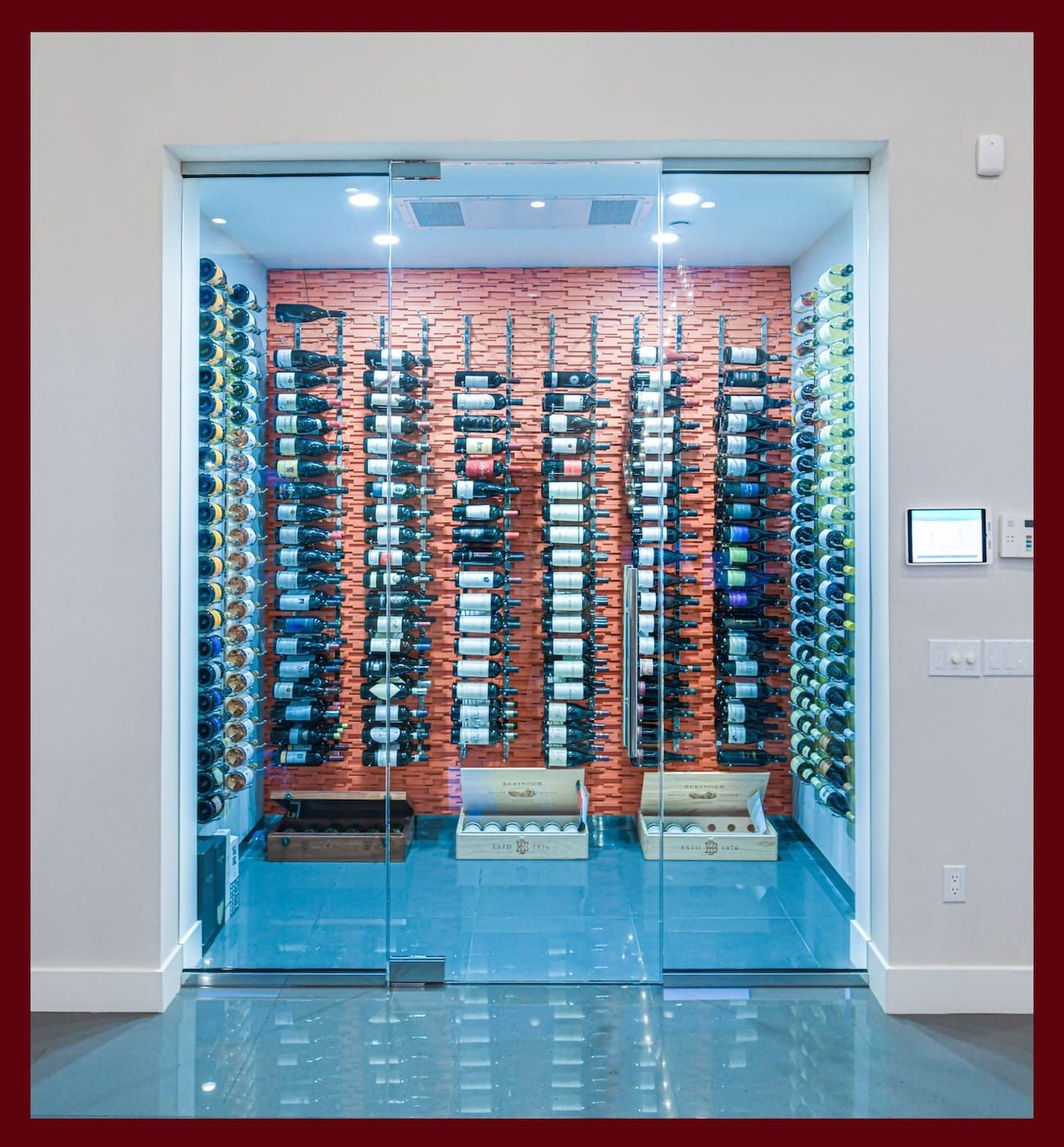
A cable system holds each bottle by a neck ring strung along a tensioned wire, with no cubicle wall, no side panel, and no rack face behind it at all. The structure blocks almost nothing, which means a beam can technically reach the bottle from nearly any direction without hitting an obstruction first.
That openness is exactly why direction still matters. A source mounted behind the grid and aimed forward silhouettes each bottle against its own light instead of illuminating it, turning the label into a dark shape against a bright field. A source positioned in front of the grid, angled down or across at the bottle face, lights the label and the glass directly, even though the cable system itself has no cubicle wall behind it.
None of these six directions is a universal fix for the others. A wall that mixes cork-forward, label-forward, and diamond-bin cubicles in the same run is mixing six different lighting problems into one fixture line, and matching direction to configuration is what keeps any single style from going dark while another reads perfectly.
Frequently Asked Questions
Does a foil capsule change how a cork-forward bin should be lit?
Some cork-forward bottles keep the foil or wax capsule on the cork end, which presents a small reflective disc instead of bare cork. A cubicle holding capsuled bottles often reads better lit slightly off-axis than lit dead center.
Does a diamond bin's lighting need to be adjusted over time?
A diamond bin's depth changes as bottles are pulled during service, so whichever bottle sits furthest back changes too. An aim point set for a full bin can end up short once several bottles are gone, landing on empty space where the back bottle used to sit. Checking the aim after a bin is drawn down keeps it reaching whatever bottle currently holds that back position.
Does a magnum's placement in the rack affect how it's lit?
A magnum course is usually specified low in a run so the loaded weight sits near the base. That placement puts it furthest from a source mounted at the top of the racking, which is why a magnum section often gets its own dedicated fixture.
How is a case-storage shelf lit differently than a bottle rack?
A wine case end is flat, unfinished wood carrying a stenciled or branded mark instead of curved glass and paper. Raking light crossing that surface at a low angle reveals the stencil through the shadow it throws inside each letter, a different job than the shallow graze used on a rack of standing labels.
Do open-sided display cubicles need different light control than a boxed one?
Some single-bottle showcase cubicles are built open on the sides instead of fully enclosed on every side. That construction lets light aimed at a neighboring position spill into the opening next to it. That spill softens the shading that gives the bottle its shape, worth accounting for before assuming one fixture lights one bottle in isolation.
Does a cable-hung bottle need light from more than one direction?
Often, yes. A boxed cubicle has rack material on three sides that bounces some fill light back toward the shadow side of the bottle. A cable system has none of that, so a single-direction beam leaves the far side of the bottle essentially unlit unless a second source covers it.
Walk your rack layout with a designer before the lighting plan is set — see how beam direction changes across cork-forward, label-forward, diamond-bin, and magnum sections. Cachet Wine Cellars designs and builds custom wine cellars from Irvine, California, with a lifetime warranty on every installation. Call (949) 569 7857.