
Metal Wine Cellar Door Thermal Break: Leaf, Frame, or Both

October 15, 2026

Choosing Between Them for a Specific Run

Once a schedule has been issued to anyone, changing a value quietly is worse than not changing it. A revised schedule carries a new revision number, a new date, and a marker against every row that moved, so a reader holding both versions can tell in seconds which lines are different. Reissuing a corrected sheet with no revision marker leaves two documents in circulation that look interchangeable and are not.


The reissue also has to reach the people working from the old one. A cellar's fixture order, the racking shop drawings, and the electrical rough-in can all be running from the same schedule at the same time, and a Kelvin value corrected on the designer's copy changes nothing until the version carrying that correction lands with whoever placed the order.

Fixture substitutions happen at bid, at order, and occasionally after delivery, and a fully populated schedule is what sets the terms of one in advance. A substitution proposed against a complete row has to hold every value on that row, including the ones a supplier would find inconvenient to match. A fixture matching wattage, beam angle, and trim size while dropping below a stated CRI floor is a different specification, and a populated row makes that visible without an argument about intent.


The burden of showing it sits with whoever proposes the swap. A substitution request arriving as a catalog number and a price, with no line-by-line comparison against the scheduled values, has not been made yet; it has been asked about. Requiring that comparison in writing is what keeps the substitution a decision the specifying professional is still making.

The Sheet Has to Say What It Is

TIP: A schedule reissued after fixtures are ordered should say so on the sheet. A revision that arrives post-order is a change order in practice, and marking it as one keeps the cost conversation attached to the line that caused it.

What you observe Points to
Present since installation, color consistent, dim points evenly spaced Spacing and mounting height
Boundary lines up with a material seam in the racking, present from day one Rack depth or finish change
Color shifts across a boundary, not just brightness Mixed LED bins from a partial replacement
Whole run dims, flickers, or fades together; appeared after a period of looking fine Driver channel losing output

"Thermal break" sits in a wine cellar door spec sheet as two words carrying a lot of unearned weight. A comparison of the four common cellar door types, wood, metal, framed glass, and frameless glass, usually ranks insulated metal with a thermal break as the strongest thermal performer of the group, then moves on without explaining what the phrase means. A thermal break is a specific piece of engineering: a non-conductive separation between the metal facing the cold cellar side and the metal facing the warm house side, so the frame cannot conduct straight through from one to the other. Leave that separation out, or put it in the wrong place, and a metal door still looks insulated in a photo while its house-side face runs cold to the touch within a season.

How an Unbroken Metal Frame Conducts Across the Opening

Metal is a far better conductor than wood, vinyl, or glass, which is exactly what makes an unbroken metal door frame a problem in a cellar. Aluminum and steel move heat efficiently, and a continuous metal path from the cellar-facing surface to the house-facing surface gives heat an uninterrupted route between the two. The cellar side sits near 55°F; the house side of that same metal sits at whatever the adjoining room runs, often 68°F to 72°F. Without a break in the path, the metal is the shortest route between those two temperatures, regardless of how much insulation fills the door panel around it.


That conduction shows up as a cold frame face, a cold door handle, and, on humid days, condensation on the house-side metal, because its surface temperature has dropped below the surrounding room air's dew point. None of that is a defect in the insulation. It is what an unbroken metal path does.

The Physical Gap That Interrupts the Metal

A thermal break is not a coating, a paint finish, or a thicker gasket at the weatherstrip. It is a literal gap in the metal, filled with a non-conductive material, typically a rigid polymer strip, so the cold-side extrusion and the warm-side extrusion are two separate pieces of metal joined only through that strip. Because the polymer conducts heat poorly compared to aluminum or steel, the temperature difference has nowhere continuous to travel. The frame still holds its shape and structural strength; the polymer strip carries the mechanical load of the assembled door, and because it conducts so poorly, very little of the thermal load travels with it.


A break is also only as good as its weakest point, which makes the perimeter worth asking about directly: does the isolation wrap the head, the jambs, and the sill, or does it stop at the leaf edges? A single corner or transition where a fabricator simplifies the work by skipping the isolation strip turns the whole assembly back into a single conductive path at that one spot, even if the rest of the frame is broken correctly.

Cozy wine cellar with wooden racks, round table, stools, and warm chandelier lighting

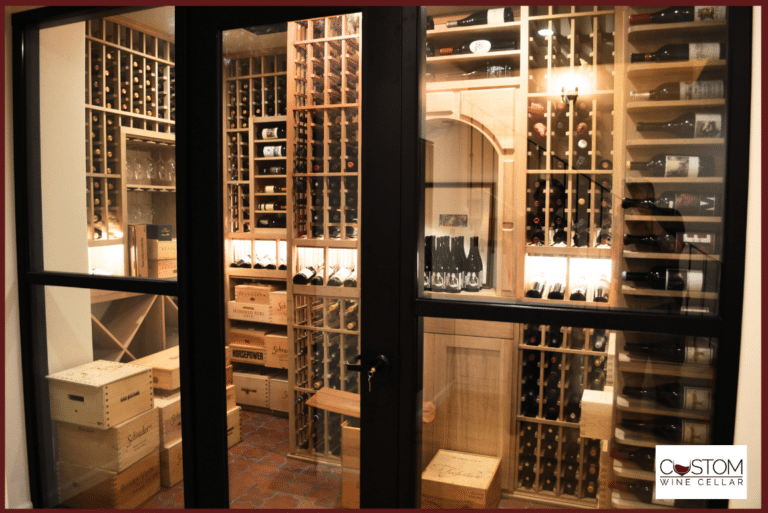
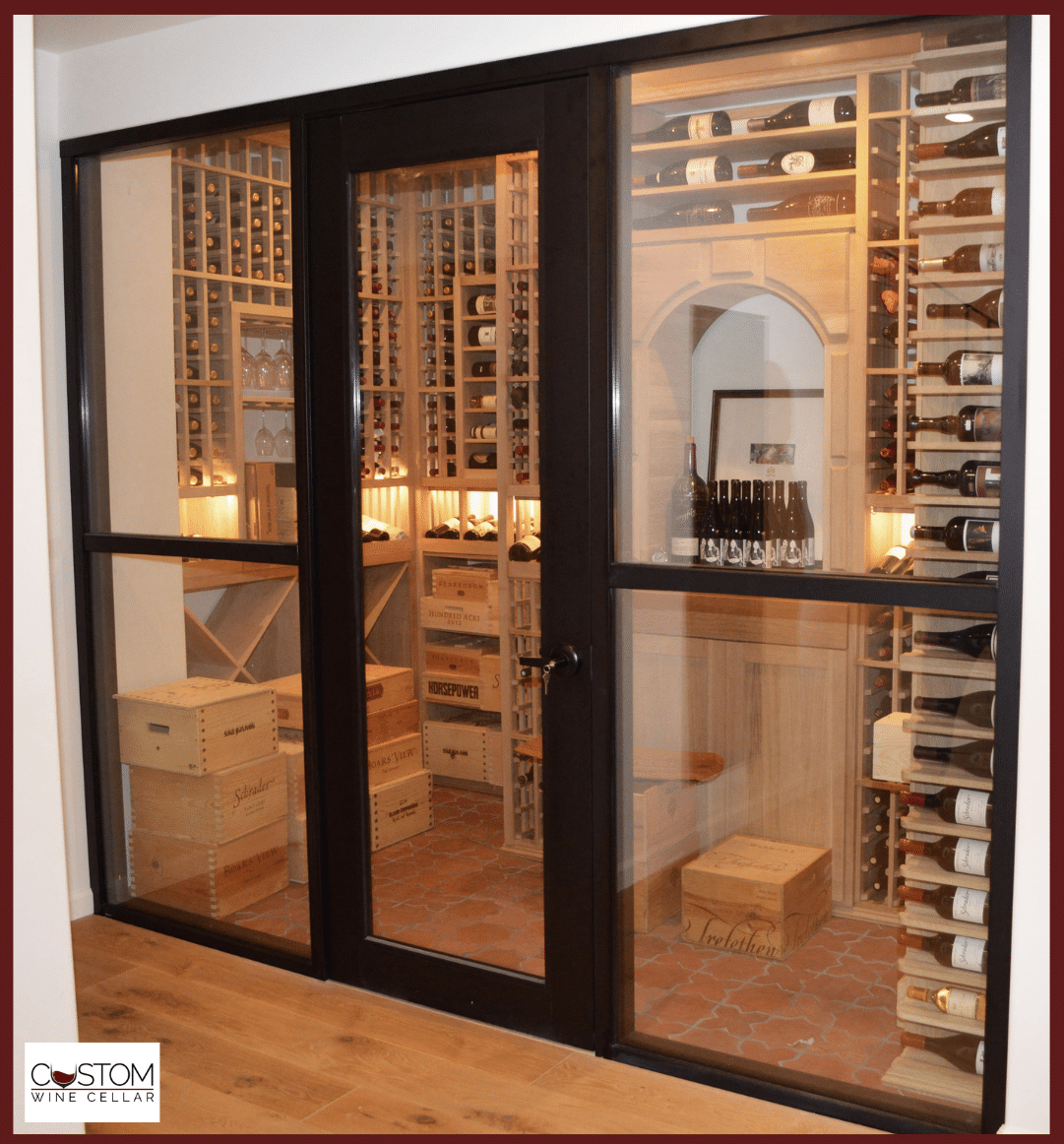
A metal cellar door has two separate parts that can each carry a thermal break: the leaf, which is the door slab that swings, and the frame, meaning the jamb and header it swings against. A break in the leaf alone interrupts conduction through the door panel itself, which is real and worth having. It does nothing for the frame surrounding it. If the jamb is a single piece of continuous metal from the cellar-facing edge to the house-facing edge, that jamb still conducts straight through at every point the door contacts it: the hinge side, the strike side, and the head where the door meets the top of the opening.


So the specification question that separates a real thermal-break door from one borrowing the phrase is simple: is the break in the leaf only, or in the frame as well? A door built with the break in both carries the isolation all the way around the opening. A door built with the break in the leaf only, and a solid metal jamb, still runs cold to the touch at the frame, and the same condensation risk described above still applies there, even though the door itself is technically insulated.

If the goal is only to have the warmest possible frame, wood outperforms metal even with a thermal break; wood is a poor conductor on its own and needs no separation to interrupt a path that barely exists. Metal keeps getting chosen anyway, and the reasons are practical rather than thermal.


A metal frame holds a narrower sightline than a wood frame of the same strength, which means more of the opening can be glass and less of it has to be frame. For a cellar built to be seen, whether from a dining room, a tasting bar, or a hallway sightline, that narrow profile reads as more collection and less carpentry. Metal also takes a wider range of finishes, from brushed stainless to powder-coated color, without the maintenance a stained or painted wood frame needs over time.


Traffic volume matters as much as sightlines. A cellar door in a restaurant, hotel, casino, country club, or wine bar gets used far more heavily than one in a house, and metal is specified there as a judgment about construction and the traffic the opening will see, not as an appeal to any published duty-cycle rating.

WARNING: A thermal break does nothing for corrosion. It interrupts conduction, and conduction alone. What resists salt-laden coastal air at the fasteners and hinge points is the hardware finish specified alongside the frame: brushed stainless or powder-coated.

Near the coast, then, the frame carries two separate specifications that are easy to collapse into one. The break answers how much heat crosses the frame. The finish answers how the fasteners and hinges hold up in the air around it, and neither answer substitutes for the other.

Putting the Right Language in the Specification

Once the leaf-and-frame answer is settled, four more items keep a metal thermal-break door from turning into a case of the label without the engineering behind it. First, get the frame finish specified in writing, since brushed stainless, painted steel, and powder-coated aluminum each carry different maintenance needs near the coast. Second, confirm which side of the door swings which way and which side takes the visible hardware, because a break that runs correctly on a right-hand door doesn't automatically translate if the handing changes during design. Third, ask how the hardware, hinges, strike plate, and any closer, anchors into the broken frame, since a fastener path is a separate question from the frame's own break. Fourth, keep the leaf-versus-frame answer on the same page as finish and handing, not in a separate conversation that can drift before the door is ordered.

Wine bottles stored in a floor-to-ceiling cellar with wooden cubby shelves

TIP: Ask for the frame's section drawing rather than the spec line alone. A real break appears there as two separate metal profiles with a polymer strip between them, and a drawing showing one continuous profile settles the question in a second.

None of this changes what the door looks like once installed. It changes whether the performance a comparison table promises is actually built into the frame, or only into the panel swinging inside it.

Glass Area, Sightlines, and the Break at the Frame

A metal thermal-break door can be built as a solid insulated panel, and glazing is available across a wide range, from a small view lite to most of the leaf. Where there is glass, the break sits in the metal around the pane, not in the glass itself, so the same leaf-and-frame question applies to the pane's perimeter exactly as it does to a solid panel.


Metal also frames a large glass panel with a narrower visible edge than wood manages at the same size. That is different from a frameless glass door, which has no perimeter frame at all: the panel runs on pivot hinges and seals against magnetic gaskets at the jambs and head. A frameless door has no metal path to break because it has no metal frame in the first place; the thermal-break question only exists where metal meets both the cold and warm sides of the opening.


For a metal-and-glass door, the narrow sightline is the whole point of choosing metal over wood in the first place, so a thermal break that runs the full frame, not just the leaf, lets that narrow profile stay narrow without turning into the coldest, most condensation-prone part of the whole opening.

WARNING: A cold jamb beside a room-temperature door panel is the signature of a leaf-only break. If the leaf reads close to the room and the metal framing it reads colder, the isolation stopped at the door and never entered the opening.

Frequently Asked Questions About Metal Wine Cellar Door Thermal Breaks

  • Can a thermal break be added to a metal frame that is already installed?

    No. The isolation is created during fabrication, when the cellar-side and warm-side profiles are mechanically locked around the non-conductive strip and leave the shop as one assembled section. There is no seam to open on site and nothing to insert between two faces that were formed together. Adding a break to an unbroken frame means replacing the frame, which is why the question belongs in the original specification.

  • Does it matter whether the frame is steel or aluminum?

    It changes what an unbroken frame costs the room. Aluminum conducts heat several times more readily than steel, so an unbroken aluminum section carries the difference across the opening faster than an unbroken steel one of the same profile. Neither is acceptable unbroken on a cellar door. The point is that the break matters most on the metal that would otherwise conduct best, which is why aluminum extrusions are where the polymer strip turns up as standard practice.

  • Does the glass in a metal door have its own version of this problem?

    It does, at the spacer holding the two panes apart. A conventional aluminum spacer runs a conductive path all the way around the perimeter of the pane, right where the glass meets the frame, so the coldest strip of a glazed door is often the inch nearest its edge rather than anywhere in the middle. A low-conductivity spacer answers that the way the polymer strip answers the frame, and it is specified with the sealed unit rather than added to it later.

  • Can hardware installed into a broken frame undo the thermal break?

    It can. Hinges, strike plates, and closers anchor with screws or bolts that pass through the frame, and a fastener running straight through both the cold-side and warm-side metal forms a small conductive bridge at every point it is installed. Isolating sleeves, or a fastener path that lands in only one of the two profiles, keep the break intact where the hardware sits.

  • Does a metal door suit a traditional cellar as well as a modern one?

    Metal reads with the modern cellar vocabulary: metal and cable racking, minimalist framing, and RGB lighting. Traditional rooms pair alder and mahogany racking with arched wooden doors and diamond bins, where a metal frame sits against a different set of materials entirely. A metal door works in either room, but its narrow profile has to match the racking and millwork already chosen.

  • Do all metal cellar doors come from the same manufacturer?

    Not necessarily. A trade program can source specialty doors with UV-protective glazing and custom frame options from outside manufacturers when a project calls for a configuration outside the standard door line, then deliver them to the job site. Installation runs either as a complete service or as support only, where the trade partner installs the door with their own crew.

Specify the thermal break in the leaf and the frame together — a single spec line naming the isolation, the jamb, the head, and the frame finish gives the fabricator every answer the opening depends on. Cachet Wine Cellars designs and builds custom wine cellars from Irvine, California, with a lifetime warranty on every installation. Call (949) 569 7857.

Recent Posts

Open ornate glass doors into a warmly lit wooden dining room with a long table and chandelier
October 16, 2026
One face of a wooden cellar door sits at cellar humidity, the other tracks the house. That difference bows the panel; core and finish scope limit how far.
Wooden ceiling vent above a dark beam, with two bottles visible at the bottom edge.
October 16, 2026
A return grille placed near the door reads warm household air as cellar air. See where return air belongs, and the mistakes that cause the same error.
Modern restaurant interior with dark wine wall, pendant lights, and white upholstered chairs
October 16, 2026
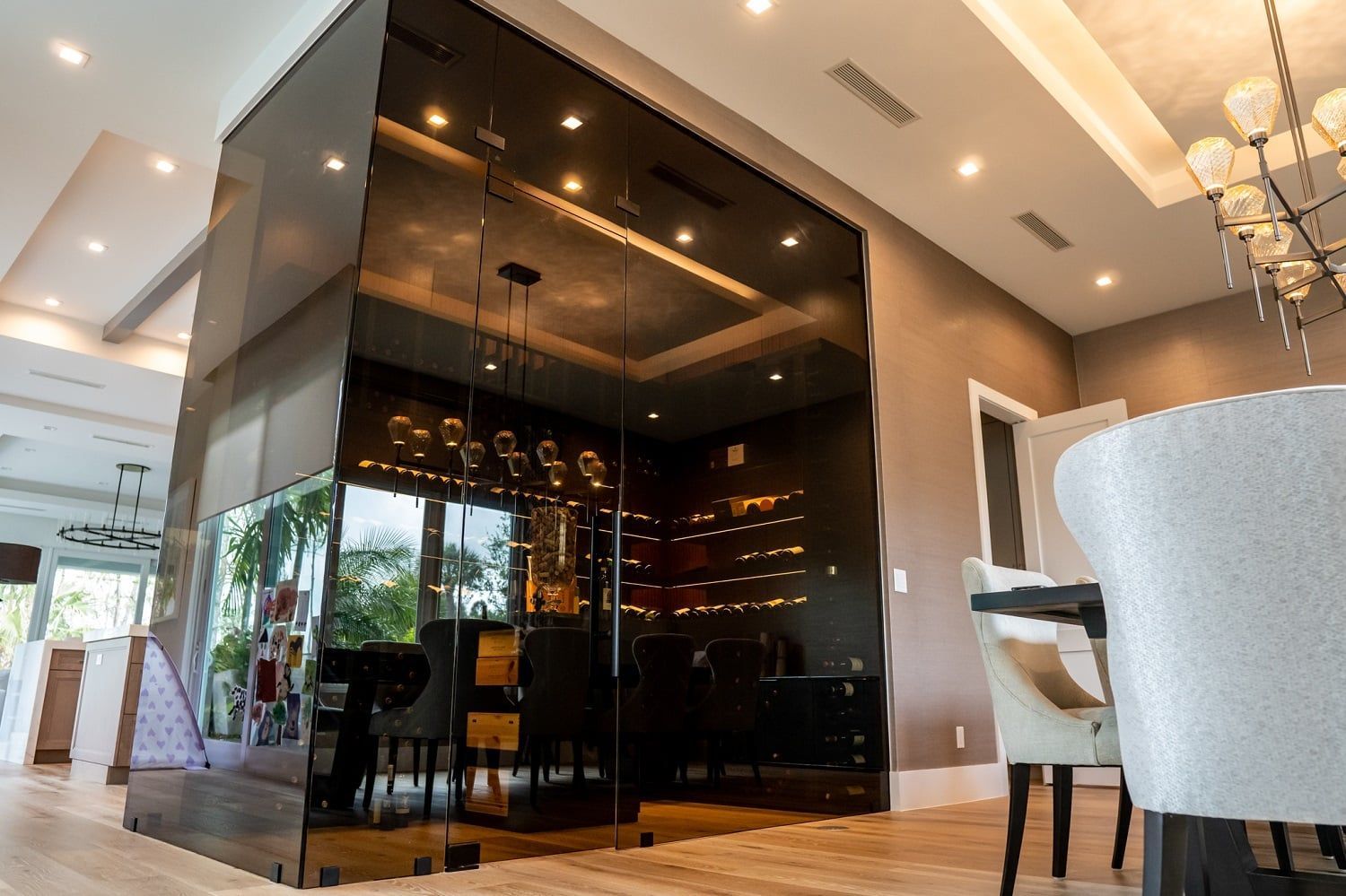
Condensation on a cellar glass door usually means humid house air met a cold house-side pane, not a cooling fault. Which side is wet is the diagnosis.
Four decorative wooden arched doors with ornate iron and carved detailing
October 16, 2026
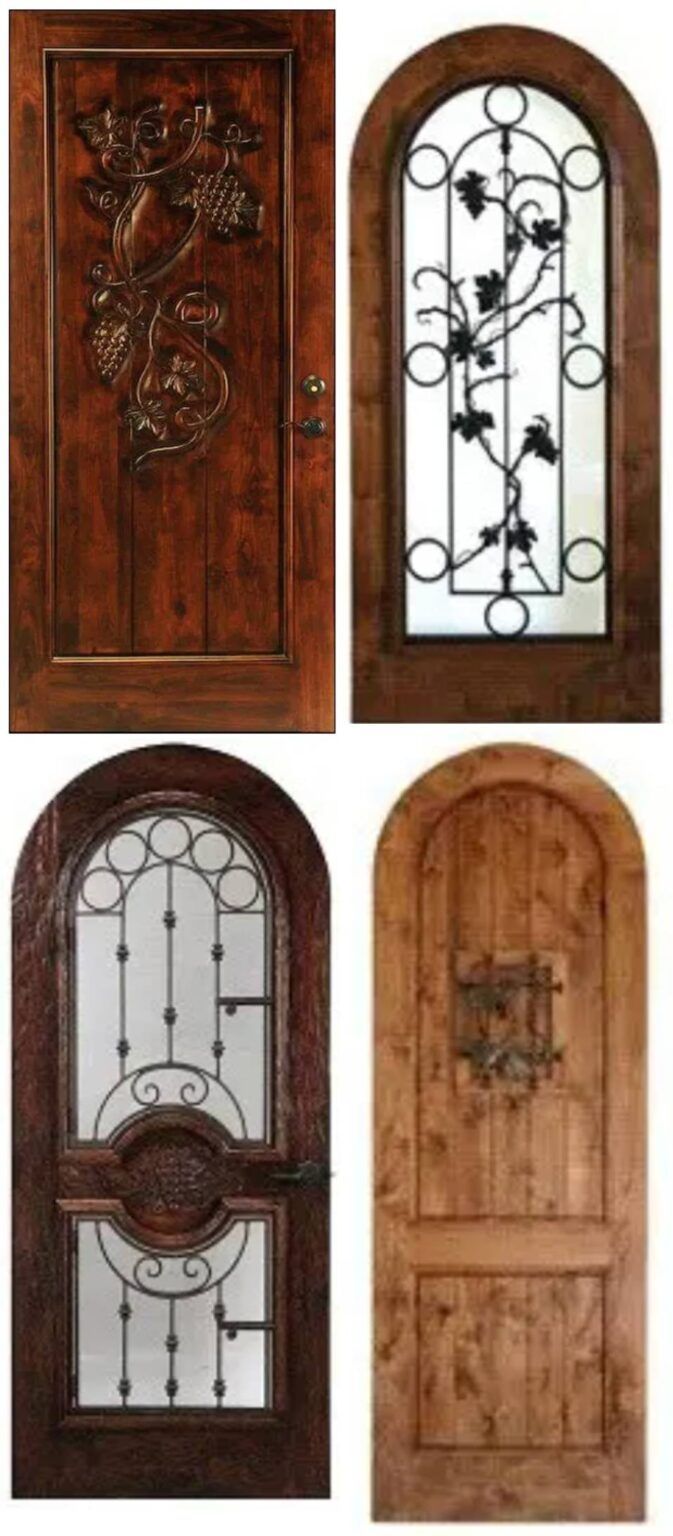
Compare wine cellar door types by what rules each one out: the opening, the wall, traffic, and the view, not style alone.
Black metal pull handles on a glass door, viewed close up.
October 16, 2026
A cellar door can seal at the jambs and head and still fail at the floor. Why the threshold is different, and the two ways builders close it.
Tall glass display cabinet with decorative metalwork in a warmly lit hallway.
October 16, 2026
A cellar door's swing needs clear floor inside the cellar and clear hallway outside it. See how clearance, opening width, and wall placement fit together.
Wooden double doors with glass panes in a tan hallway, flanked by framed wall art.
October 16, 2026
A custom cellar door built to the wrong opening can't be trimmed on site. What a GC and framer must confirm in writing before release to manufacture.
Custom home-built wall cabinet with hidden sliding shelves and a louvered wall vent in a room.
October 16, 2026
A leaking cellar door shows up first as cooling that runs longer with no setpoint change. The daily shape of that runtime is the real tell.
Open glass doorway into a warmly lit wine cellar with wooden racks and bottles.
October 16, 2026
The cellar door is picked early and ordered late. See what sets wine cellar door lead time and how to build it into a remodel schedule.
Wine bottles stored in a built-in under-stair wine rack with metal shelving and glass doors
October 16, 2026
A cellar door that sticks, won't stay shut, and whistles when the system cycles isn't three problems. It's one pressure difference, read three ways.

Show More